
Some messages make me hold my breath for a moment as I read them on my phone. This one arrived a few days after the Fear of Heights Training and was refreshingly short: Markus did it. The big suspension bridge at Madrisa, near Klosters and Davos, where he had been failing for three years, was behind him. Just like that, or at least that's how the email sounded.
Of course it wasn't just like that. Before it came countless attempts, a Wednesday on which his inner system first moved in the wrong direction, and a Thursday on which things suddenly went much better. I wanted to understand how that fits together. And because fear of heights is never about just one person, I asked Sonia as well.
Who are Markus and Sonia?
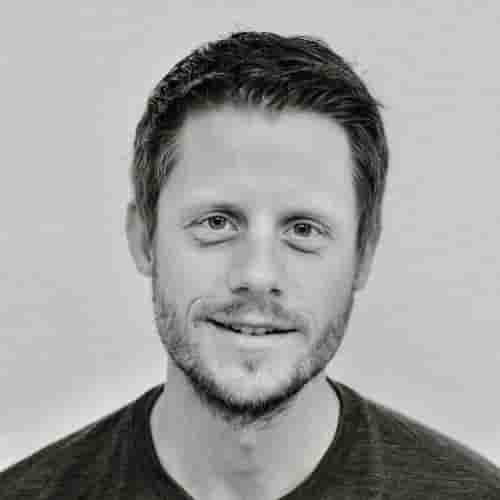
Markus and Sonia are regularly out and about in Klosters and exactly the kind of hikers I like to guide most: curious, well prepared, and with plenty of humor. Markus plans every route down to the last detail on the Swisstopo map, backup plan included. Sonia knows these plans and knows where things might get serious. When the two aren't in the mountains, they go looking for porcini and chanterelles at lower elevations.
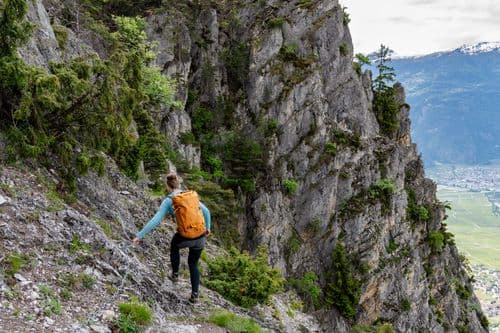
Fear of heights training
2 days in real terrain
CHF 790 For 1 person, optional with companion
When the view is the trigger
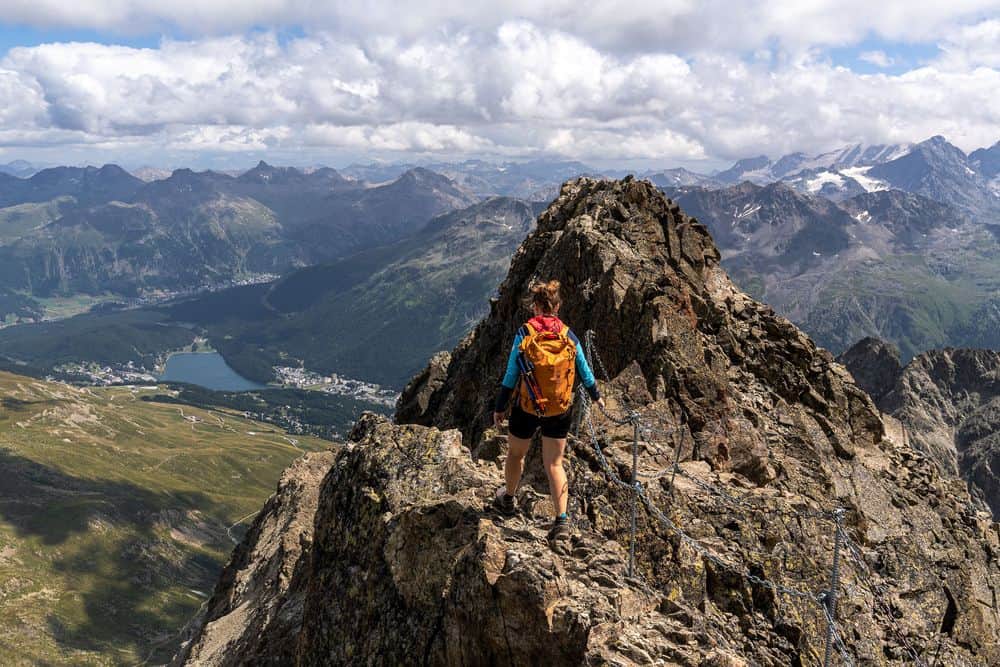
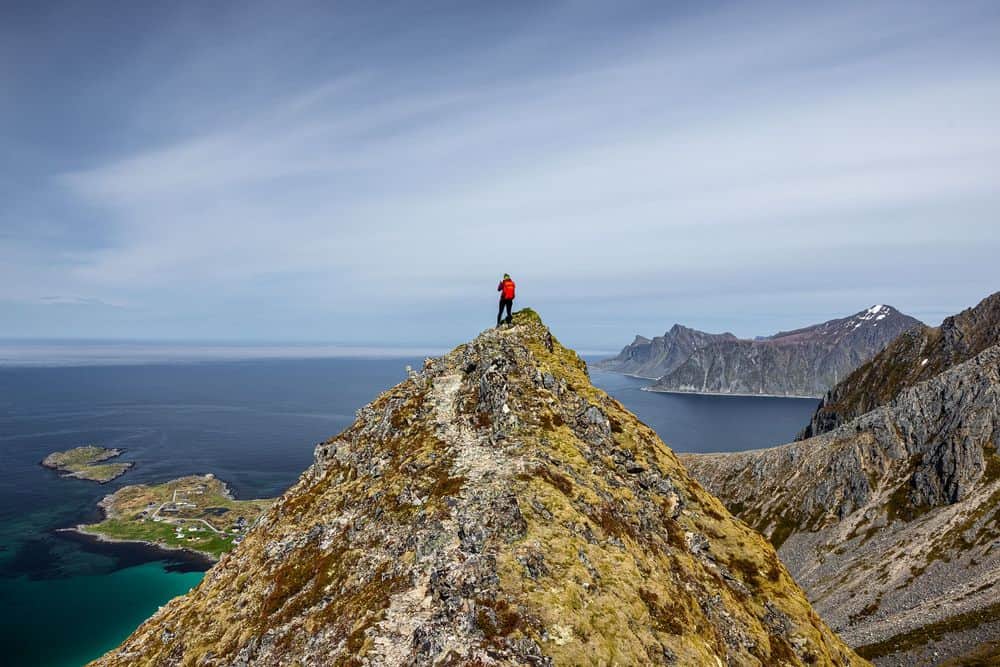
Markus' fear of heights has a peculiarity I rarely see this clearly: it depends on seeing. In a dark ride at Europa-Park he feels no fear at all, but on a steep slope with an open view into the valley, he does very quickly. When there are no trees, bushes, or other reference points, his system starts to shut down: breathing, pulse, sweating, dizziness. Once this cascade is underway, even the best intentions barely help.
That's not bad news, quite the opposite. If the view is the trigger, you can start right there.
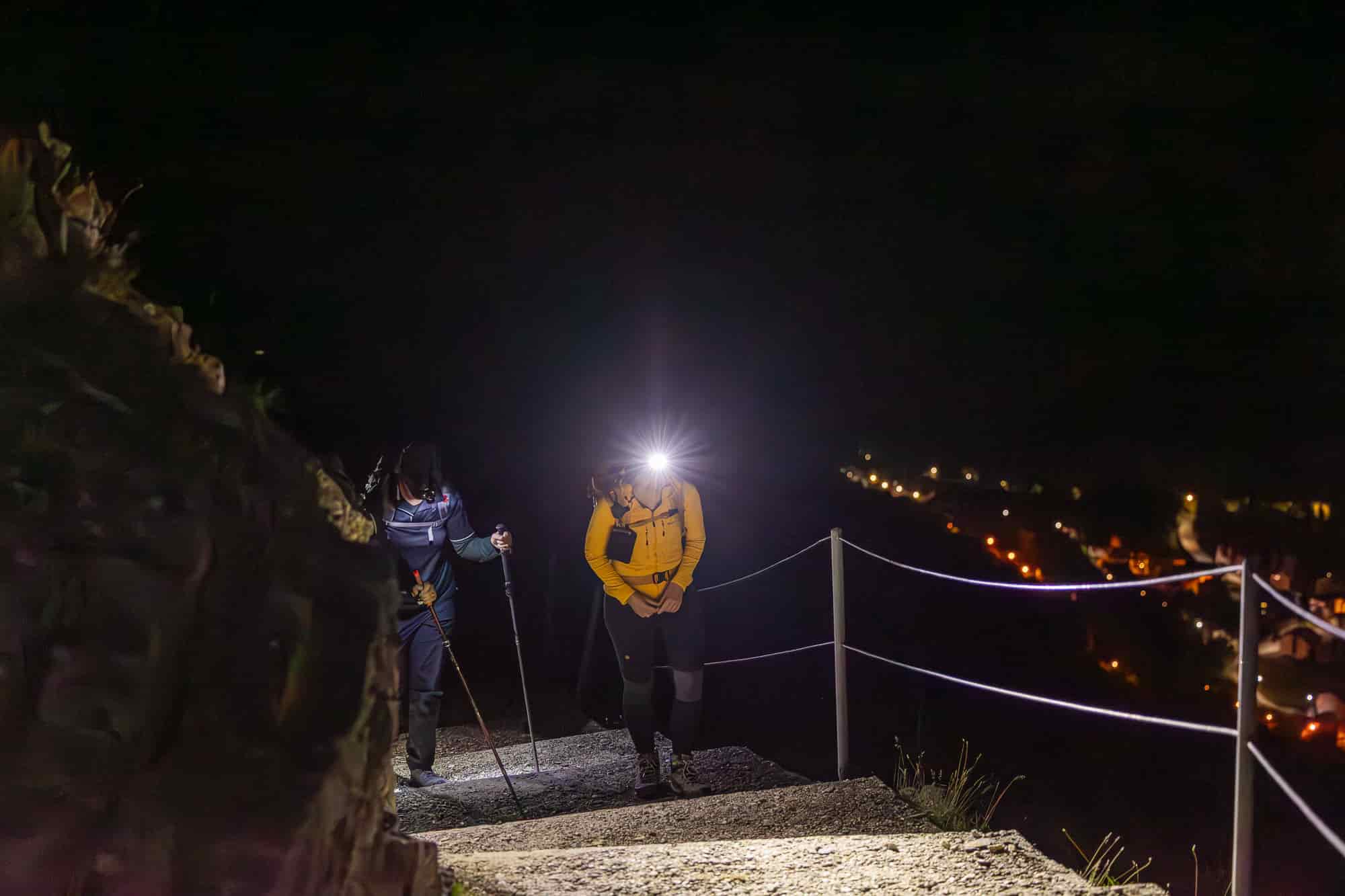
The training in brief
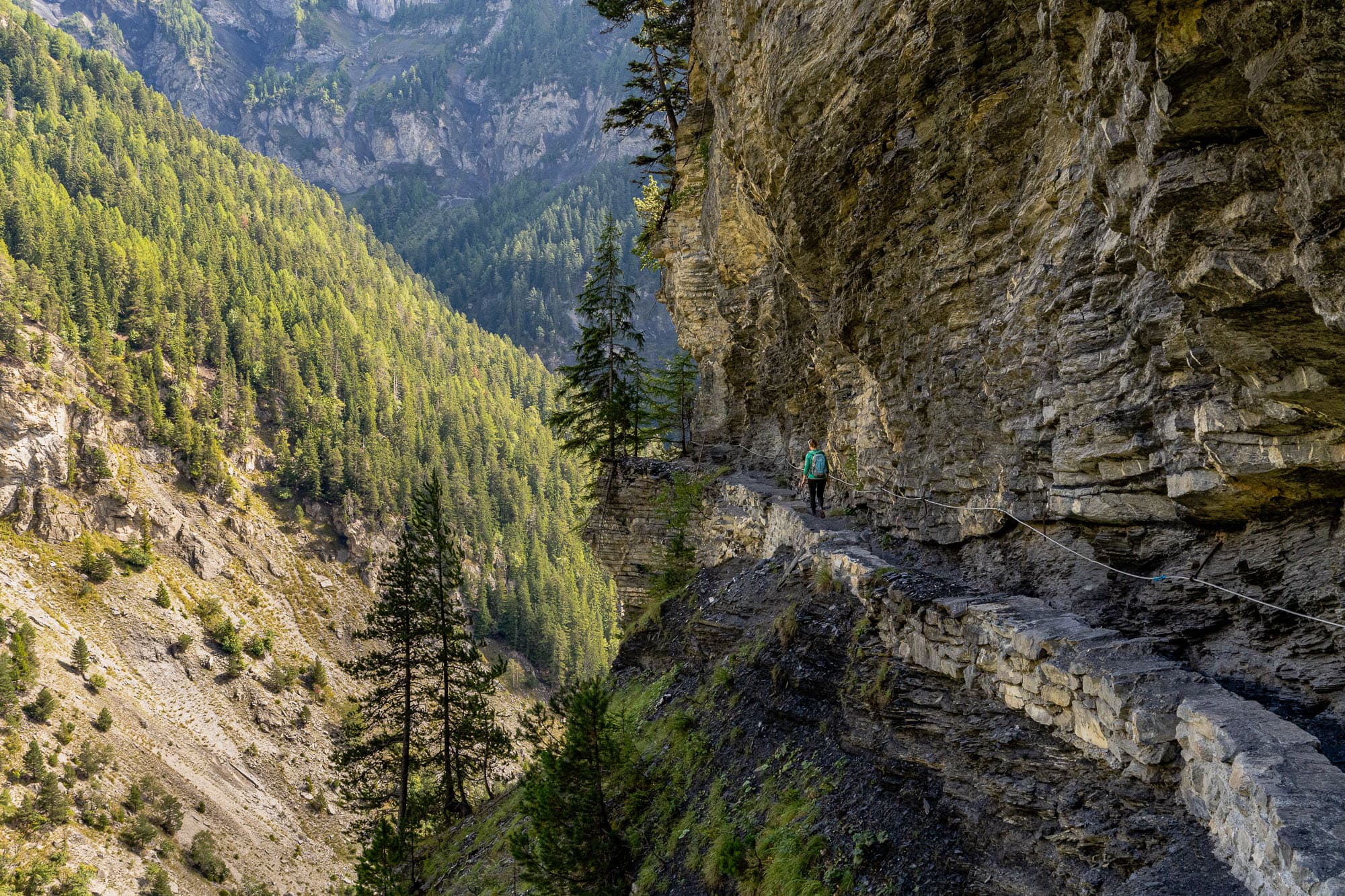
We started on a Monday at 10 a.m. at the valley station of the Gotschna cable car. Two days, plenty of time, and a few aids: focusing on the next step instead of the drop to the left and right, breaks in the right places, a baseball cap as blinkers, and Sonia walking directly in front of Markus as a guide. How that looked in detail, the two of them can tell you better themselves in a moment.
The interview
I sent Markus and Sonia a few questions, which they answered in writing and in their own time. Thank you so much for that! Their answers are published here unchanged.
How has your fear of heights affected your life and your hikes together over the years?
For a long time, my fear of heights was simply a fact of life that I planned around. When the family visited the Eiffel Tower, I waited at the bottom. The same was true at Rockefeller Center. I planned hikes very carefully in advance and always told my wife where it might get difficult. She always supported me: she told me we could turn around at any time, but that we should at least try.
What had you already tried before our training to get a grip on your fear of heights?
I tried exposure again and again, meaning I deliberately put myself in situations that trigger fear and tried to endure them, for example through conscious breathing or the mantra that the body can't stay afraid permanently. At the same time, I read a lot about the topic to better understand the mechanisms behind the fear. That helped cognitively, but it wasn't helpful in the moment of fear (right up to being completely blocked). In addition, I tried hypnotherapy, which brought me small improvements.
What was the most important turning point or biggest insight for you during the two days?
The most important insight for me was that even in a fear situation I can create an "island" for myself at any time, no matter where I am. That feeling of being able to pause briefly despite the fear and regain control helped me enormously. Just as important was keeping my gaze focused on the next step instead of constantly scanning left and right for possible dangers. I use these strategies all the time now. That also means the fear doesn't simply go away, but my limits have shifted.
After three years, you made it across the suspension bridge at Madrisa. How did that moment feel?
That was an incredible moment. I felt relief, joy, and pride, because I had overcome myself and the suspension bridge. After countless attempts in which I felt my way closer step by step, the successful crossing felt like a real breakthrough. Before the training I had barely made it to the halfway point of the bridge, and suddenly the crossing was possible. I admit: I talked to myself out loud, kept going very focused, step by step, and suddenly I was at the other end. The way back was then much easier.
Which technique from the training helps you most in everyday life?
Besides the strategies already mentioned, it was especially valuable to me that my wife took part in the training. Together we developed an approach that allows her to support me in difficult moments without us having to talk about it for long. I also give fear of heights less space when planning now. Instead of putting possible obstacles in the foreground, I approach new routes with a much more positive attitude.
How did you experience Markus' fear of heights over the years as a companion?
Sometimes it was frustrating because the fear of heights made certain activities together impossible. Over time it became part of our planning, and we increasingly chose activities where it played no role. At the same time, I often found it hard to understand what was going on inside Markus, because situations that were very stressful for him seemed completely fine to me. Even so, it was always important to me to show understanding and not to add any extra pressure.
What did you learn during the training to support him in difficult moments in the mountains?
The training showed me how I can support Markus in critical moments in a targeted way. I can help him create an "island," distract him through conversation, or give him a sense of safety. At the same time, I've learned to better judge what is possible despite the fear of heights. That's why I now also consciously encourage him to expand his limits step by step. The fear of heights hasn't disappeared, but the room for action has become significantly larger.
What would you advise other partners who accompany someone with a fear of heights?
In my view, every kind of fear of heights is different, so there's no one-size-fits-all solution. What seems important to me is finding the right balance between patience, encouragement, and realistic expectations. Progress usually happens in small steps. Anyone who acknowledges and supports these can contribute a lot to the affected person developing confidence in their own abilities.
How has your time in the mountains together changed since the training?
We have expanded the limits of what's possible and now dare to tackle more demanding sections. It helps us to know that we can handle such situations together. At the same time, we now deliberately seek out exposed spots so that Markus can keep practicing. The fear of heights hasn't disappeared, but its limits have become much more movable than we used to think.
What would you say to someone who is still hesitating to tackle their fear of heights?
The most important step is the wish to change something. Anyone who doesn't want to simply accept their fear of heights as a given should be willing to actively work on it. The fear usually doesn't disappear overnight, but your own limits can be shifted, and that opens up many new possibilities.
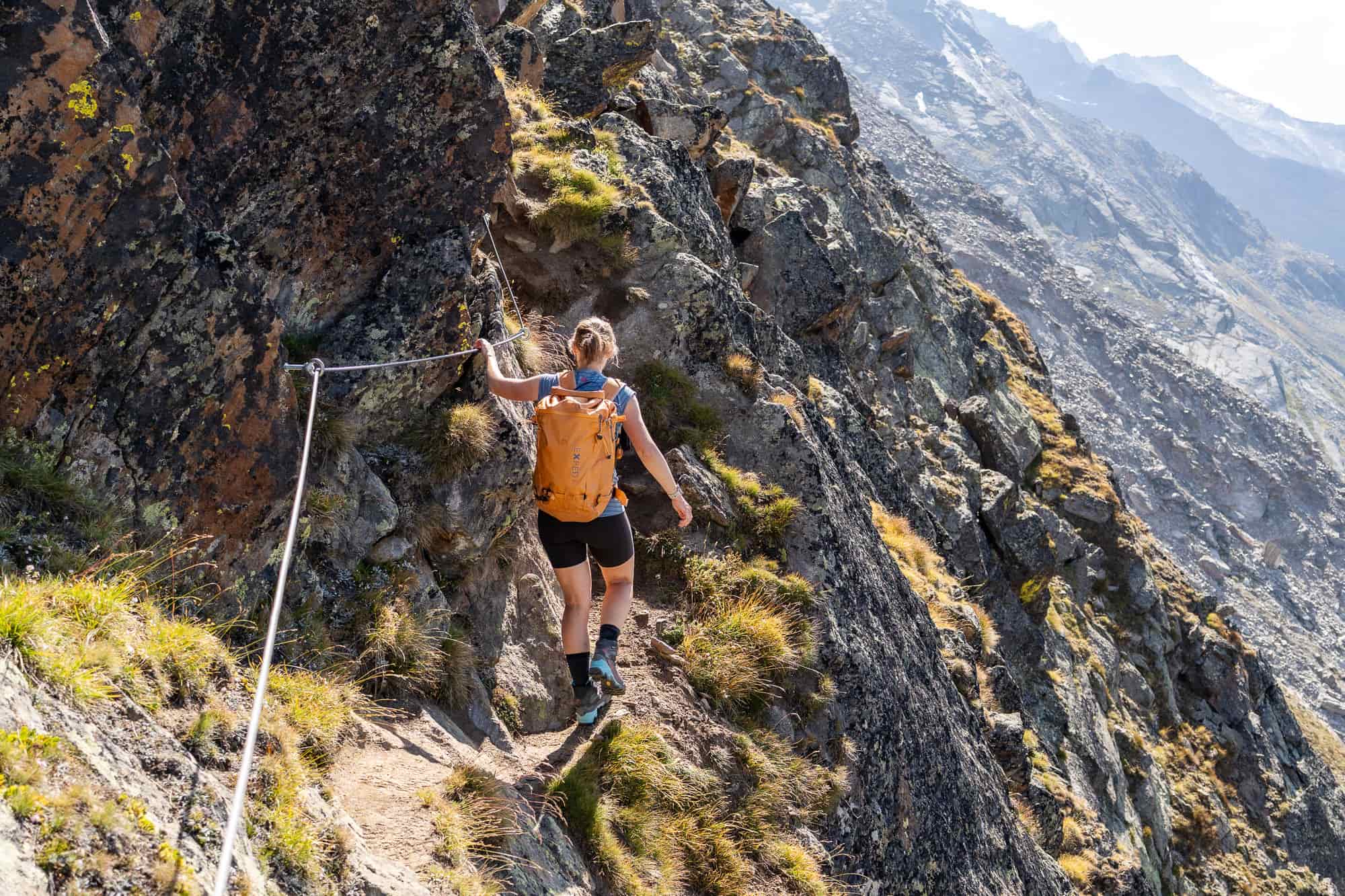
What I take away from the conversation
The fear stays, the limits move. Markus and Sonia said this several times in their answers, and it's the most honest summary I know. A training doesn't turn fear of heights into a love of heights. It shifts what's possible. And yes, setbacks are part of it too: Markus' bad Wednesday after the training wasn't a sign that it doesn't work, but that something is moving.
The view decides. Focusing on the next step and the little island you can create at any time aren't magic tricks. But they give the mind a task before the fear gives it one.
It's easier together. Sonia coming along was worth its weight in gold for both of them. Today she can support Markus without long explanations, and she has a better sense of what's possible. Anyone accompanying a person with a fear of heights is not just a spectator but a real tool.
For companions: what Sonia recommends
- Help create an island: pause briefly and convey a sense of safety
- Distract with a conversation when things get tight
- Find the balance between patience, encouragement, and realistic expectations
- Acknowledge small progress without adding extra pressure
If you recognize yourself in this story: you don't have to start alone. Depending on where you live and how far along you already are, there are two paths. The Video Coaching works from anywhere, as a first step with an assessment and a concrete plan. The 2-day training in Switzerland is the next step if you'd like to try the techniques out in real terrain. And if you'd first like to know more, you'll find all the basics in my article on fear of heights when hiking.
In closing
By the way, the suspension bridge at Madrisa is still hanging exactly where it hung three years ago. The only thing that has changed is who walks across it. And the way back, Markus assured me, was indeed much easier.