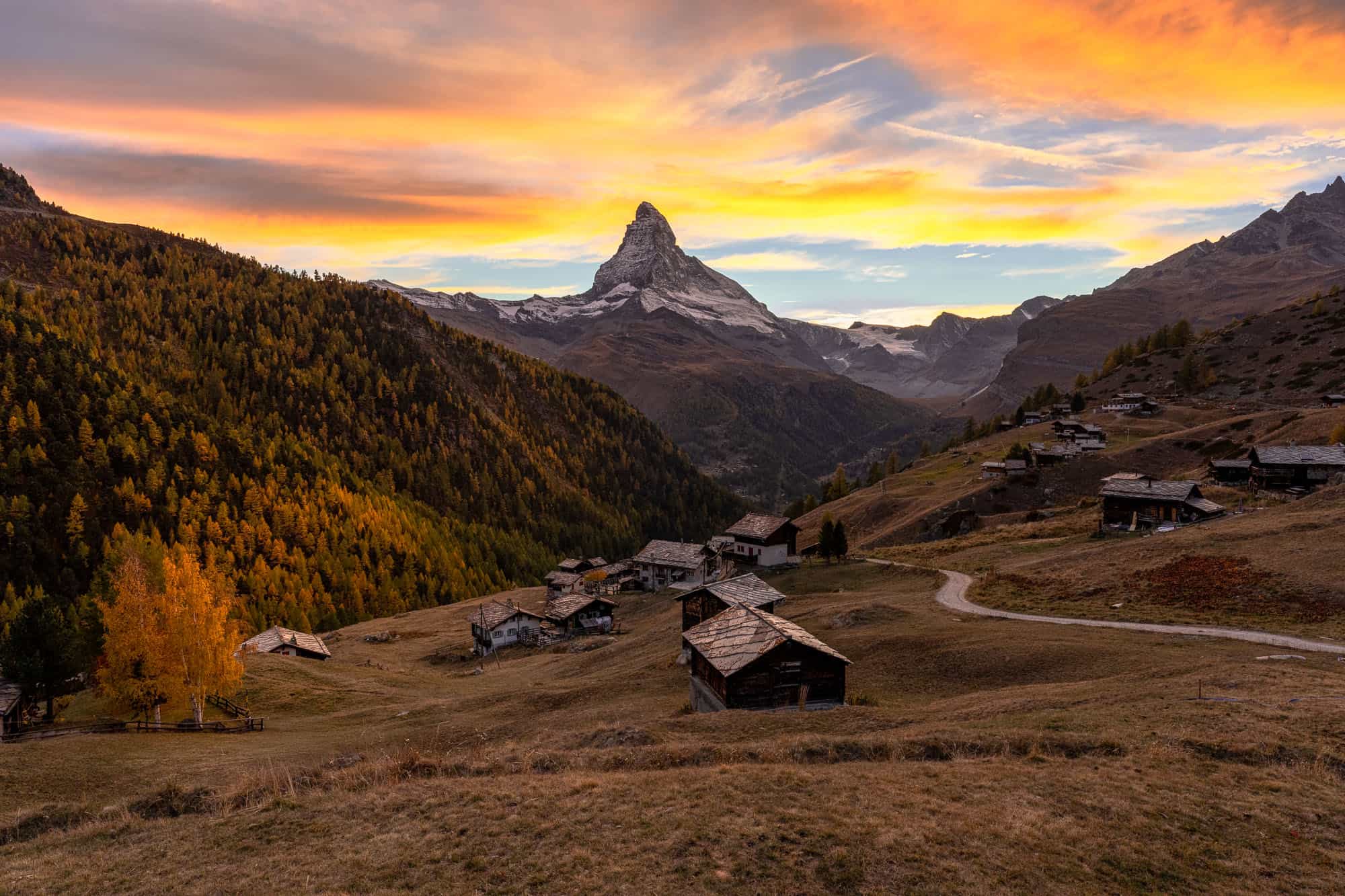
In October, something happens in Zermatt that isn’t mentioned in any brochure. The gondolas come to a standstill, the mountain restaurants close one by one, and that’s exactly when the most beautiful weeks of the year begin. What autumn does better here than any other season—and what it asks of you.
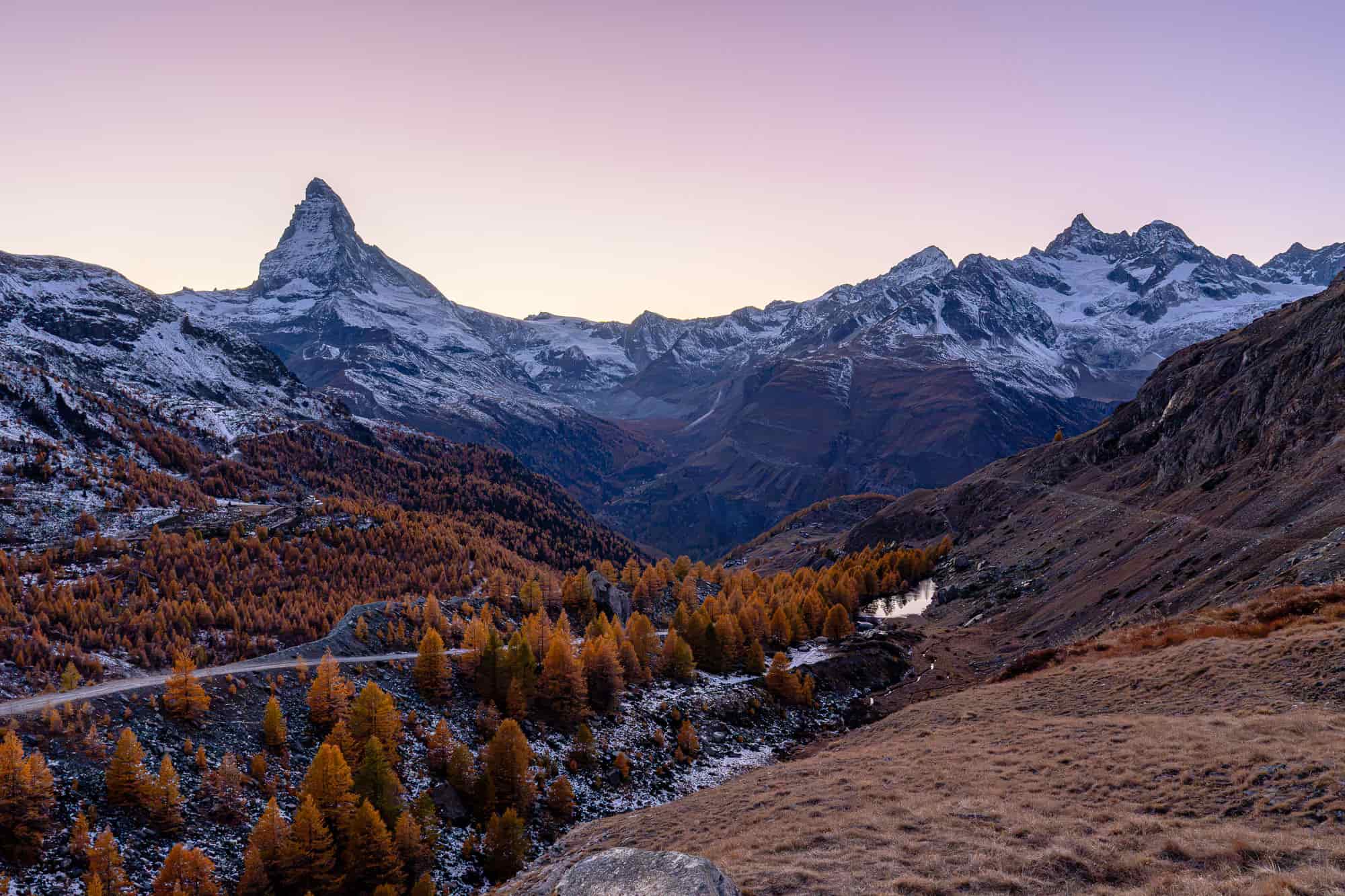
Golden Larch Trees, the First Snow, and Plenty of Peace and Quiet
When the larch trees above Zermatt turn golden, the first snow settles on the four-thousand-meter peaks, and the mountain railways shut down for maintenance, perhaps the most beautiful time of the year begins in this valley. In our Travel Guide, you’ll find everything you need to know about Zermatt in the fall: when the larch trees glow, where to find them, what’s still open in October and November, and why these weeks are so special for hikers and photographers.
Most people know Zermatt from midsummer or winter. That’s when the village is packed, the trains run on schedule, and people line up at Stellisee to stand in front of Switzerland’s most famous mountain. Between these two peak seasons, however, there’s a window of just a few weeks—known in the village as the “off-season”—that hardly anyone is aware of. Bahnhofstrasse becomes quiet; the cafés are filled with locals; and, with a bit of luck, on a Tuesday in October, you won’t run into a single soul up on the mountain. We love spending these weeks in Zermatt because that’s when the valley reveals its true character.
Zermatt
A car-free mountain village at the end of the Mattertal valley, overlooked by the most famous mountain silhouette in the Alps.
When Do the Larch Trees Glow in Zermatt?
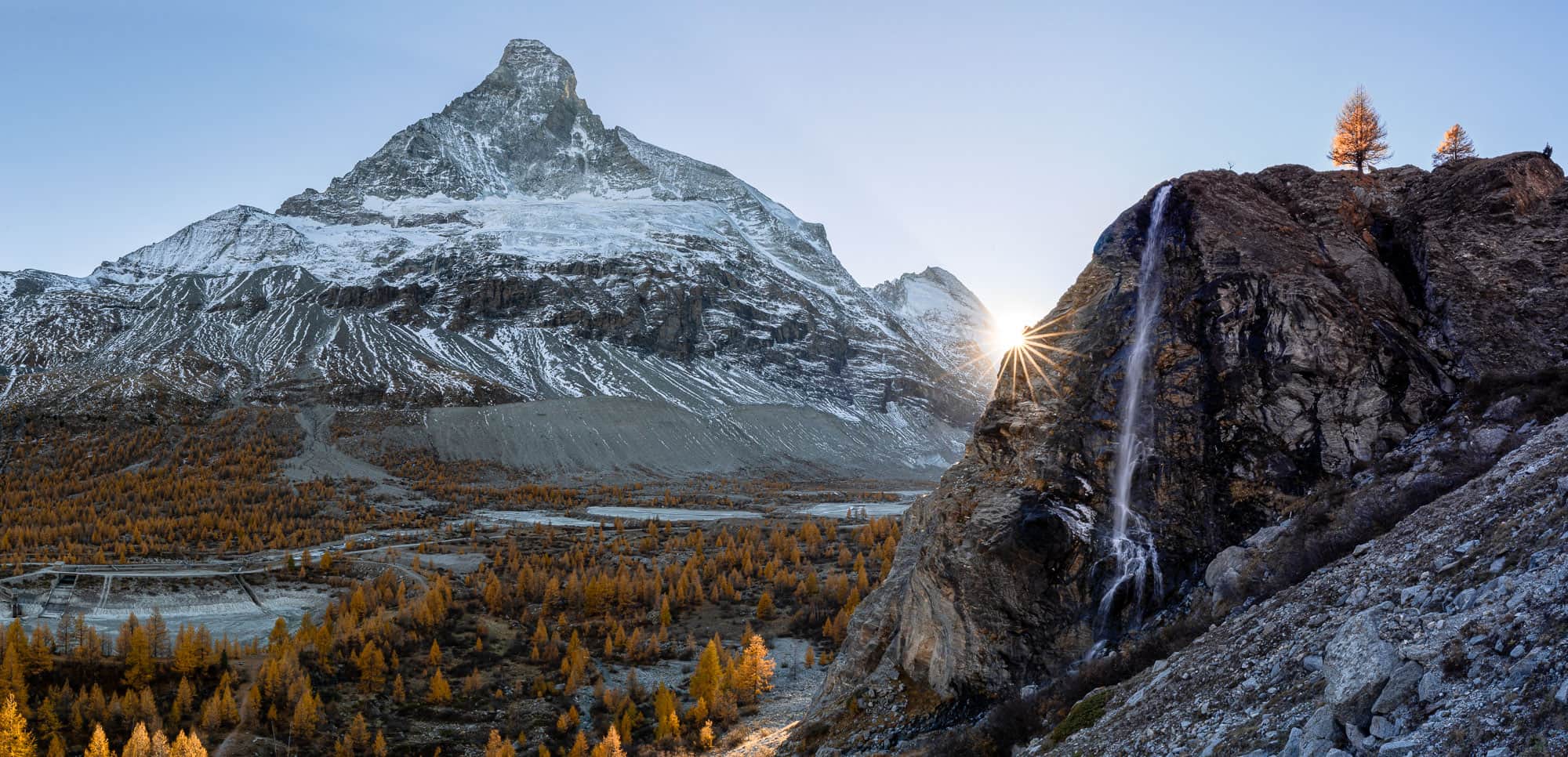
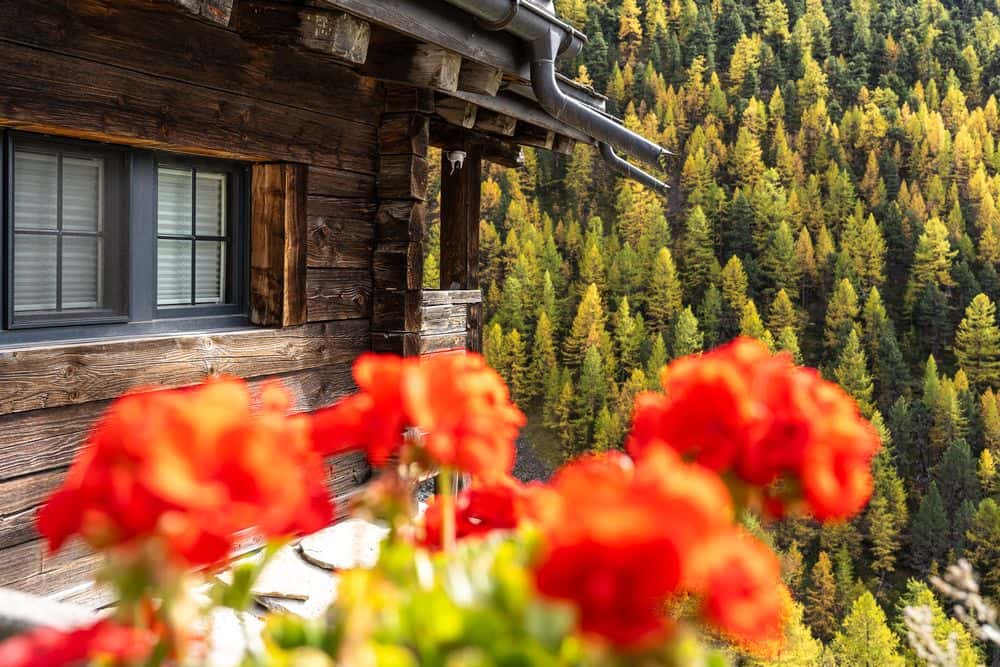
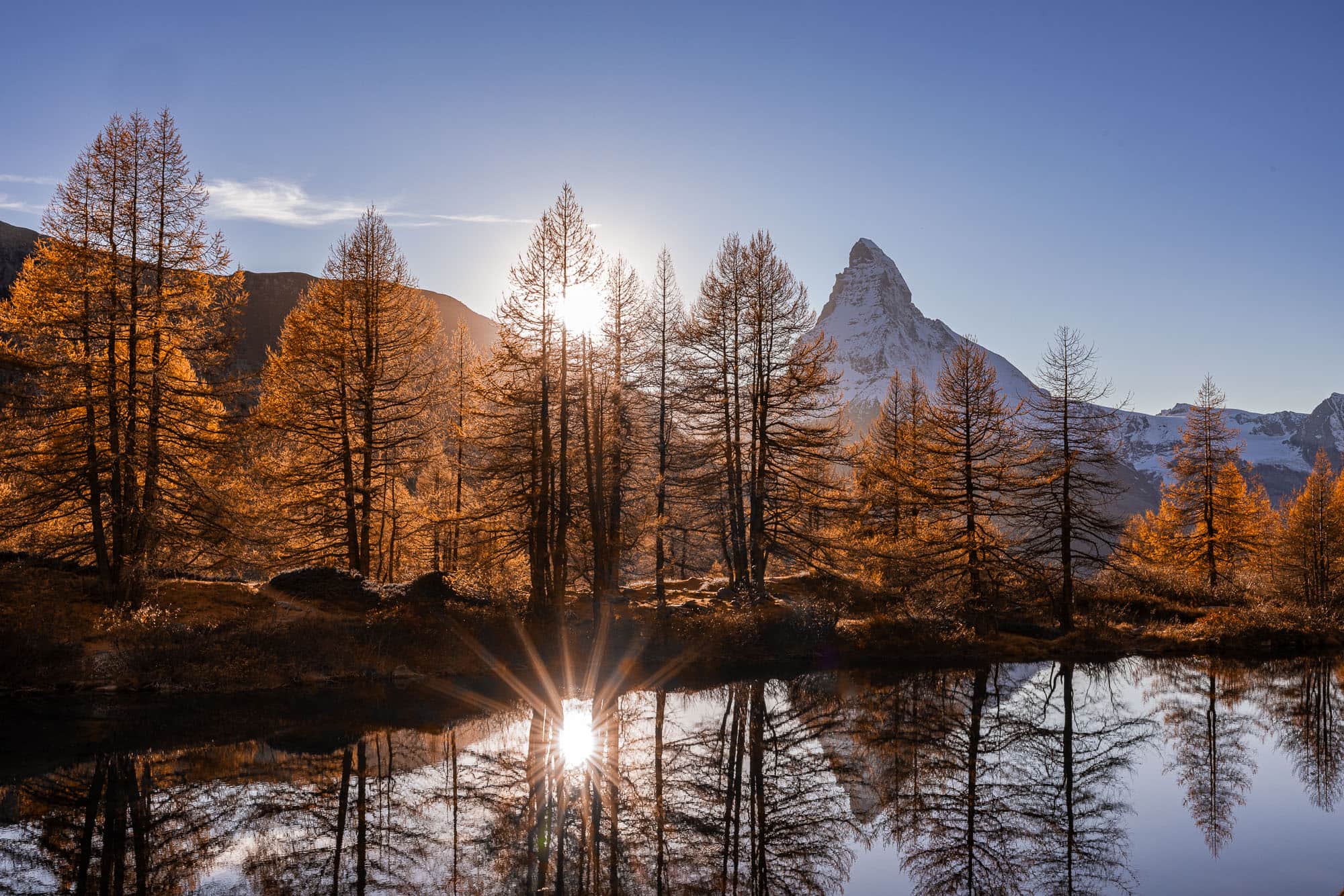
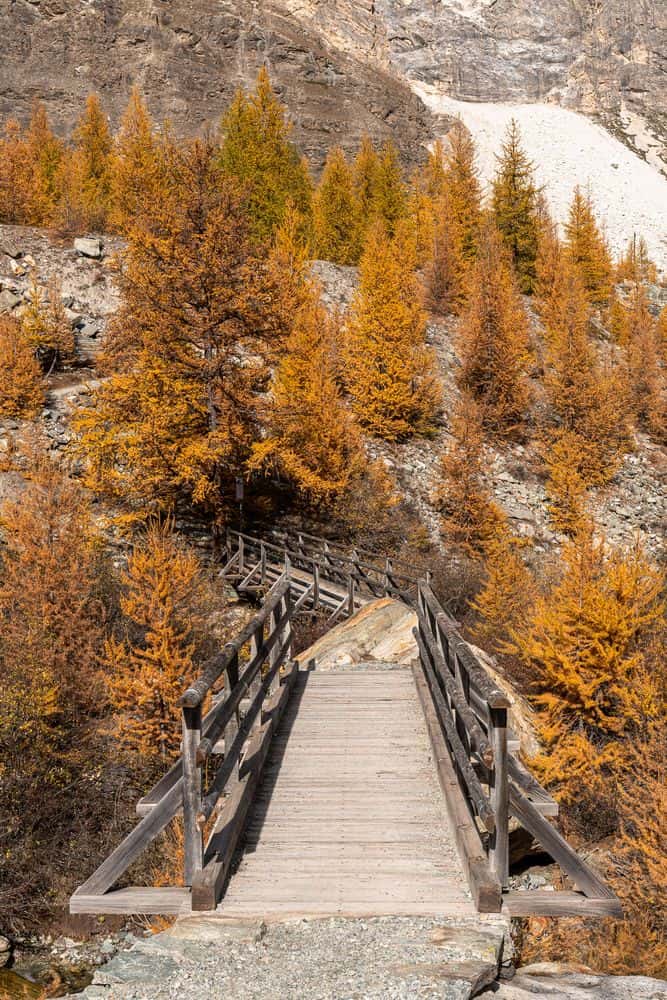
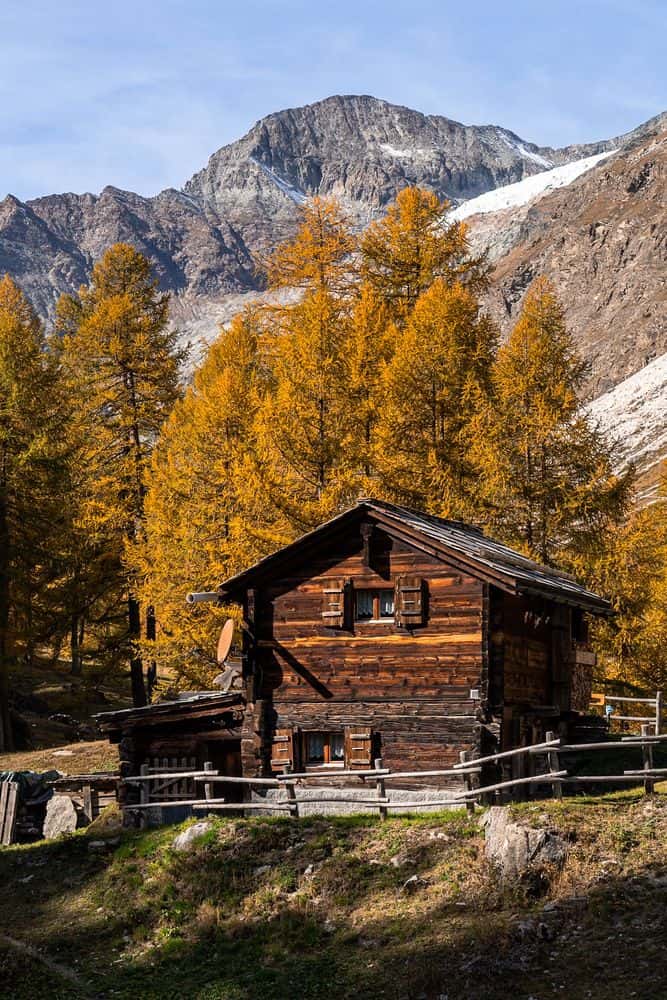
The larch is the only conifer in the Alps that sheds its needles in the fall, and it puts on quite a show. For about two weeks, entire slopes are bathed in a warm golden hue that seems to glow especially when backlit, because the fine needles let the light through rather than simply reflecting it.
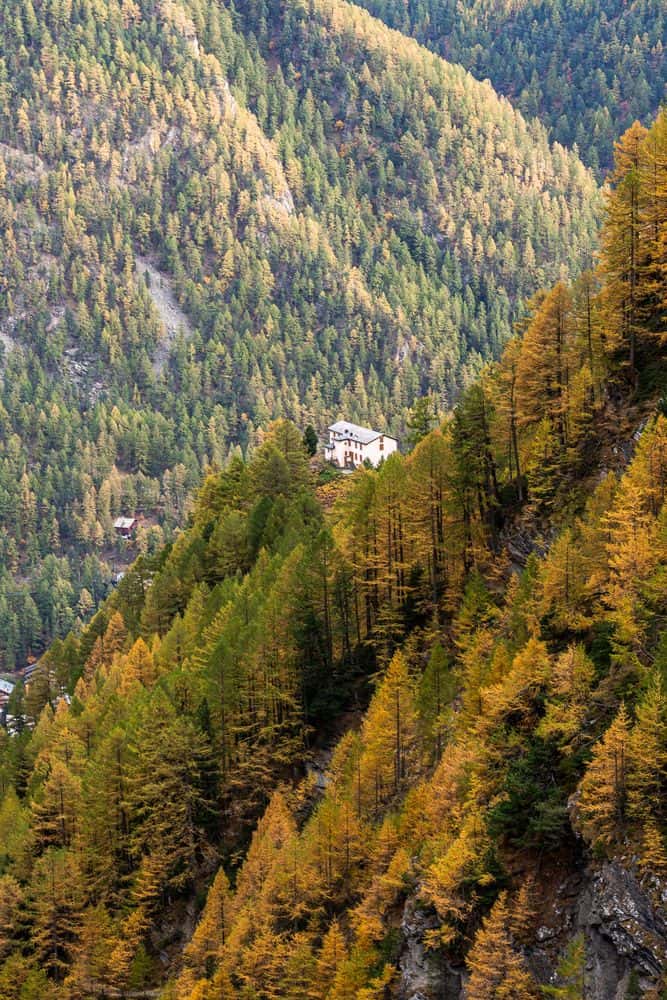
Around Zermatt, the larch trees mark the tree line at an elevation of about 2,200 to 2,300 meters. The color change begins at the top and works its way down, which is why you can see three stages at once in a single day: at the very top, individual, wind-sculpted trees that are already almost bare of needles; in the middle, the full golden splendor; and at the bottom, between the village and the Riffelalp, a mixed forest of larch and Swiss stone pine that is still green.
For elevations between 2,000 and 2,300 meters, the second half of October is a good rule of thumb, though there are significant year-to-year variations. A dry, hot summer can bring the peak forward by a week, and a stormy Föhn day can sometimes end it overnight. The village itself lies at 1,600 meters and turns color significantly later, sometimes not until early November.
In a Nutshell
Where? Around Zermatt between about 1,600 and 2,300 meters, most densely above Findeln and in the forest leading to Riffelalp.
When? Peak usually in the second half of October; in the village, until early November.
Why? The larch is the only conifer in the Alps that sheds its needles annually, and they turn golden before falling.
How long? About two weeks per elevation; significantly shorter after a storm.
Tip
Never judge the snow color from the valley floor. This is the most common mistake in October: Visitors arrive, look up from Zermatt, see green, and think they’re too early. In fact, it may already be golden yellow above 2,000 meters, while summer still reigns below.
The destination’s webcams are a more reliable source; you can check them daily starting in early October. As soon as the slopes above Findeln shift from green to ochre, you’ll have about one to two weeks until peak conditions.
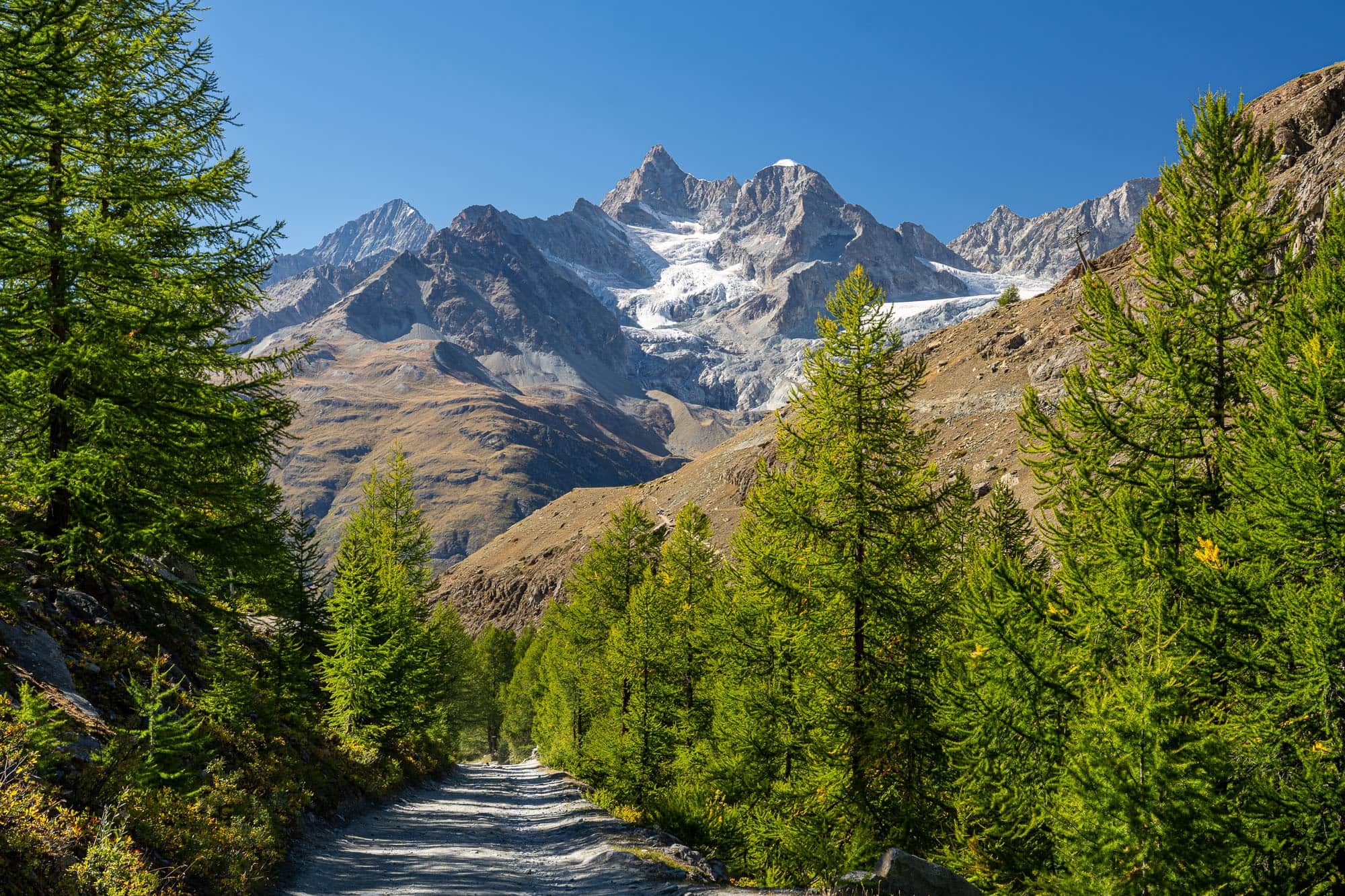
Summer Feeling
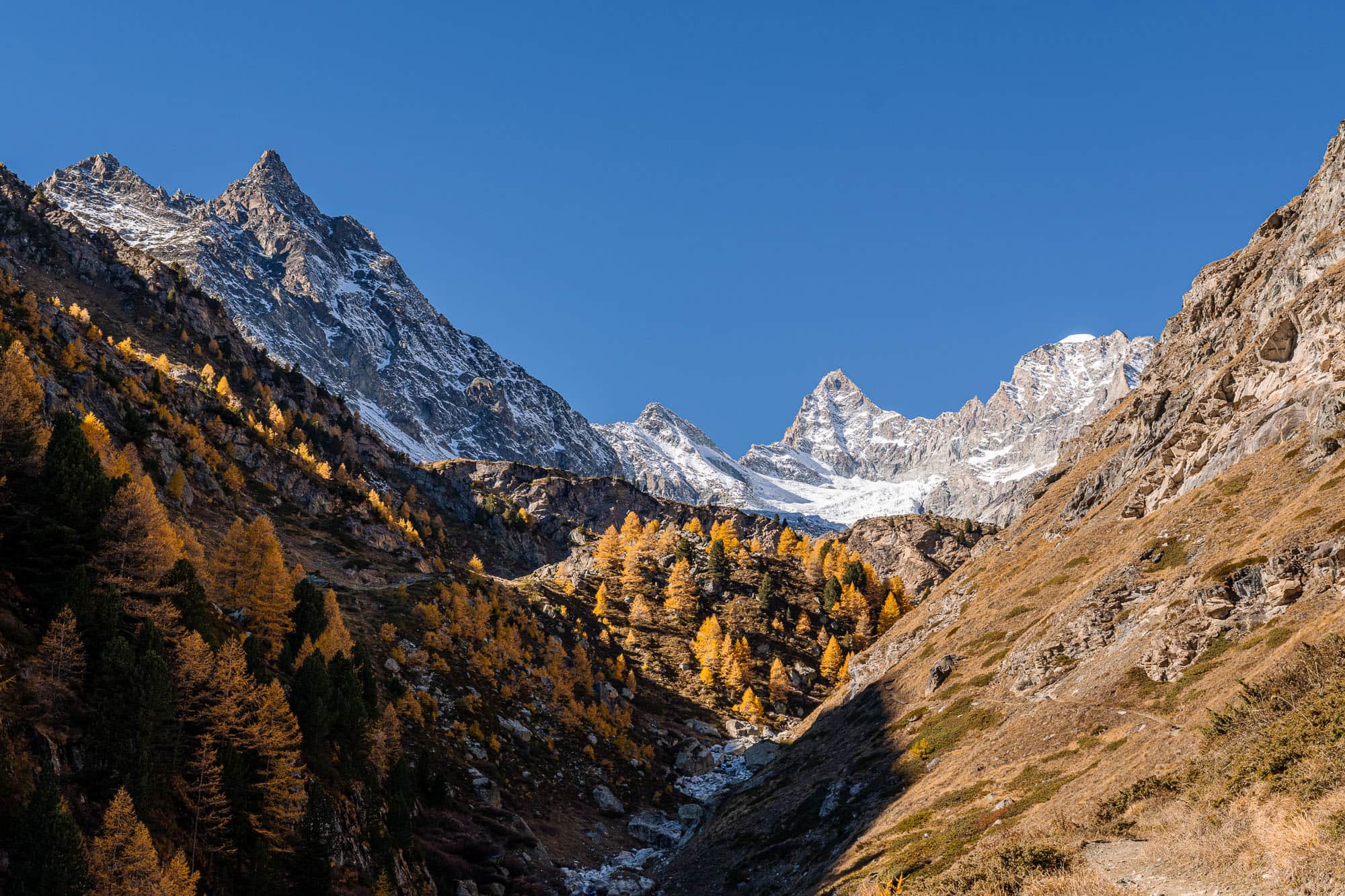
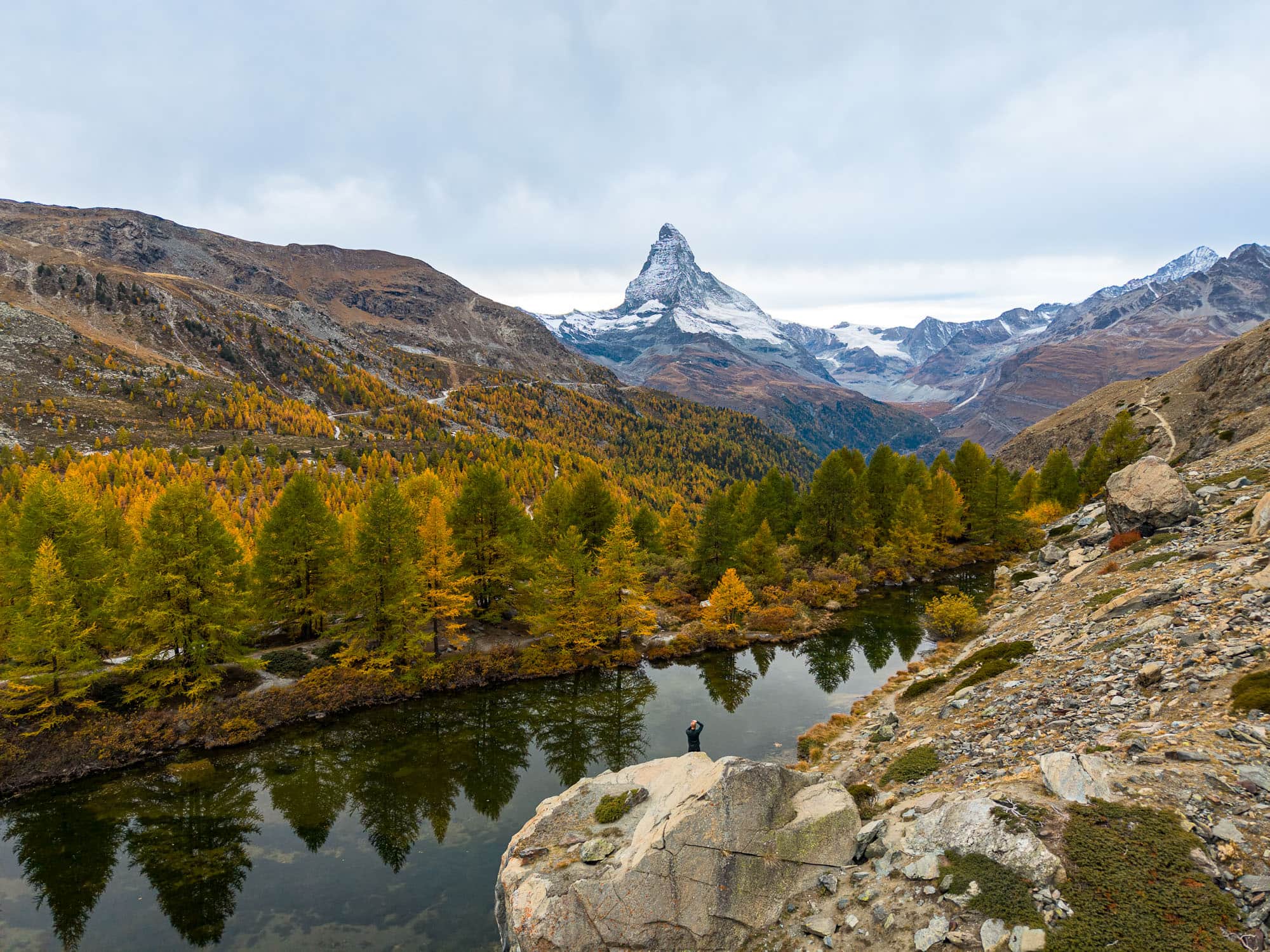
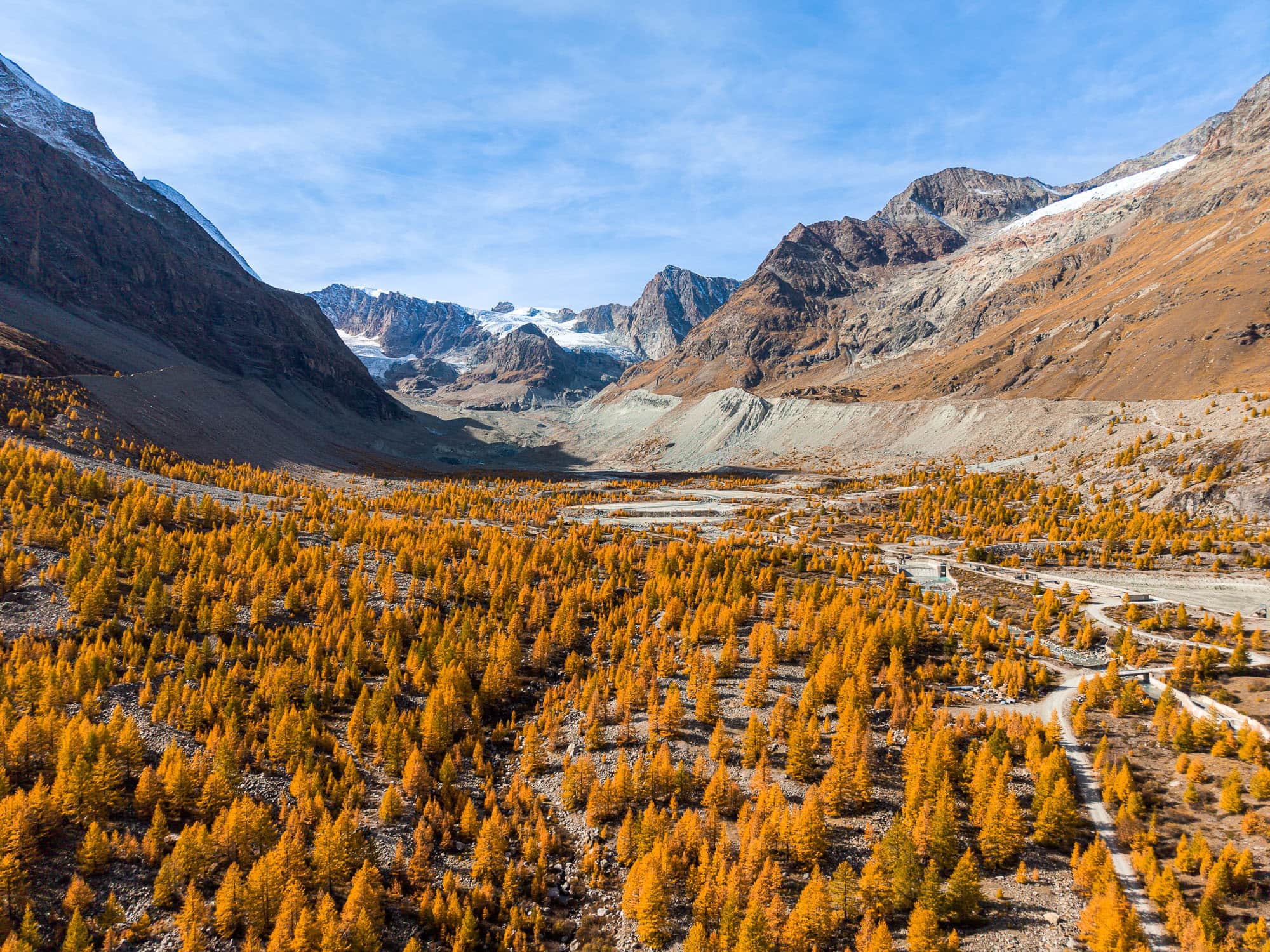
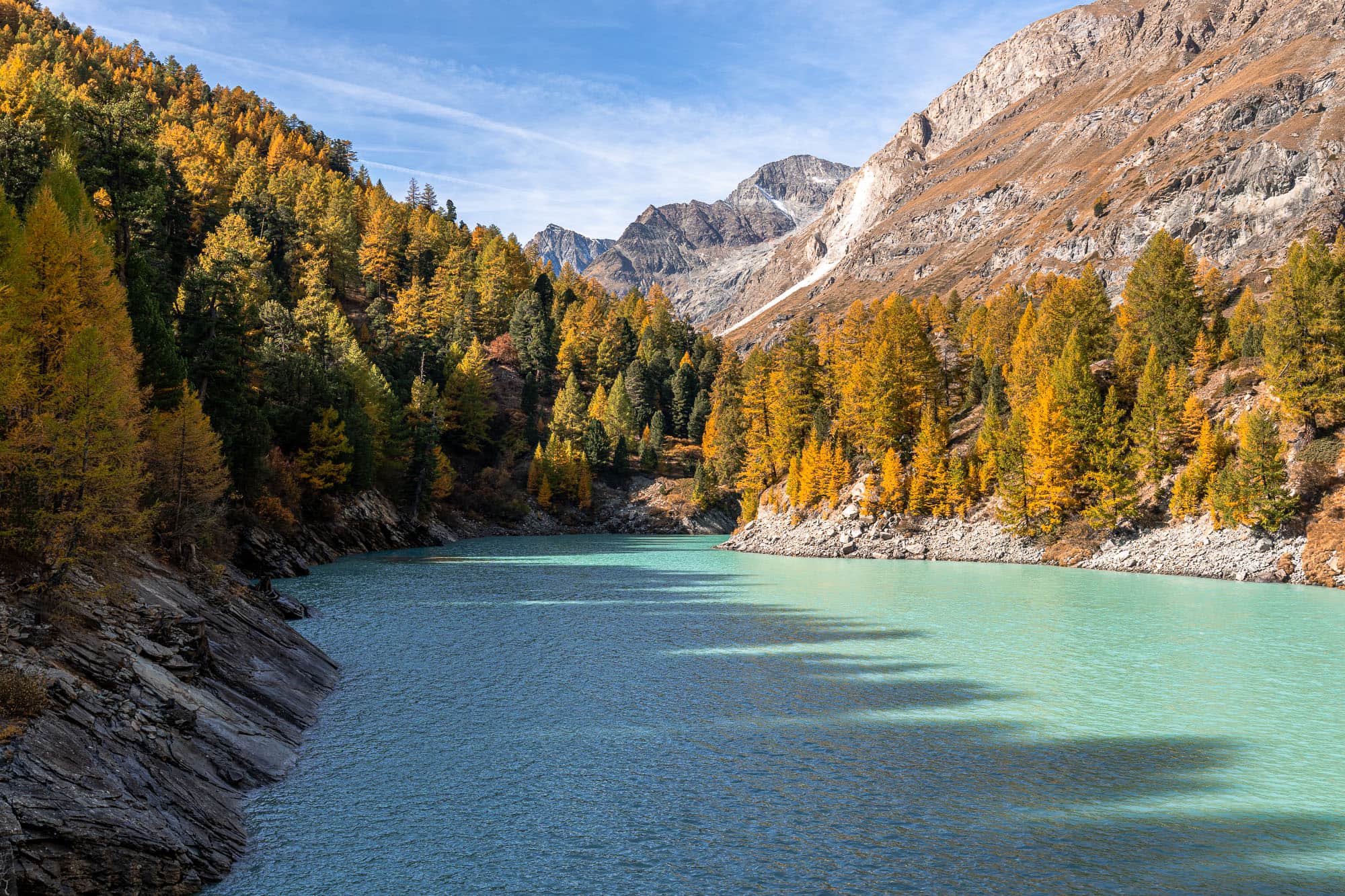
In the summer, it's hard to imagine how the scenery around Zermatt transforms into a panorama tinged with the golden yellow of larch trees during the fall months. But it happens every year between October and November.
It is a play of colors perfectly orchestrated by nature: blue skies, snow-capped mountains and glaciers, and golden-yellow larch trees. Add to that deserted hiking trails and, often, stable weather with plenty of sunshine and hardly any fog.
Photography Workshops
It’s not just photographers who take part in our photo hikes and photography workshops around Zermatt. Above all, they are people who love fall and want to improve their photography skills in a relaxed atmosphere with tips from an internationally acclaimed photographer—while having lots of fun and taking in new sights around the Matterhorn.
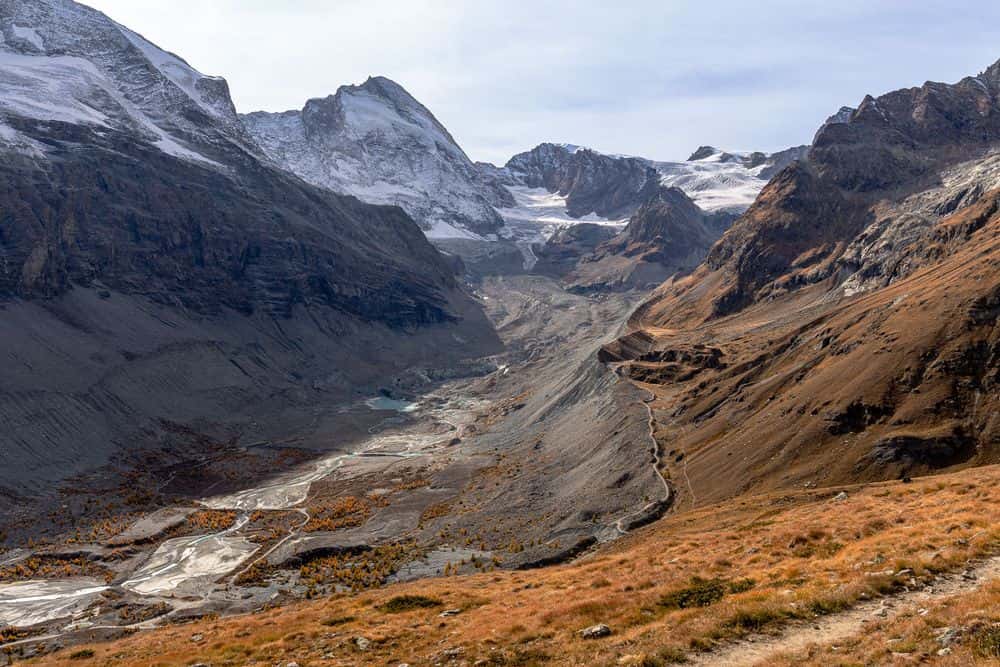
The Zmutt Glacier is the final extension of the Stockji Glacier, the Tiefmatten Glacier, and the Schönbiel Glacier, stretching below the Schönbiel Hut of the same name toward the small mountain village of Zmutt. In the expansive area around the Stafelalp, sparse larch forests predominate instead of glacial ice—all in the shadow of the massive north face of the Matterhorn.
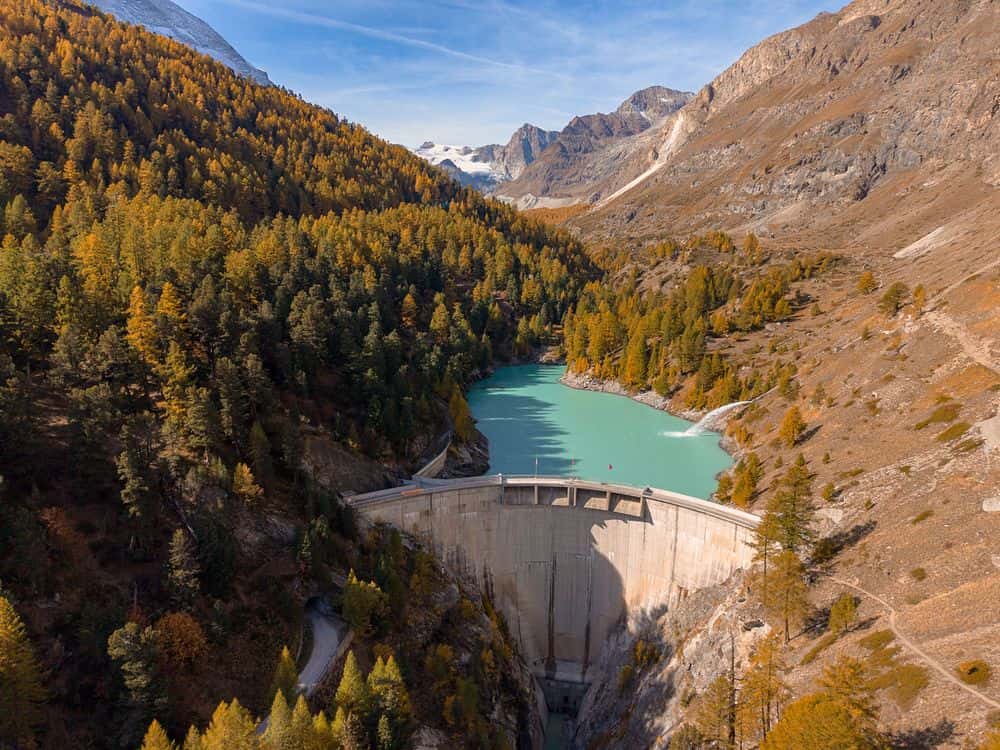
The dam, which is approximately 74 meters high, impounds water from the Zmutt Glacier and the Zmutt Stream to generate electricity. The water is channeled from the Z’Mutt pumping station as part of a vast system in the Valais Alps. The turquoise-green reservoir is a popular hiking destination and is framed by larch trees in the fall.
Where are the larch trees around Zermatt?
The valley has two sides, and they are popular to different degrees.
The Findeln side is the better-known one. From Winkelmatten, the trail leads up through the forest to the hamlet of Findeln, and beyond it, the open larch-covered slopes stretch from Eggen all the way to the lakes. Here you’ll find the classic view that most people are looking for: a larch tree in the foreground, the Matterhorn behind it, and nothing in between. Even in October, most people are out and about on this side, though there are still very few visitors during these autumn weeks.
The Zmutt side, west of the village, is known to far fewer visitors. On the way toward Schönbiel lies the hamlet of Zmutt, with a dozen dark Valaisan houses, a small chapel, and a tranquility that has become rare in the rest of Zermatt. The larch trees here are more scattered and grow at lower elevations, but in return, the Matterhorn reveals itself from the north side and thus appears completely different—as a wall rather than a pyramid. Further up the valley, the landscape becomes more alpine; the forest ends, and you find yourself standing among moraines and glacial striations.
Tip
If you want to see both sides of the valley, visit them on different days rather than on the same day. The Findeln side is best in the afternoon and evening, because that’s when the sun shines directly through the larch trees there. Zmutt and the trail toward Schönbiel are better lit in the morning.
The First Snow on the Peaks
Starting in mid-October, it can snow at any time in Zermatt, and that’s good news for the atmosphere in the valley.
A larch forest bathed in golden hues is beautiful in its own right. But beneath freshly snow-covered four-thousand-meter peaks, it takes on a whole new character. The snow washes away the brownish hues of late summer from the peaks, tracing every ridge and every edge, and sets a cool white against the warm gold of the trees. Added to this is the sky, which, after a cold front, often takes on a depth usually associated with winter. These three colors together can only be seen during these few weeks.
The most beautiful moment is when the snow falls all the way down into the trees and still lies on the north-facing sides of the branches the next morning. This rarely lasts longer than half a day, and anyone out there at that time has seen something that most visitors to this valley will never get to see.
In practical terms, however, fresh snow also means that the trail is no longer exactly the one shown on the map. After frosty nights, shaded sections are frozen solid, rock slabs become slippery, and carrying a pair of lightweight crampons in your backpack is a good idea starting in mid-October. You can find them at any sports store in the village.
Why Zermatt Is So Quiet in the Fall
Every year, Zermatt welcomes many times its population, and these guests are spread out very unevenly throughout the year. There’s a peak in the summer and one in the winter, and everything in between is comparatively empty. October falls right into this gap.
You’ll notice this in several ways at once. In the village, you can find a table in the evening without a reservation. On the trails above 2,000 meters, you might encounter just a handful of people on a weekday. At the lakes, where thirty tripods are set up in August, you’ll be lucky to see two in October. And since the gondola isn’t running, no one is spreading out across the slopes from a mountain station.
Those seeking peace and quiet will find one of the quietest corners of the Alps in Zermatt during October and November—in a valley otherwise known for the exact opposite.
Mountain Railways Under Maintenance: Pros and Cons
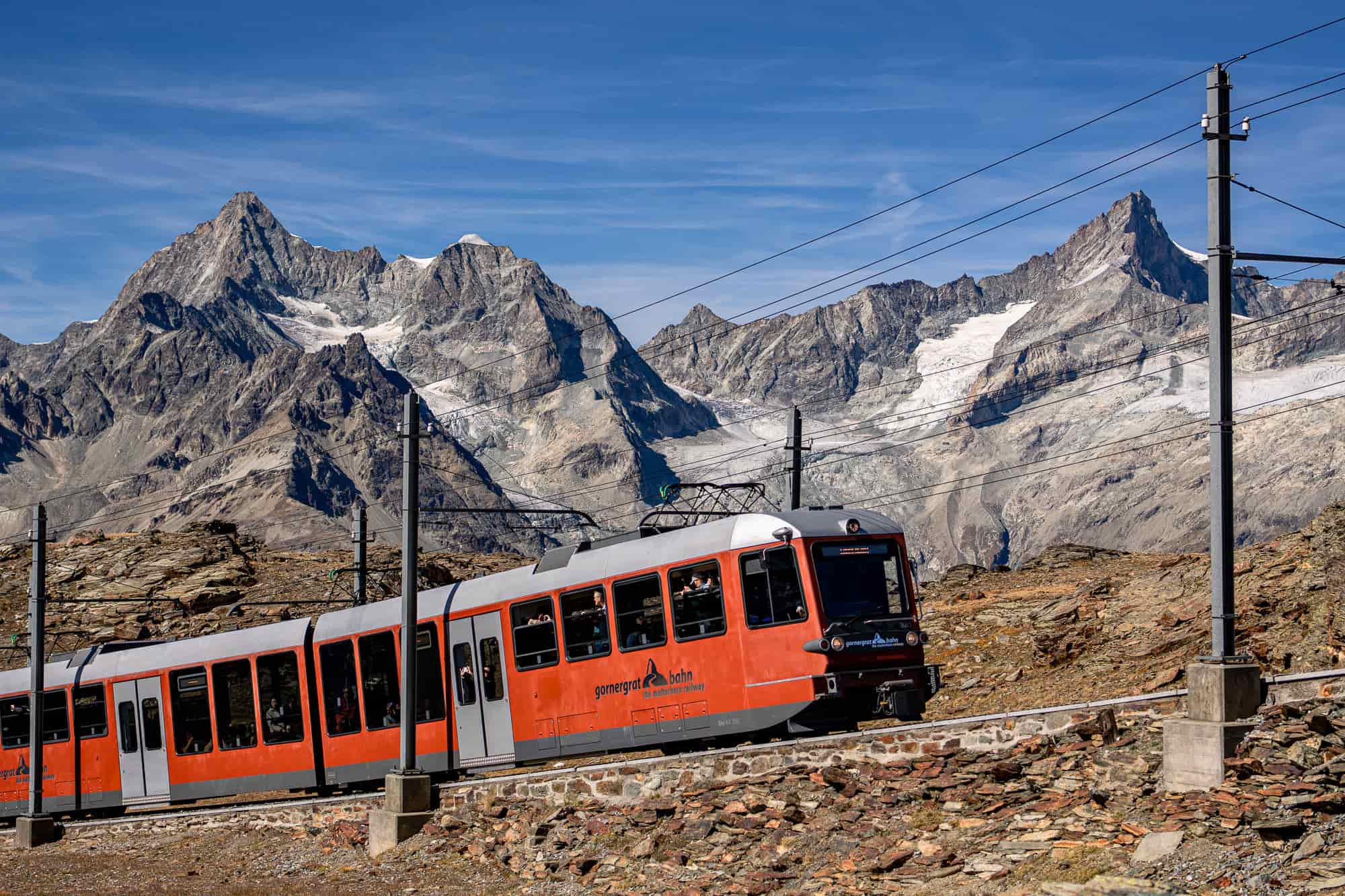
Summer service on the railways to the Sunnegga side usually ends in mid-October, while service on the higher sections ends even earlier. After that, the railways are shut down for maintenance until the end of November. The Gornergrat Railway, a cog railway, operates year-round and is the only means of mechanical transport up the mountain during these weeks.
This coincides exactly with the peak of the larch foliage, and this serendipitous scheduling shapes the entire fall season in Zermatt.
Pros
- You’ll be largely alone on the trails, even at popular spots
- No gondola noise, no announcements, no groups
- The lakes are peaceful because no one is coming up by gondola
- There are no gondola costs, which makes a day of hiking noticeably cheaper
Cons
- You’ll have to hike the elevation gain that the gondola handles in summer; on the Sunnegga side, that quickly adds up to 700 to 800
- The mountain restaurants close when the cable car stops running—and some even earlier
- There are no places to stop for a break, no coffee, and no lunch along the way
- For a scenic ride with a short walk, this side of the valley is the wrong choice in October
So if you’d rather not climb too much, it’s best to plan your trip on the Gornergrat side. The cogwheel train takes you up to Riffelalp at 2,200 meters—right into the heart of the larch forest—without you having to climb at all.
Zermatt Mountain Railways
You can find information about the open mountain railways in Zermatt on the Matterhorn Glacier Paradise website.
You can find information about the Gornergratbahn on the Gornergrat website.
What Else Changes in Fall
The water becomes clear and still. In summer, glacial streams cloud every lake in the watershed, and the meltwater keeps the surface in motion. By October, hardly anything is melting anymore; the streams are low, and the lakes often lie there as clear and calm as they never do in July. For reflections, fall is therefore the best season—provided the wind cooperates.
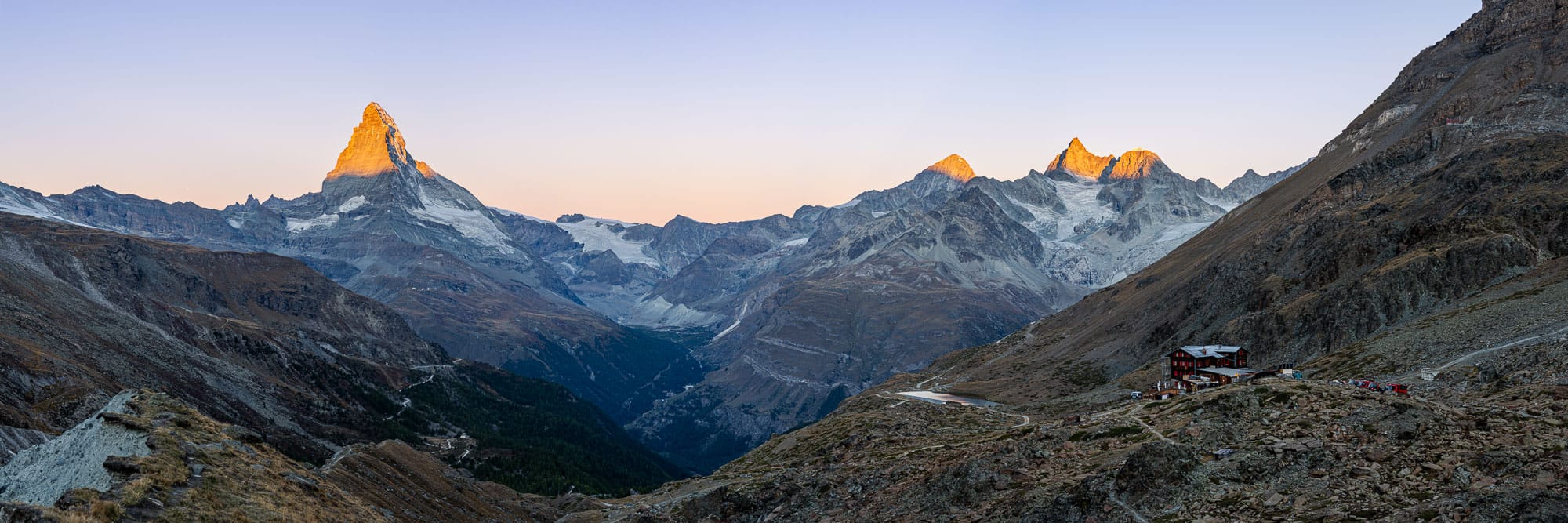
The sun is low in the sky and sets early. Zermatt lies in a narrow north-south valley between high slopes. In October, the valley floor loses direct sunlight long before actual sunset, while it remains light and warm much longer up above. So if you want to experience the most beautiful part of the day, you should be up high when others are already back in the village—and pack a headlamp for the return trip.
Zermatt lies above the fog. While the valley floor of the outer Rhone Valley is often shrouded in a gray blanket for weeks on end in the fall, Zermatt—at 1,600 meters—is usually above it. The journey through the high fog and the moment when the train emerges into the sunshine are part of the experience and are one of the reasons why autumn days in Valais are so reliably beautiful.
The animals are less disturbed. As the mountain summer comes to an end, tranquility sets in, and with it, the chances of spotting wildlife increase. Chamois and ibex on the slopes, golden eagles soaring over the moraines, and, after fresh snow in the morning, tracks that no one has yet smudged. Of course, there’s no guarantee, but the likelihood is significantly higher in October than in August.
The nights are long and dark. Above the village, there’s practically no light pollution, and in October it gets dark as early as half past six. So you don’t need to stay awake half the night to see a starry sky over the Matterhorn.
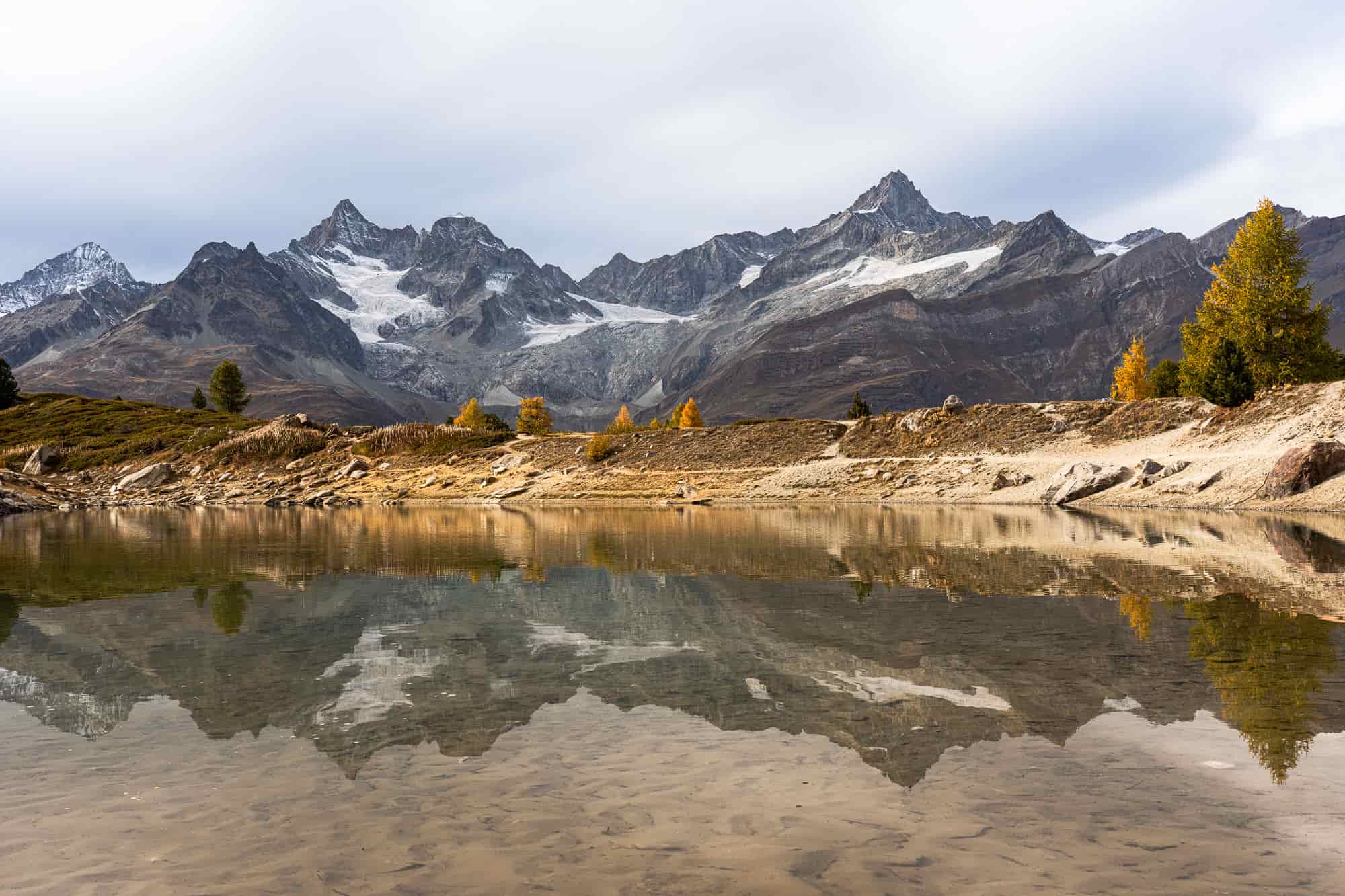
The Most Beautiful Places Around Zermatt in the Fall
It’s hard to sum up Zermatt in the fall in just one itinerary, because so much depends on snow conditions, weather windows, and the length of the day. It’s more helpful to know the different spots and then decide what fits the day and the forecast.
On the map, you’ll find the places that are especially worth visiting during these weeks. Click on a marker to find out what to expect there, how high it is above sea level, and what to keep in mind in the fall.
What is open in October and November?
This question will shape your day more than the weather forecast does. The patterns below are reliable, but the exact dates change every year and are worth checking before you book.
| October | November | |
|---|---|---|
| Gornergrat Railway | running | running |
| Sunnegga and Rothorn | until mid-October, then maintenance | closed |
| Matterhorn Glacier Paradise | limited, please check | limited, please check |
| Mountain restaurants in Findeln | close with the lifts | closed |
| Berghaus Fluhalp | usually until mid-October | closed |
| SAC huts around Zermatt | usually closed already | closed |
| Hotels and restaurants in the village | some businesses closed | small selection |
| Shops, sports stores, pharmacy | open | open |
| Matterhorn Gotthard Railway from Visp | running | running |
How to plan around this. Check the operating calendar of the Zermatt lifts before you book, along with the opening dates of your accommodation. And assume that you cannot buy anything up on the mountain: a litre of tea in a thermos, something to eat, a headlamp, a warm layer and, if conditions call for it, a pair of spikes belong in every rucksack during these weeks, even on a day with a perfect forecast.
Down in the village, supplies are no problem at all. Supermarkets, bakeries, sports shops and the pharmacy are open, and if your jacket turns out to be too thin, you will find a better one on the spot.
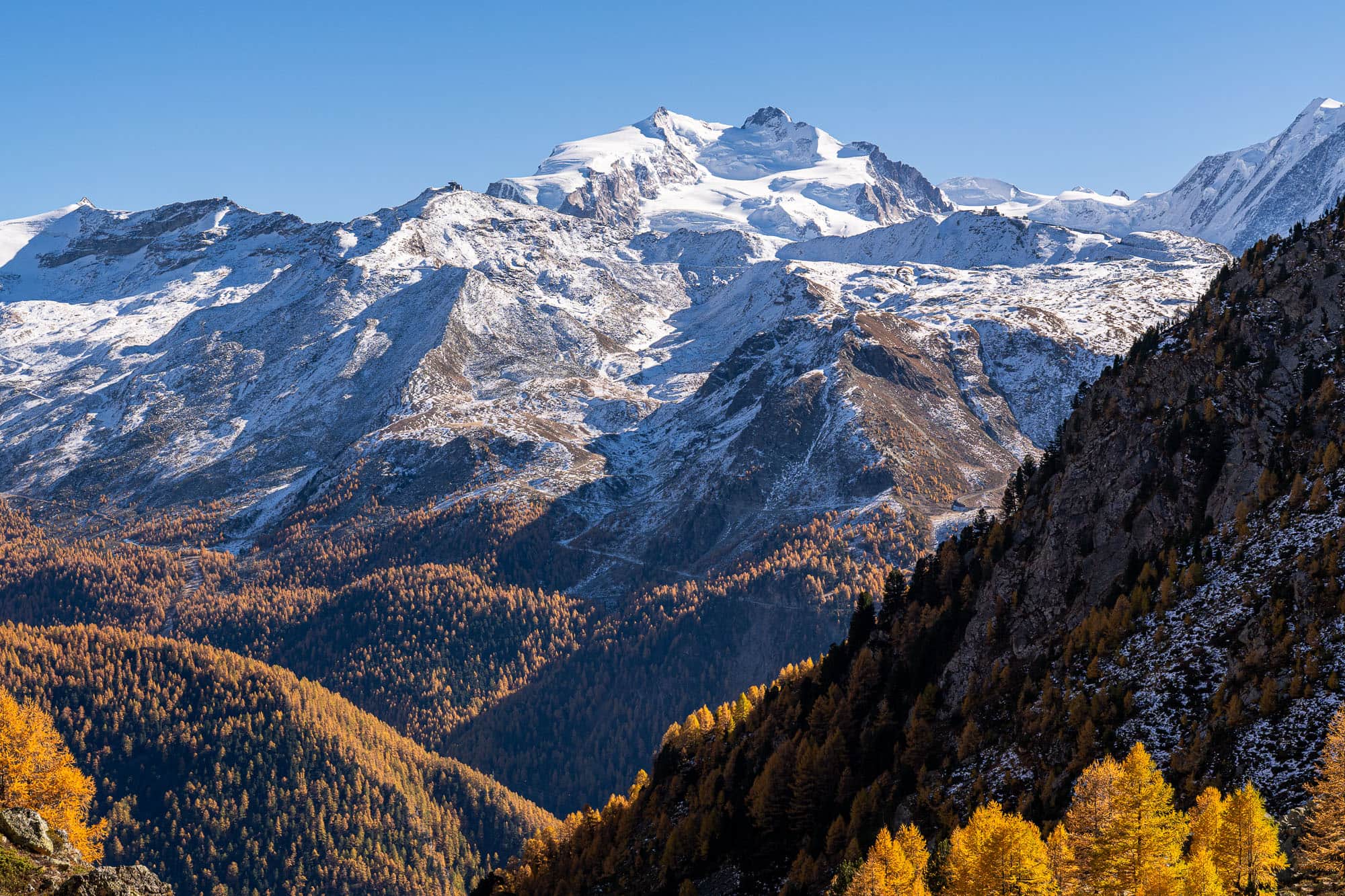
Cheaper accommodation in the shoulder season
Zermatt is not one of Switzerland's budget destinations, but in autumn it becomes considerably more affordable. The shoulder season sits between two high seasons, and that shows up in the price lists. Come in October and you will pay noticeably less for the same room than in August or February, you will more often get a view of the mountains, and you rarely need to book months ahead.
The flip side is described above: some businesses close altogether during these weeks, because hotels and restaurants use the gap for renovations and holidays. That does not leave the village empty, it simply means a smaller choice, and your favourite restaurant from the summer may well be shut. In return you get a mountain with hardly anyone on it.
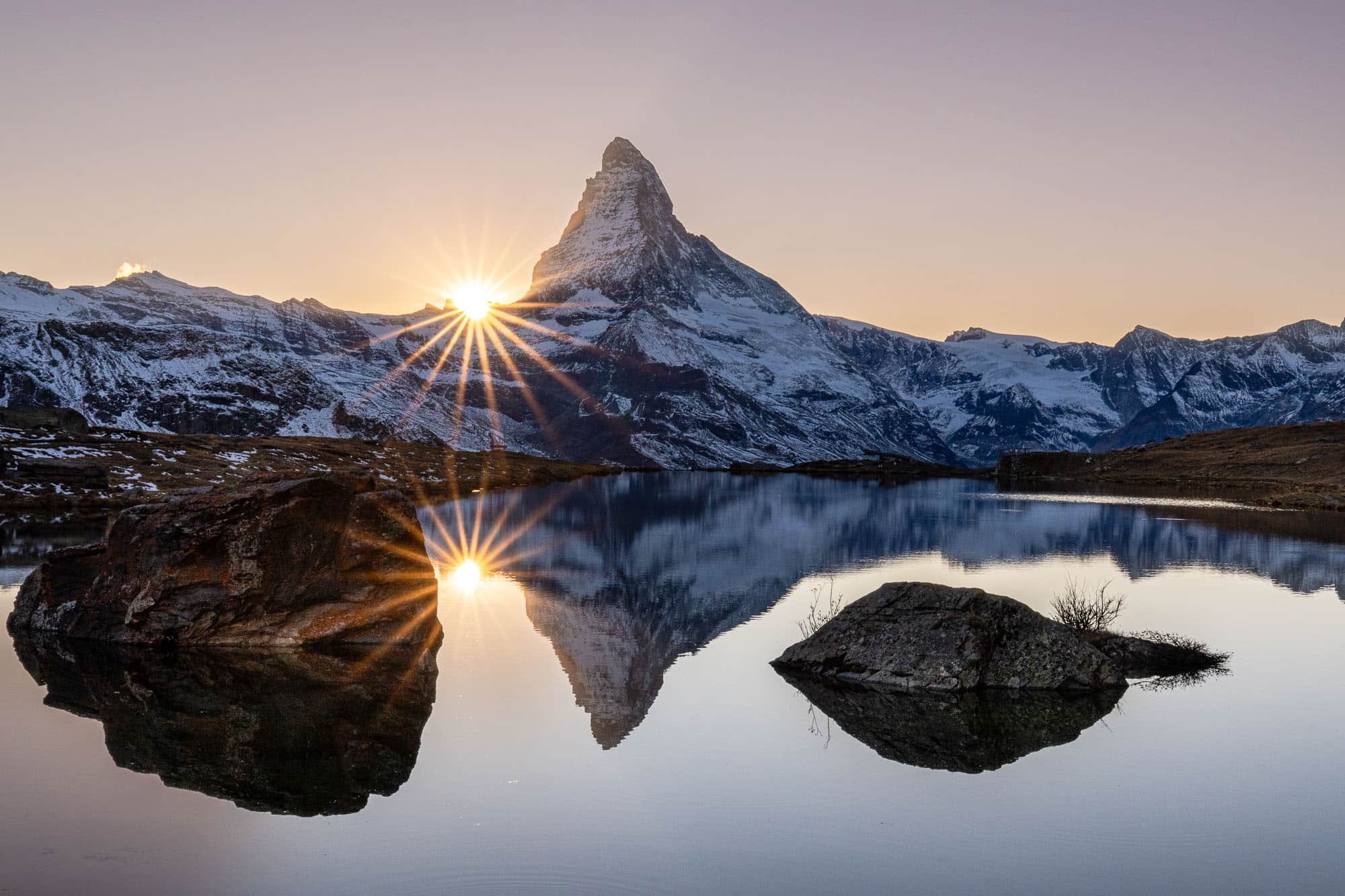
Photographing Zermatt in autumn
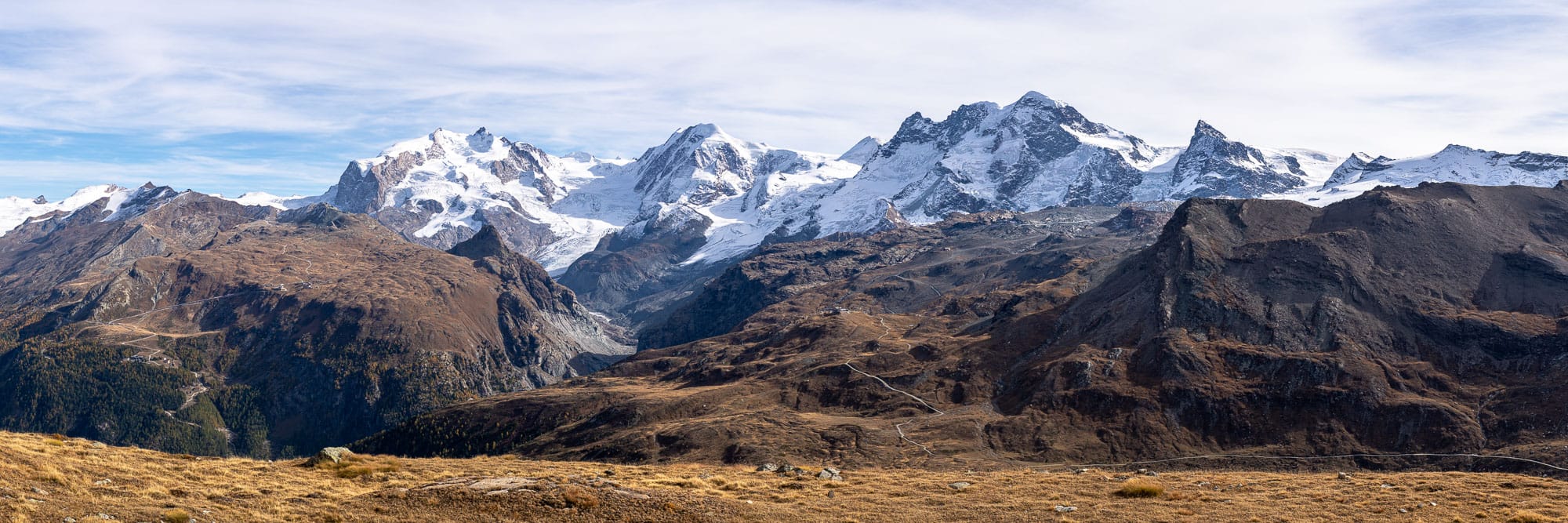
For photographers, these weeks are the strongest window of the year in Zermatt. The sun sits so low that raking light works for hours instead of twenty minutes. The gold of the larches and the white of fresh snow appear in the same frame. The lakes are clear and often mirror-smooth. And after a cold front the air is so clean that the Mischabel range looks close enough to touch.
Three things will help you most in these conditions:
- Work with the backlight. Larch needles are thin enough for light to pass right through them, and that is exactly what creates the glow. Position yourself so that the sun sits behind the trees or just off to the side, and expose a little on the darker side so the bright needles keep their detail.
- Give the mountain a foreground. The Matterhorn on its own makes a postcard that already exists a million times over. A larch branch, a lakeshore or a single tree in the foreground turns it into your picture. In autumn that foreground also happens to be colourful, which it never is otherwise.
- Let the cold shadows stay cold. In autumn light, snow in the shade turns blue while larches in the sun glow warm yellow. That contrast is the picture. Correct it away with the white balance and you take away the very thing that makes autumn autumn.
And one more observation from several autumns in this valley: the best picture of the day rarely happens at the well-known spot, but twenty minutes before or after it, when the light does something nobody saw coming.
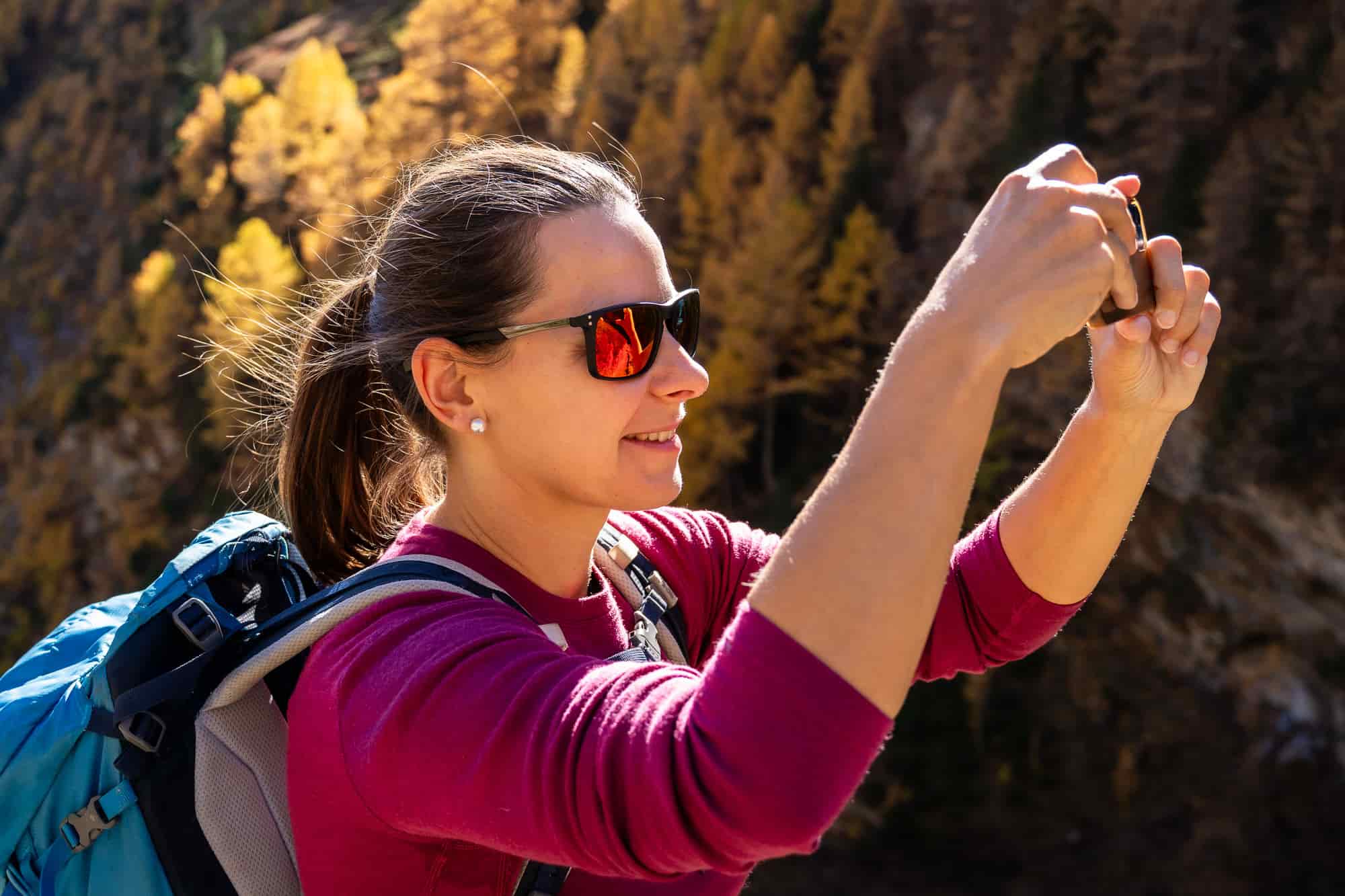
Photo workshops in Zermatt
Would you like to photograph the golden larches at the Matterhorn yourself, without having to think about timing, trail conditions or the walk back in the dusk? At beAnywhere you will find the guided photo hike, which deliberately starts in the afternoon and ends at dusk, along with further photo workshops in Valais. Just get in touch and we will plan your day in the autumn mountains together.
Travelling sustainably in the shoulder season
A trip in October takes pressure off a valley that reaches its limits in summer and in winter. You fill a bed that would otherwise stand empty, eat in a restaurant that would otherwise be half full, and walk a trail that nobody else is on. It costs you nothing beyond the willingness to take your holiday in autumn, and for the place itself it is by far the more sustainable distribution.
Getting there fits the same logic. Zermatt is car-free, and the valley is fully served by public transport via the Matterhorn Gotthard Railway from Visp. If you come by car, you leave it in Täsch and change to the train. This trip works entirely without a car, and not as a sacrifice but as the more comfortable option.
One point that matters more in autumn than in summer is leaving wildlife undisturbed. Chamois, ibex and birds are building up the reserves they need to survive the winter during these weeks, and every disturbance costs them energy they can hardly make up. So stay on the trails, even when the better angle lies off to the side, keep your distance, and resist startling animals for a photograph. This applies especially at dusk, when the animals are on the move and your headlamp makes you easy to spot.
And the entirely unglamorous part: take your rubbish with you, the mandarin peel and the tissue included. Up in the mountains there is nobody behind you to clear it away.
More than a season: Zermatt in autumn
Whether you come to hike, to photograph or simply to spend a few quiet days in one of the best-known mountain valleys in the Alps, autumn shows you a side of Zermatt that most visitors never see. Golden larches, fresh snow on the four-thousanders, clear air, still lakes and trails where you meet yourself rather than a group.
In return, this season asks a little more of you than high summer does. You climb the altitude yourself, you carry your lunch in your rucksack, and you come back down to the village in the dark. If none of that bothers you, what you get is a valley that feels, for these few weeks, as though it had been reserved just for you.
Questions? Answers!
In most years during the second half of October, with the colour starting high up and working its way down. For elevations between 2000 and 2300 metres, the window from 10 to 25 October is a usable guideline. The village itself turns one to two weeks later.
The Gornergrat Railway runs all year round. The lifts on the Sunnegga side usually go into maintenance in mid-October and stay closed until the end of November, with the higher sections shutting down earlier. Check the current operating calendar before you travel.
For hiking, photography and peace and quiet, October is the strongest time of the year. For panoramic lift rides, glacier tours with lift access or a stop at every mountain restaurant, it is the weakest. So it depends entirely on what you have in mind.
November is the quietest time of the whole year. Up high the larches are done, in the forest between the village and Riffelalp they are often still turning, and the first real snow reaches the valley. If you are after absolute quiet and can live with a small selection of open businesses, these weeks give you a Zermatt that hardly anyone knows.
Down in the village usually not, up high it is possible at any time. Expect temperatures around freezing in the morning, fresh snow from roughly 2500 metres and icy sections in the shade. Warm, windproof clothing, boots with a good sole and a headlamp belong in every rucksack.
Yes, accommodation in the shoulder season is considerably cheaper than in high season. In exchange, some businesses close altogether during these weeks.
No. Zermatt is car-free and reachable by train from Visp. If you arrive by car, you park in Täsch and change to the train there.
Yes. At beAnywhere you will find guided hikes and photo workshops around Zermatt, and in autumn above all the photo hike to the golden larches at the Matterhorn.