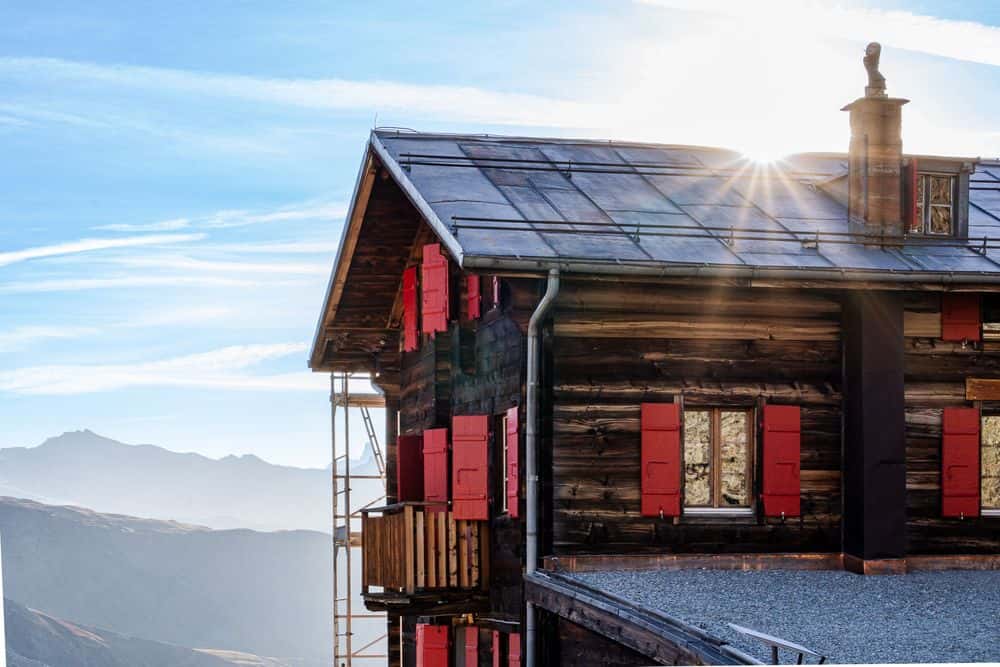
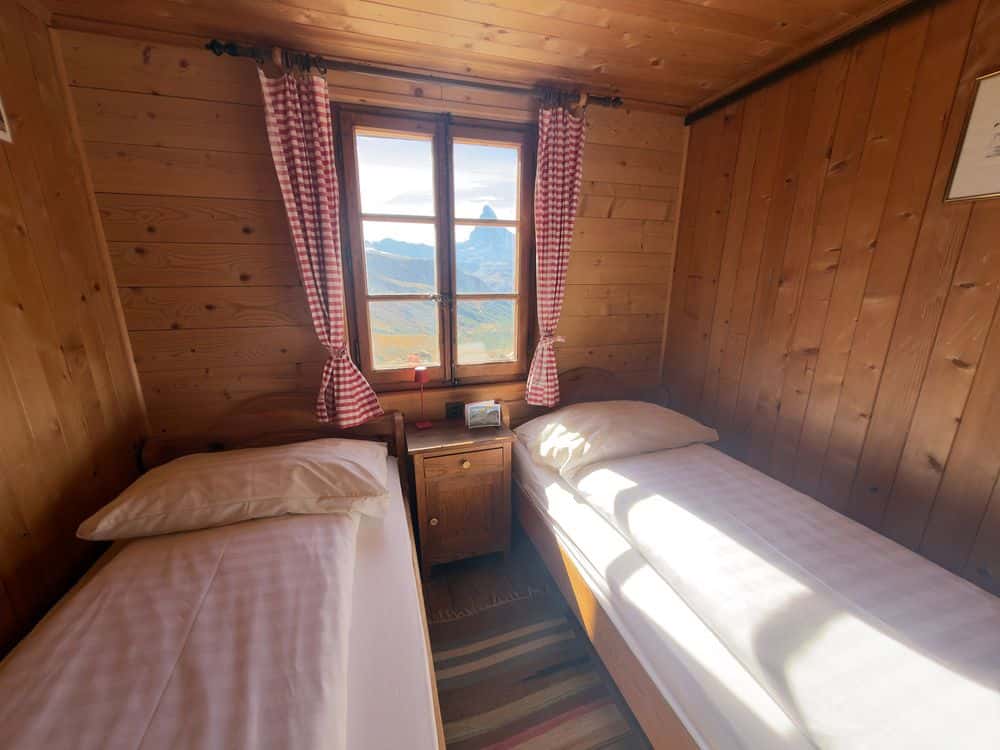
That's exactly what this weekend is for. We'll be staying in a room, not in a dorm; bedding is provided, there are showers, and you don't need to bring anything you don't already have. For most of the people coming along, this will be their first time spending the night at this altitude.
+9
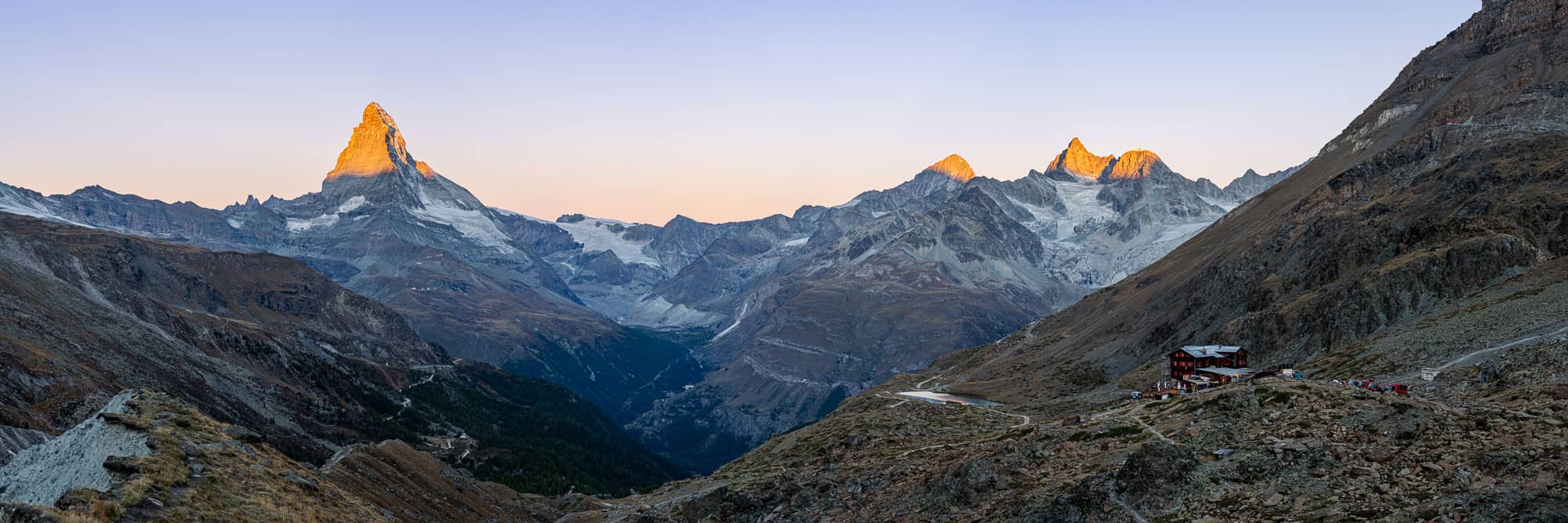
Two days high above Zermatt, one night at 2,620 meters, and the Matterhorn so close that you can look out at it in your pajamas in the morning. Without the 1,000-meter climb that usually goes with it.
There are two ways to see the Matterhorn. One takes four hours, costs the price of a train ticket, and ends with the last train down to the valley. The other doesn’t begin until that train has left.
This hike in Zermatt is the second kind. On the first day, we hike along the Europaweg high above the valley toward Sunnegga, with the mountain right in front of us the whole time, and arrive at Fluhalp in the afternoon. Stellisee is a fifteen-minute walk away, and since we’re sleeping up there, we’ll be there in the evening when the last light falls on the north face, and in the morning when the first light appears. In between, we’ll enjoy dinner, a private room instead of a dormitory, and a starry sky unlike anything you’d see down in the valley.
On the second day, the landscape changes completely. Across the moraine of the Findel Glacier, past Lake Grindji and Lake Grünsee, then up a trail that hardly anyone takes, all the way to the Gornergrat. From there, we take the cogwheel train down. No 1,500-meter descent—which no one will miss.
Your benefits
- Taking a taxi up and the train down saves you from the two sections that you’ll only feel in your knees later on. What remains are two days at high altitude.
- A room instead of a dormitory. Linens are provided, a sleeping bag isn’t necessary, and you don’t have to listen to anyone snoring. Of course, you can take a shower, too.
- Sunset and sunrise at Stellisee. Just fifteen minutes from your bed, while everyone else arrives by gondola at 9:30 a.m.
- Two completely different days: Day one is the Balkonweg trail with the Matterhorn; Day two features glaciers, moraines, mountain lakes, and the view from the Gornergrat of the Monte Rosa massif.
- Very small group, two to six people. The tour takes place with a minimum of two people; upon request, you can of course book it on your own.
- Edited photos of you along the way are included. This isn’t a photography course, but simply a guide who happens to be a photographer.
- Led by Falko Burghausen, a certified mountain guide (in training) and a landscape photographer who has won multiple international awards.
CHF 650
from 4 to 6 peopleCHF
Dates
2 days
Available on request
The most beautiful moment isn't the sunrise at Stellisee. It's the evening before, when the last train has left and suddenly there's no one left but us and the mountain.
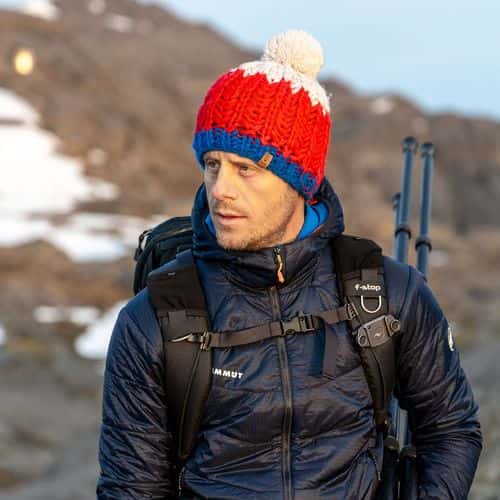 Falko Burghausen
Meeting point
Zermatt main stationParticipants
Min. 2, max. 6 participants per guide
Course language
English, German, French (upon request)
Included services
- Guided tour on both days led by Falko Burghausen
- Mountain taxi from Zermatt to Täschalp
- Overnight stay at Berghaus Fluhalp in a double or triple room with half-board
- Descent by the Gornergrat Railway from Riffelberg to Zermatt
- Edited photos of you taken along the way, delivered digitally within ten business days
- Organization of the lodge reservation, including arrangements for meals and allergies
Your guide
Falko Burghausen
Hiking Guide (in training). Internationally awarded Photographer. Swiss Athletics Trail Running Instructor.


Personal advice
Do you have any questions? I will be happy to advise you on this travel offer.
PDF Download
Requirements
Technique
Fitness
Distance11 km
Duration6h
Ascent700 m
Descent400 m
Day 1: Täschalp, Europaweg, Stellisee, Fluhalp
We meet in Zermatt in the morning and take the mountain taxi up to Täschalp. This isn’t a matter of convenience, but a deliberate choice: The 1,000 meters of elevation gain from the valley is a forest trail, and it takes exactly the kind of energy you’d be better off saving for the climb up.
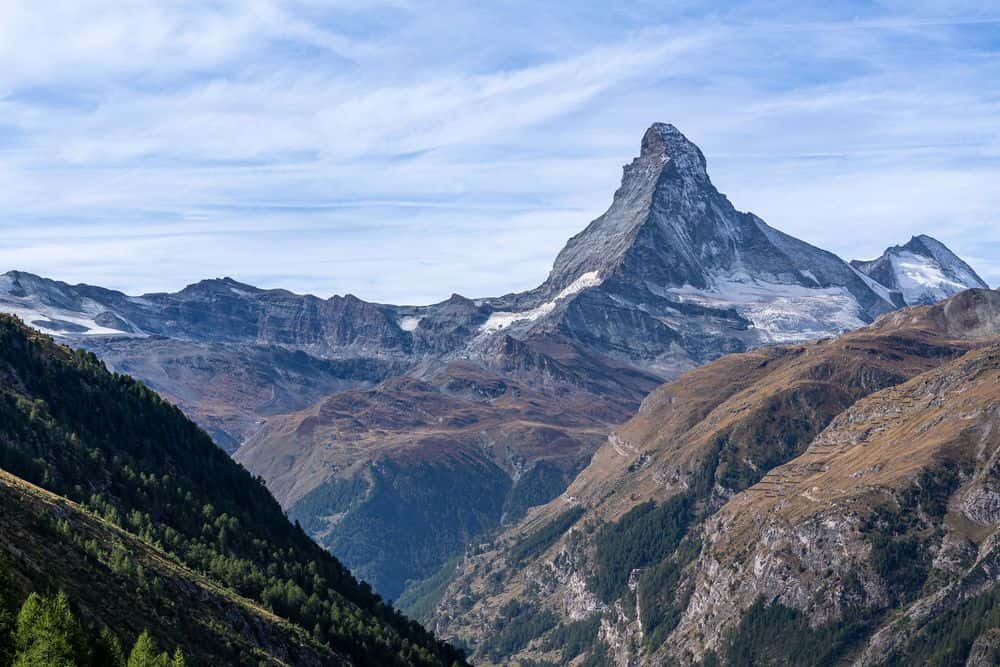
From there, the Europaweg winds its way like a balcony trail above the Mattertal toward Zermatt. The Matterhorn comes into view right from the first bend and stays with us all day. We walk slowly, stopping wherever it’s worth it, and if the afternoon is warm, we sit somewhere for half an hour longer than planned.
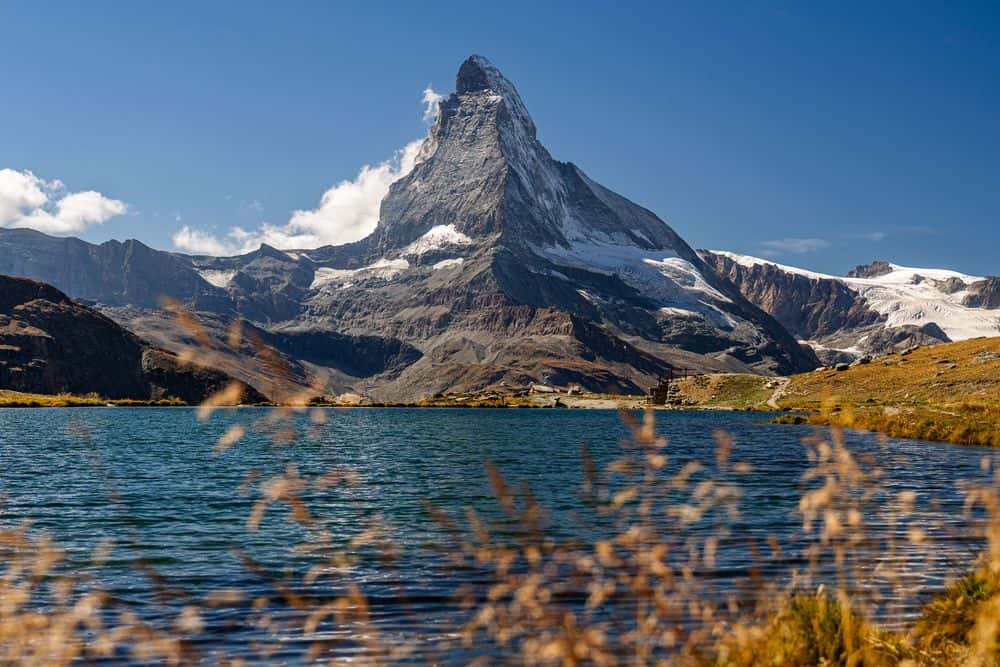
From Sunnegga, the trail leads up to Stellisee, the lake with the most famous reflection of the Alps, and from there in fifteen minutes to Fluhalp at 2,620 meters. Check-in, shower, sun terrace. In the early evening, we head back to the lake once the day-trippers have left and the east face of the Matterhorn catches the last light. Dinner at half past six, and afterward, if the sky is clear, a view upward that you’ve forgotten about in the Swiss Plateau.
About 11 km, roughly 400 to 700 meters of elevation gain depending on the route, 4 to 6 hours including breaks.
Day 2: Findel Glacier, Three Lakes, Gornergrat
If you’re up for it, get up early and head back to Stellisee. In September and early October, the sun rises around the same time breakfast begins at Fluhalp—it almost seems too perfect. Those who’d rather sleep can sleep in.
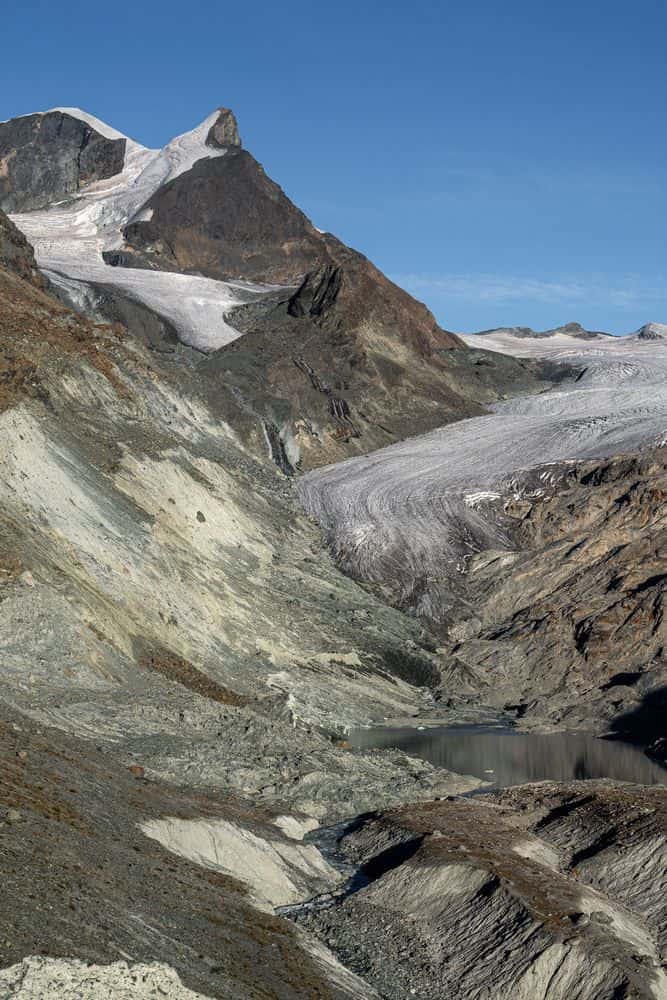
After breakfast, we cross the moraine of the Findel Glacier to where the meltwater has formed a delta of gray channels and gravel banks. This is a landscape unlike anything in the valley, and one that changes from year to year as the glacier retreats. Then down to Lake Grindji, framed by larch trees with the Matterhorn peeking through the gap, and on to Lake Grünsee.
There we leave the “hiking highway” section behind. The trail up to the Gornergrat is steep, quiet, and rarely used because it makes the hike longer. That’s exactly why we’re taking it. At the top, Lake Gornergrat awaits, followed by the ridge itself at just under 3,000 meters, with the Gorner Glacier, the Dufourspitze, and a string of four-thousanders too numerous to count in a single day.
From there, head down to Riffelberg and take the cogwheel train back to Zermatt. You’ll be back in the valley by the afternoon and home by evening.
About 10 km, roughly 700 meters of elevation gain, 4 to 6 hours including breaks.
The price depends on the group size, with no fine print: The more of us there are, the cheaper it is for everyone.
- 2 people: CHF 890 per person
- 3 people: CHF 760 per person
- 4 to 6 people: CHF 650 per person
Single room supplement: CHF 120, subject to availability at the lodge.
The price includes the guided tour on both days, the mountain taxi to Täschalp, overnight accommodations with half-board, the descent with the Gornergrat Railway, and your photos. No additional mountain railway tickets are required—you won’t have to purchase any yourself.
And because no one else does it this way: If additional participants join after you’ve booked, you’ll automatically be moved to the lower-priced tier and receive a refund for the difference. Those who book first won’t end up paying more than everyone else.
Variants
My PureFlex tours without a specific date can be customized on request. Simply contact me using the request form.
2-Day Hike Around Zermatt
Overnight stay in a double room at Fluhalp
CHF 650Zermatt needs no introduction. The Matterhorn at the end of the valley is the most photographed sight in the Alps, and the village is correspondingly popular in the summer.
This loop takes in very little of that. The Europaweg is a long-distance hiking trail, not a day-trip destination; the moraine at the Findel Glacier isn’t featured in any brochure; and the ascent from Grünsee to the Gornergrat is rarely taken because it makes the hike longer. Between these sections lie the well-known spots—Stellisee, Grindjisee, and the Gornergrat—and we deliberately visit most of them at times when the trains aren’t running.
The area on the eastern side of the valley is geologically the more interesting half of Zermatt: the Findel Glacier, the Gorner Glacier, moraines, dead ice pits, and a series of mountain lakes, each with its own unique appearance. From the Gornergrat, you look out over the Monte Rosa massif, including the Dufourspitze—Switzerland’s highest peak—and one of the largest glaciers in the Alps. And the Matterhorn is always there, of course.
Take the train to Zermatt; meet at the train station. The trip takes three to four hours from Zurich, Bern, Basel, or Geneva. Drive to Täsch, park there, and take the shuttle to the village—it runs every 20 minutes.
The mountain taxi to Täschalp on the first morning and the descent on the Gornergrat Railway on the second afternoon are included in the price, so you don’t have to worry about that.
We’ll be back in Zermatt in the early afternoon on the second day, so the return trip on the same day is no problem. If you want to start the first day at a leisurely pace, arrive the night before; I’d be happy to give you a few recommendations for accommodations in Zermatt or Täsch.
We’ll be staying at the Berghaus Fluhalp at 2,620 meters. It’s a mountain hut, but a comfortable one: private rooms instead of dorms, linens provided, no sleeping bag needed, shared bathrooms and restrooms on each floor, and showers available for a small fee. Please bring your own towels and toiletries.
This package includes a double or triple room as standard. If you’d like to sleep alone, you can book the single-room supplement, provided the lodge has the capacity on your travel dates. Dinner is served at 6:30 p.m., and breakfast starts at 7:00 a.m.
Dogs are welcome in the rooms at Fluhalp for a small additional fee per night. Let me know when you make your request so I can include this in your reservation.
And to be honest: The Fluhalp isn’t a hotel. It’s cozy when there are lots of guests, the shower isn’t a spa oasis, and water is a precious resource. But in return, you’ll sit down to dinner with a view of a mountain that other people book trips across the globe to see.
Half-board is included: dinner and breakfast at the Fluhalp. The food is much better than you’d expect at 2,620 meters, and there are vegetarian options.
Please specify any allergies, food intolerances, or vegetarian/vegan dietary needs in your inquiry, and I’ll note them when making the reservation. It’s difficult to accommodate these requests at the last minute.
You’ll need to pack food and drinks in your backpack for both days while on the trail.
Essential
- Hiking boots with tread; ankle-high boots are recommended.
- A 25- to 30-liter backpack—that’s all you need.
- Rain and wind jacket, warm mid-layer, hat, and gloves. At 2,620 meters, it can get cold even in July.
- Sun protection: sunglasses, sunscreen, and a hat. The sun at high altitudes is no small matter.
- 1.5 liters of water per day, plus snacks for the trail.
- Towel and toiletries—the hut doesn’t provide them.
- A minimum of one change of clothes for one day.
- Headlamp.
- Personal first-aid kit, band-aids, blister plasters.
- Cash for drinks and showers at the hut, ID.
- Your camera or smartphone
Recommended
- Hiking poles, especially for the descent from the Gornergrat.
- Earplugs. A hut is a hut, even with a room.
- A spare battery or power bank
A sleeping bag or hut sleeping bag is not necessary; the Fluhalp provides bedding.
- Travel to and from Zermatt
- Meals and drinks along the way
- Drinks at the hut
- Shower at the hut (small fee payable on site)
- Single-room supplement
- Personal gear
- Insurance
Participants are responsible for their own insurance (accident, health, and liability). We recommend becoming a Rega supporter and purchasing trip cancellation insurance.
The tour will take place if the weather is stable. If thunderstorms, storms, or fresh snow are forecast, we will reschedule; rescheduling is free of charge up to 72 hours before the scheduled date; after that, the lodge’s cancellation policy applies.
CHF 650
from 4 to 6 peopleCHF
Dates
2 days
Available on request
The most beautiful moment isn't the sunrise at Stellisee. It's the evening before, when the last train has left and suddenly there's no one left but us and the mountain.
Falko BurghausenMeeting point
Zermatt main stationParticipants
Min. 2, max. 6 participants per guide
Course language
English, German, French (upon request)
Included services
- Guided tour on both days led by Falko Burghausen
- Mountain taxi from Zermatt to Täschalp
- Overnight stay at Berghaus Fluhalp in a double or triple room with half-board
- Descent by the Gornergrat Railway from Riffelberg to Zermatt
- Edited photos of you taken along the way, delivered digitally within ten business days
- Organization of the lodge reservation, including arrangements for meals and allergies
Your guide
Falko Burghausen
Hiking Guide (in training). Internationally awarded Photographer. Swiss Athletics Trail Running Instructor.
Personal advice
Do you have any questions? I will be happy to advise you on this travel offer.
PDF Download
Two Days with the Matterhorn
Switzerland – ZermattCHF 650
Non-binding request
Your non-binding request will bring you one step closer to your experience. I will get back to you shortly with further information on dates and the exact procedure and discuss the next steps together.
Questions? Answers!
Still have questions about the offer? I have compiled the most important information for you.
Four to six hours of walking per day, including breaks, with an elevation gain of about 1,100 meters spread over two days. Anyone who enjoys going on a day hike on Sundays can manage this. We’ll walk deliberately slowly.
The ascent from Grünsee to Gornergrat becomes steeper, rockier, and narrower in one spot. You’ll need sure footing there, but you don’t need to be completely free of vertigo. If you’re unsure, give me a call beforehand, and I’ll describe the spot in enough detail for you to assess it for yourself.
Yes, and many people do. The tour takes place as long as there are at least two bookings, so you may end up traveling with people you don't know. Experience has shown that this isn't an issue anymore after the first dinner at the cabin.
Subject to an additional charge and availability. The Fluhalp has only a limited number of rooms, so I can't guarantee it—I can only check availability. Please let me know right away when you request a reservation, not later.
Because I don't want to reserve beds that might not be used. That's unfair to the lodge, and in the end, it means you won't be able to get a spot there anymore. So: you tell me the date, and I'll check and confirm—usually within a day.
Sooner than you think. If there's room at the cabin and the weather's good, you can even book just a few days in advance.
July and August are the warmest and busiest months. September is my favorite: clear air, a quieter cabin, and the sunrise happens around breakfast time instead of in the middle of the night. In early October, it’s quiet and cold, and the first larch trees begin to change color.
If the weather is really bad—with thunderstorms or the onset of winter—we’ll reschedule. Rescheduling is free up to 72 hours in advance; after that, it depends on the lodge’s policies. Two days of fog with a risk of thunderstorms isn’t a good weekend for anyone, and the photos won’t turn out well either.
On the first day, we’ll pass two huts; on the second, we’ll pass one only at the very end. Be sure to bring enough food for both days and at least one and a half liters of drinking water. You can restock everything in the evening and in the morning at the Fluhalp.
Edited photos of you on the go, delivered as high-resolution JPGs via a download link within ten business days. You may use them for personal purposes, print them, and post them. This isn’t a photography course—it’s simply a bonus that comes with having a photographer as your guide. If you want to learn photography, you’re better off taking the photography workshop.
At Fluhalp, yes—for a small additional fee per night. Along the way, he must be able to handle the distance and altitude and interact calmly with wildlife and other people. Please include him in your request.
Starting at about age 14, accompanied by a parent, provided the child is physically fit. For younger children, the second day in particular is too long.
You'll only be carrying what you need for two days, which will fit in a 25- to 30-liter backpack. You can store larger luggage at the train station in Zermatt.
Pure Outdoor.
Discover our hiking trips and tours.Experience the impressive nature and breathtaking landscapes of the Alps and Scandinavia with us on our guided hikes.
Discover offers