No. Modern phones are very good in this light. What matters is where you stand and when you press the button, and that is what I am there for.
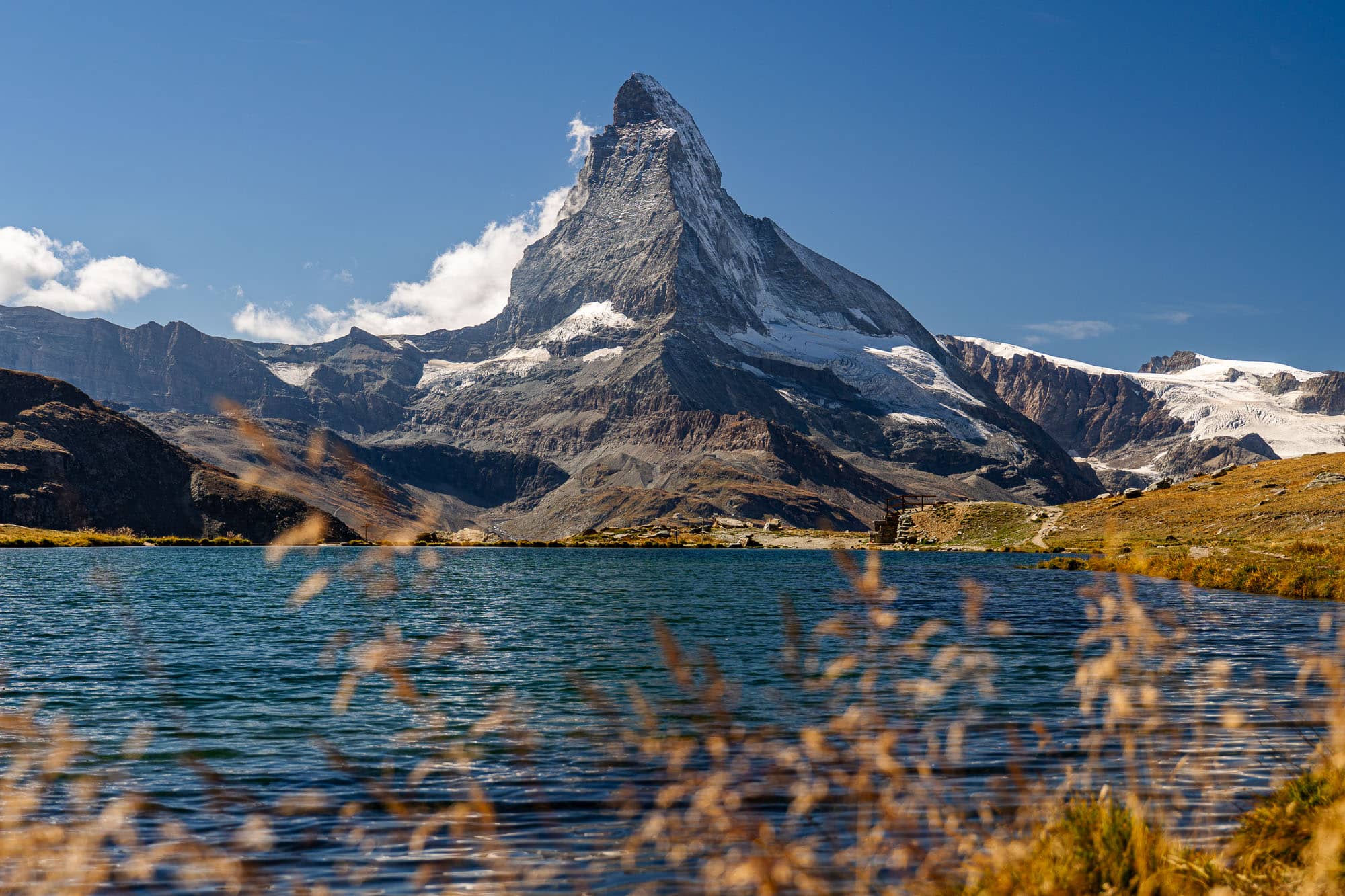
Everyone photographs the Matterhorn in the lake. Almost everyone does it at eleven in the morning, with thirty other people and a breeze on the water. We go in the afternoon, and we arrive at the best lake when the light is warm and nobody else is there.
There is one photo almost every visitor to Zermatt wants: the Matterhorn, reflected in a mountain lake. You have seen it before you came here.
Most people take it between ten and two. That is when the lifts bring everyone up, when the wind moves the water, and when the sun is high and flat. The photo is fine. It looks like everyone else's.
This tour runs the other way round. We start in the early afternoon, walk the five lakes in reverse, and reach the Stellisee, the famous one, in the evening. By then the day visitors are back in the village. The wind usually drops. The Matterhorn turns warm and gold. We stay as long as the light is good, then walk down through the old hamlet of Findeln into Zermatt.
You do not need a camera for this. A phone is fine. You do not need any experience. What you need is one free afternoon and evening, and normal walking fitness.
Your benefits
- You stand at the Stellisee in evening light, with almost nobody else there. This is the single reason the tour starts in the afternoon.
- Five mountain lakes, each one a different colour: clear, green, milky turquoise, deep blue. They are close together, and they look nothing like each other.
- Edited photographs of you in front of the Matterhorn are included. Not a selfie. A picture you will want to print.
- Your guide is a photographer with international awards. He shows you where to stand and what to look for, in simple words, while you walk.
- Phone, mirrorless or DSLR, all welcome. You work with what you have.
- Small group, two to six people. No rushing, no waiting in line for the view.
- The lift ticket up the mountain is included. There is nothing else to buy.
fromCHF 350
CHF
Dates
June through October
Individual appointments by arrangement
I have photographed the Stellisee at every hour of the day. The best hour starts after the last group has gone down.
 Falko Burghausen
Meeting point
Zermatt Main StationParticipants
Min. 2, max. 6 participants per guide
Course language
English, German, French on request
Included services
Guiding and photographic coaching by Falko Burghausen throughout the day
Funicular ticket from Zermatt to Sunnegga
Individual help with composition, light and finding your picture, while we walk
Edited photographs of you in front of the Matterhorn, delivered digitally within ten working days
A short review by email afterwards: send me your three favourite pictures from the day and I will give you honest feedback
Your guide
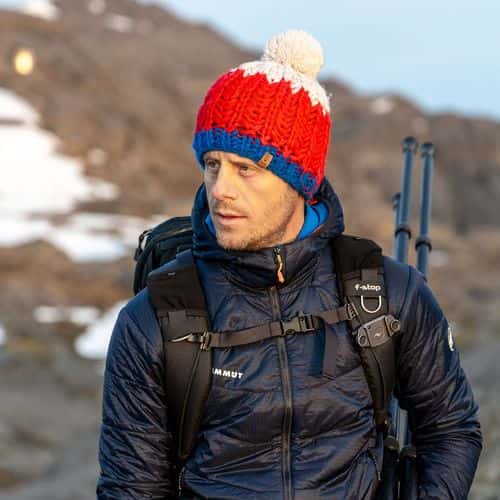
Falko Burghausen
Hiking Guide (in training). Internationally awarded Photographer. Swiss Athletics Trail Running Instructor.


Personal advice
Do you have any questions? I will be happy to advise you on this travel offer.
PDF Download
Requirements
Fitness
Technique
Distance13 km
Duration6-7h
Ascent450 m
Descent1000 m
A long but easy day on marked mountain paths: around 13 kilometres, 450 metres of ascent and 1,000 metres of descent, six to seven hours in total with plenty of stops. No climbing, no exposed sections, no experience needed. If you walk regularly, you will be comfortable.
The one thing to be aware of is the end of the day. The final descent into Zermatt is in dusk or darkness, on a wide path, with headlamps. It is part of the plan, not an accident.
We meet in the early afternoon at Zermatt train station. A short look at the weather and the plan, then we take the funicular up to Sunnegga at 2,288 metres. The ride takes less than five minutes and goes through the mountain.
From there we walk the five lakes in the opposite direction to everyone else. First the Leisee, right below the station, with the Matterhorn straight ahead. Then down to the Moosjisee, which is milky turquoise because it is fed by meltwater from the Findel glacier. It is a reservoir, not a natural lake, and it looks like no other water you have seen.
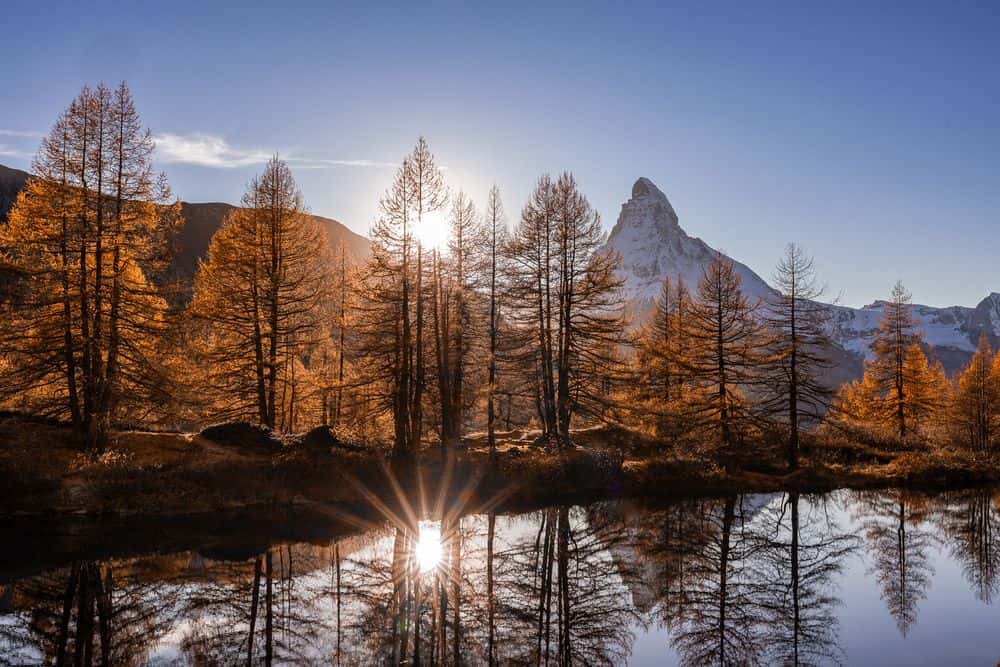
The path climbs gently to the Grünsee, green, with a small sandy shore and old stone pines growing out of the gravel. From here on we are above the busiest section and the walking gets quieter. Next is the Grindjisee, small, hidden behind a moraine, framed by larch trees, with the Matterhorn sitting exactly in the gap behind it. This is the lake photographers like best, and most visitors walk past it.
The last climb takes us to the Stellisee at 2,537 metres. This is the lake from the postcards. We arrive in the late afternoon, when the groups have gone down and the water usually turns still. We stay here. This is not a photo stop, it is the point of the day: the reflection, the light moving on the east face, your photographs, and time to simply sit and look at it.
When the light is gone we walk down to Sunnegga, then on foot through Findeln, a small hamlet of dark wooden barns above Zermatt, and down into the village. The last part is in dusk, on a wide and well marked path, with headlamps. Zermatt from above in the blue hour is one more picture.
How long we stay where is decided by the light, not by a timetable.
CHF 350 per person, from two people.
The price includes the guiding, the photographic coaching, the funicular ticket up to Sunnegga and your edited photographs. There are no extra tickets to buy.
Travelling alone? Then it becomes a private tour for CHF 790, with the same programme and my full attention.
Variants
Pure Flex tours don't come with a fixed date, they come with yours. Tell me when you'd like to go, I'll check availability and usually get back to you within a day. If you have wishes for how the days should run, we'll build them in.
In a small group
Price per person. Two to six participants. Funicular ticket and your photographs included.
CHF 350Private
Flat rate for one person. The date, the pace and the breaks are entirely yours.
CHF 790Zermatt sits at the end of a long valley in the south of Switzerland, under the most photographed mountain in the Alps. The village has no cars. You arrive by train, and the mountain is in front of you as soon as you step outside the station.
The five lakes lie on the eastern side of the valley, between 2,100 and 2,600 metres, on the slopes below the Rothorn. They are close together and completely different from one another, because some are fed by glaciers, some by springs, and one was built by people. Three of them reflect the Matterhorn when the water is calm.
Above them is the Findel glacier, which has retreated a long way in the past decades and left behind the grey moraines you will walk across. Below them are larch forests and the old hamlet of Findeln, where families from Zermatt have kept barns and summer houses for centuries.
Zermatt is car free and easy to reach by train from anywhere in Switzerland. From Zurich, Geneva, Bern or Basel the journey takes about three to four hours, with one or two changes. If you come by car, you park in Täsch and take the shuttle train, which runs every twenty minutes and takes twelve minutes.
Please read this before you book: this tour ends late. In July we are back in the village around nine in the evening, in September around seven. You will not be able to travel on to another city the same day. Plan a night in Zermatt or in Täsch. Rooms in Zermatt are easier to find and more reasonable in June and September than in the middle of summer.
The meeting point is the train station in the centre of the village. The lift ticket up to Sunnegga is included and I will have it with me.
There is no meal included and the mountain restaurants close in the late afternoon, before the best part of our day. Bring enough food and water for a long afternoon and evening.
If we pass the Fluhalp or the Grünsee restaurant while they are still open, we can stop for a coffee. Please do not count on it.
Essential
- Hiking boots with a good sole. Trainers are not enough on the descent.
- Warm layers, a hat and gloves. At 2,500 metres the evening is cold even in July.
- Wind and rain jacket
- Headlamp. This is not emergency equipment, we will use it.
- At least 1.5 litres to drink, and food for the day
- Sun protection: glasses, cream, a cap. The sun is strong at this altitude.
- Your camera or phone, charged, with free storage
Useful
- Spare battery or power bank
- A tripod if you own one and are happy to carry it. It is not required.
- Walking poles for the descent
- A small backpack, 20 to 30 litres
- Travel to and from Zermatt, and accommodation
- Food and drinks
- Personal equipment
- Insurance
Insurance is the responsibility of each participant (accident, health and liability). We recommend Rega patron membership and cancellation insurance.
The tour runs in settled weather. If thunderstorms, strong wind or heavy rain are forecast, we move it to another day. Cancellation is free up to 48 hours before the date. Light cloud is not bad weather; it is often better light than a clear sky.
fromCHF 350
CHF
Dates
June through October
Individual appointments by arrangement
I have photographed the Stellisee at every hour of the day. The best hour starts after the last group has gone down.
Falko BurghausenMeeting point
Zermatt Main StationParticipants
Min. 2, max. 6 participants per guide
Course language
English, German, French on request
Included services
Guiding and photographic coaching by Falko Burghausen throughout the day
Funicular ticket from Zermatt to Sunnegga
Individual help with composition, light and finding your picture, while we walk
Edited photographs of you in front of the Matterhorn, delivered digitally within ten working days
A short review by email afterwards: send me your three favourite pictures from the day and I will give you honest feedback
Your guide
Falko Burghausen
Hiking Guide (in training). Internationally awarded Photographer. Swiss Athletics Trail Running Instructor.
Personal advice
Do you have any questions? I will be happy to advise you on this travel offer.
PDF Download
Last Light at the Matterhorn
Switzerland – ZermattfromCHF 350
June through October
Non-binding request
Your non-binding request will bring you one step closer to your experience. I will get back to you shortly with further information on dates and the exact procedure and discuss the next steps together.
Questions? Answers!
Still have questions about the offer? I have compiled the most important information for you.
No. There is no theory and no lecture. We work on real subjects while we walk, and I meet you where you are.
Easy, but long. Around 13 kilometres over six to seven hours with many stops, on wide marked paths. There is no climbing and nothing exposed. Good boots make the difference, especially on the way down.
Because that is the whole idea. Between ten and two the lakes are busy and the light is flat. In the evening the people are gone, the wind usually drops and the Matterhorn turns warm. You cannot get that photograph on a morning tour.
That depends on the month. In July around nine in the evening, in August around half past eight, in September around seven. I will tell you the exact time when we confirm your date.
No. Please plan to stay the night in Zermatt or in Täsch. This is the one thing people get wrong when they book.
Yes. The path from Findeln to Zermatt is wide, well marked and used by local people every day. We use headlamps and we take our time. Many guests say it is their favourite part.
If the water is calm, yes. The evening is the best chance of that, but no one can promise it. If there is a breeze, we photograph other things: the larch trees, the glacier, you in the landscape. There is never nothing.
Edited high resolution photographs of you in the landscape, by download link within ten working days. You may print them, give them away and post them on social media. A credit is appreciated but not required.
Only if you say yes. I ask you at the end of the day, and no is completely fine.
From about fourteen years old with a parent, if they can manage the distance and the late finish. For younger children the day is too long.
We move the tour to another day, or you get a full refund. Free cancellation up to 48 hours before. I would rather move a date than take you out in a thunderstorm.
Usually within one day. If you are already in Zermatt and need an answer faster, call me.
Often yes. If the hut, the weather and my calendar allow it, a day or two is enough.
Pure Imagination.
Photo workshops for landscape and sports photographyTake your photography skills to a whole new level: in our photography workshops with internationally acclaimed photographer Falko Burghausen, you will learn completely new ways to skillfully showcase your subjects.
Discover offers