That depends on the hut. In SAC huts, expect around CHF 80 to 110 per night for accommodation and half board, so roughly CHF 160 to 220 for both nights, with a lower rate for members. You’ll know the exact price once we’ve chosen the hut. I take care of the reservation, and you pay on site.

Duration
3 days
Next Date
Flexible
Prices
fromCHF 1,090
Skillfully showcase the giants of the Swiss Alps in monochrome photography.
Your advantages
- You will learn how to capture the rocky ridges, glaciers and peaks of the high Alps in black and white at their very best
- Lots of practical know-how about camera settings, equipment and (route) planning for monochrome photography
- Photo editing on the hut evenings: you’ll learn how a good shot becomes a powerful black and white image
- Small group of no more than five people, so there’s plenty of time for you and your pictures
- Location of your choice: we pick the region together, based on the weather and your subjects
- Accompanied by internationally awarded photographer Falko Burghausen
fromCHF 1,090
Dates
3 days
Date of your choice
A Few Words from Me
« Light and shadow, mountains and valleys: the contrasts in monochrome mountain photography could hardly be more stark. »
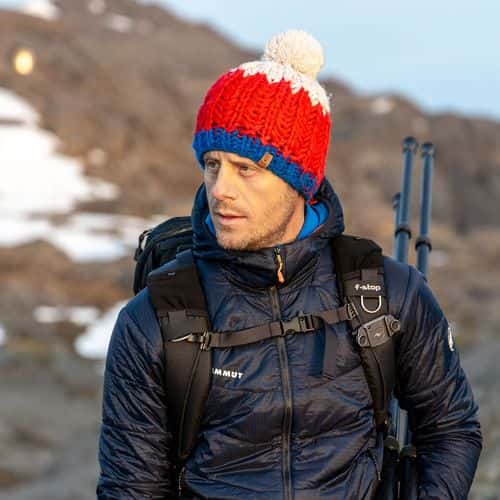 Falko Burghausen
Region
SwitzerlandParticipants
Min. 2, max. 5 participants per guide
Course language
Deutsch und Englisch
Included services
Course led by Falko Burghausen
Three-day workshop with guiding to impressive alpine photo spots
Photo editing sessions on the hut evenings
Individual support from the course leader
Hut reservations
Your guide
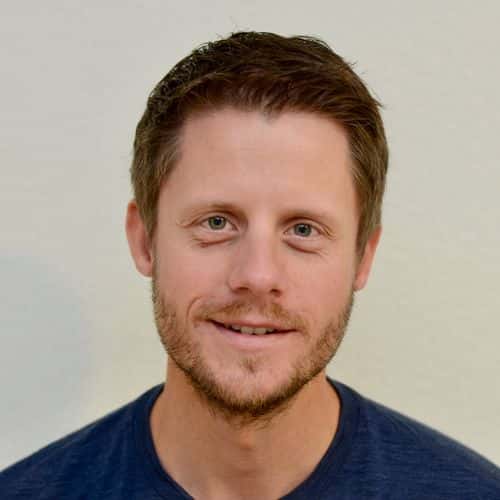
Falko Burghausen
Hiking Guide (in training). Internationally awarded Photographer. Swiss Athletics Trail Running Instructor.


Personal advice
Do you have any questions? I will be happy to advise you on this travel offer.
PDF Download
Requirements
Fitness
Technique
Sure-footedness and a head for heights on mountain trails with some exposed sections, all while carrying a camera backpack. Photographically, this is an advanced course: you know your camera and have already worked in manual mode with aperture, shutter speed and ISO. If that’s still new to you, the photography workshop for alpine landscapes is the perfect place to start.
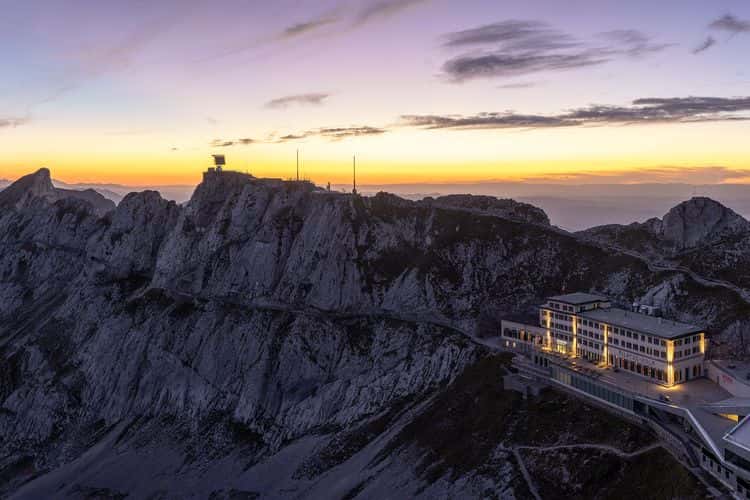
For alpine black-and-white photography, we visit regions with rocky and glaciated mountains, such as those found primarily in Valais, the Bernese Oberland, and the Upper Engadine. During the three-day photography workshop, you will learn:
- Selecting subjects and subjects that promise impressive results as monochrome photographs
- Understanding the right environmental conditions, such as light and shadow, for strong contrasts
- Using your camera with the ideal settings so you can get the most out of your black-and-white photography
- Finding a successful image composition
- Photographing different angles and image sections with the most suitable lens
- Develop your monochrome shots in a targeted way during photo editing
- Safety and behavior in the alpine environment.
Schedule of the photo workshop
On the first day, the focus is primarily on the ascent to our destination region. We deliberately take our time so that we have enough energy despite our heavy backpacks and can acclimatize optimally. Nevertheless, the day is not spent idly: during breaks, we incorporate short theory sessions and use the opportunities for practical exercises to learn and deepen our photographic know-how.
Whenever possible, we choose an ascent route that already offers our first exciting subjects for monochrome mountain photography. Once at the hut, we can leave part of our luggage there and spend the following days with lighter gear. On the programme are excursions to impressive photo spots with spectacular views of the high alpine world, the perfect setting for expressive black and white shots. For this, we sometimes set off very early or catch the special evening atmosphere, when light and shadow draw the strongest contrasts.
Evenings at the hut are all about photo editing. In black and white photography in particular, much of an image’s character only emerges on the computer. Working with your own laptop and the shots of the day, you’ll learn how to control tones, contrast and light in a targeted way. A cup of hut tea comes with it, of course.
CHF 1090 per person in the small group, from two people.
The price includes the three-day workshop, guiding to the photo spots, the evening editing sessions and the hut reservation. You pay for accommodation and half board directly at the hut, and SAC members get the reduced rate in SAC huts.
We choose the region together, depending on the weather and the subjects you’re after. Travelling solo? Send me your preferred dates and I’ll team you up with others. The workshop goes ahead as soon as two people are in for the same date.
Rather have it all to yourself? The private workshop is a flat CHF 2290 for one or two people.
Variants
Pure Flex tours don't come with a fixed date, they come with yours. Tell me when you'd like to go, I'll check availability and usually get back to you within a day. If you have wishes for how the days should run, we'll build them in.
Small group, 2 or more
Price per person. Maximum of five participants, two nights in the dormitory of a mountain hut. You pay for accommodation and half board directly at the hut.
CHF 1,090Private, 1 to 2 people
Flat rate for one or two people. Region, subjects and pace are entirely up to you, and the evening editing sessions are yours alone. You pay for accommodation and half board directly at the hut.
CHF 2,290We choose the region together, based on the weather, conditions and the subjects you’re after. Monochrome mountain photography calls for rocky, glaciated peaks and clear contrasts, typically found in the southern valleys of Valais (Saas or Matter Valley, Val d’Anniviers, Val d’Hérens), the Bernese Oberland or the Engadin. Shortly before the workshop, we check the forecast together and decide where the light looks most promising.
We’ll set the meeting point and time as soon as the location is fixed.
We spend two nights in the dormitory of a spectacularly located high alpine mountain hut, often an SAC hut. Simple and functional, but you wake up where others only arrive after a three-hour climb. I take care of the reservation, and you pay for accommodation and half board directly at the hut. In SAC huts, members benefit from a reduced rate.
At the hut, a multi-course dinner awaits you in the evening, followed by a breakfast that easily lasts until the first photo spot. Both are part of the half board, which you pay directly at the hut. You can order a packed lunch there for the second and third day; anything else for the trail, please bring along yourself.
Camera equipment
- SLR, mirrorless or bridge camera you’re comfortable using in manual mode
- Wide-angle lens, standard lens and telephoto lens
- Tripod
- Laptop or tablet with photo editing software (e.g. Lightroom or Capture One), fully charged, as power sockets are scarce in huts
- Optionally a power bank
- Optional polarizing filter and/or ND filter set
Clothes and shoes
- Functional clothing for hiking
- Thermal jacket or down jacket
- Rain jacket (and rain pants, depending on the overall weather conditions)
- Hiking boots with good tread
- Backpack with space for your personal gear and camera
- hiking poles
Please keep in mind that even in summer, weather conditions in the mountains can change quickly. You should therefore be equally prepared for sun and clouds, storms and rain.
Food on the go
- Dinner and breakfast at the hut (half board, paid on site)
- Packed lunch for the second and third day available at the hut
- You are responsible for any other food
Misc
- Sun glasses
- Sunscreen
- Headlamp with spare batteries/battery charger
- Cash (usually preferred at huts)
- Money for accommodation and half board at the hut (cash is often the safest bet in huts)
Accomodation
- Sleeping bag
- Dry change of clothes for the hut
- Earplugs, if necessary
- Toiletries
You will receive a detailed packing list in good time before the course begins.
- Two nights with half board at the mountain hut (paid on site)
- Your own arrival and departure
- Any costs for cable cars
- Individual drinks and meals during the day
- Personal expenses
- Cancellation insurance
Insurance is the responsibility of the participants (accident, health, and liability insurance). We recommend REGA membership and cancellation insurance.
fromCHF 1,090
Dates
3 days
Date of your choice
A Few Words from Me
« Light and shadow, mountains and valleys: the contrasts in monochrome mountain photography could hardly be more stark. »
Falko BurghausenRegion
SwitzerlandParticipants
Min. 2, max. 5 participants per guide
Course language
Deutsch und Englisch
Included services
Course led by Falko Burghausen
Three-day workshop with guiding to impressive alpine photo spots
Photo editing sessions on the hut evenings
Individual support from the course leader
Hut reservations
Your guide
Falko Burghausen
Hiking Guide (in training). Internationally awarded Photographer. Swiss Athletics Trail Running Instructor.
Personal advice
Do you have any questions? I will be happy to advise you on this travel offer.
PDF Download
Photo workshop: Monochrome mountain landscapes
SwitzerlandfromCHF 1,090
Non-binding request
Your non-binding request will bring you one step closer to your experience. I will get back to you shortly with further information on dates and the exact procedure and discuss the next steps together.
Questions? Answers!
Still have questions about the offer? I have compiled the most important information for you.
Yes, a little. You should be able to use your camera in manual mode and know what aperture, shutter speed and ISO do. Experience with photo editing helps but isn’t a must; I’ll show you the basics in the evenings. If you’d rather start with the fundamentals, the photography workshop for alpine landscapes is the right place to begin.
Black and white loves drama: clouds, wisps of fog and raking light are often exactly what a monochrome image needs. Since we only fix the region shortly before, we can dodge the weather. But if the forecast is truly bad everywhere or safety can’t be guaranteed, we’ll move the workshop to an alternative date together.
In a high alpine region we choose together, typically in the southern valleys of Valais, the Bernese Oberland or the Engadin. What matters are the weather, the conditions and the subjects you’re after. You’ll receive the meeting point and a detailed packing list once everything is set.
Pure Imagination.
Photo workshops for landscape and sports photographyTake your photography skills to a whole new level: in our photography workshops with internationally acclaimed photographer Falko Burghausen, you will learn completely new ways to skillfully showcase your subjects.
Discover offers