If you have a medical problem with your knees, we recommend that you consult a specialist beforehand. We often have participants who experience knee problems, especially when running downhill, and are looking for ways to improve this specific issue. We actively address this topic during the coaching sessions and explain the background from a movement perspective that can lead to knee pain.

Duration
2 days
Next Date
Flexible
Prices
CHF 960
Trail running technique inspired by alpinism—use established methods to achieve greater efficiency and enjoyment on challenging trails. This two-day course for you and your running friends will help you feel more confident and have more fun on your personal runs or in competitions.
Your benefits
- Intensive technical training to improve your running technique uphill and downhill on alpine hiking trails
- Noticeable increase in efficiency when running on technical terrain
- We approach trail running from a mountaineering perspective and incorporate our many years of experience in alpinism into the movement sequences for uphill and downhill running.
CHF 960
Total price for 3 participantsDates
2 days
Date of your choice
A Few Words from Me
« My personal theory: trail running was actually invented decades ago by mountaineers – simply out of sheer frustration with endlessly boring ascents and descents. At some point, they probably thought: “Oh, come on, just run!” And lo and behold: what works with a heavy backpack and off-trail through scree also brings a good pace to trail running – thanks to clever line selection, perfect technique, and efficient movement. »
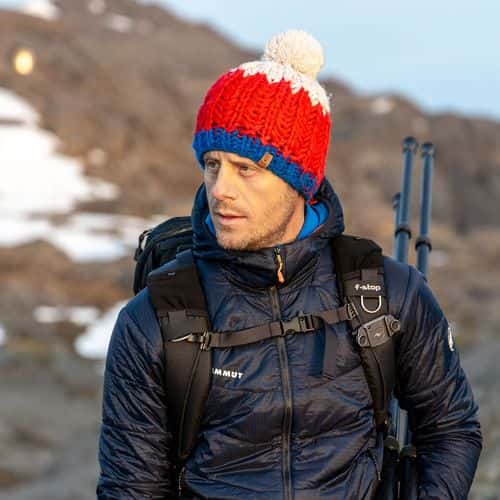 Falko Burghausen
Meeting point
Parking lot in front of IntersportParticipants
Min. 1, max. 6 participants per guide
Course language
English and German
Included services
Professional support from Swiss Athletics Trail Running Guide
2 days of intensive, personalized coaching on uphill and downhill trail running techniques
Detailed techniques and training methods to increase efficiency
Valuable expertise on reducing the risk of muscle and joint damage
Your guide
Falko Burghausen
Hiking Guide (in training). Internationally awarded Photographer. Swiss Athletics Trail Running Instructor.


Personal advice
Do you have any questions? I will be happy to advise you on this travel offer.

PDF Download
Requirements
Fitness
Technique
Distance10 - 15 km
Duration2 - 3 h
Ascent850 m
Descent1000 m
You have already been on hikes and are sure-footed and have a head for heights on hiking trails up to T3 (white-red-white marked trails in Switzerland).
Day 1: Uphill training on Piz Scalottas
The first day of our Trail Running Uphill & Downhill Technique Training is all about running uphill. We train intensively and playfully to improve your uphill performance and save energy for your run or competition.
- Between power hiking and running: getting to know and trying out different running styles uphill
- Analysis of different stride lengths on the efficiency of the ascent
- Foot placement technique and energy-saving foot placement on steep and/or blocked hiking trails
- Video analysis of your running style with individual discussion and suggestions for improvement
- Forward-looking pace planning so you don't run out of energy before you reach your goal
- Use of trail running poles for a more efficient running style
Day 2: Downhill training over 1,000 meters of elevation from Rothorn
After focusing primarily on running uphill on the first day, today you will need power for running downhill. We take the cable car up to an altitude of almost 2,861 m and warm up by climbing a nearby peak of almost 3,000 m in alpine running style. We apply the techniques we learned the day before and are now well warmed up for the long downhill run back to the valley.
- Placing your feet when running downhill: you will learn intensively how to place your feet precisely, survey the next 3-4 meters of the trail, and at the same time not lose sight of the overall route.
- Mountain running without knee pain: how can you find the optimal movement pattern that is easy on your knees? What will hold, what will slip?
- We analyze your running style in terms of surefootedness on hiking trails with rock slabs, gravel passages, earthy or grassy sections, and improve the stability of each individual step—because falls and misplaced effort cost time and rob you of valuable energy.
- Elegant flow instead of frantic flailing: how can you tackle a descent in trail running in a controlled but fast manner? What role does your whole body play in a professional, efficient running style?
- Use of trail running poles in downhill running: where does it make sense, when does it become dangerous?
At the end, we will have time for individual questions before we conclude two intensive days of technical training together in Lenzerheide.
We offer the Trail Running Uphill & Downhill Technique Course as a complete package at a total price. Our experience has shown that many people would like to take part in this kind of technique training with fellow runners. With our offer, we want to make it possible to hold a two-day intensive course on a flexible date of your choice in a group with familiar faces for a total price of CHF 960. With 3 participants, this results in a total price of CHF 320 per person.
Of course, we also run the course with more than 3 participants. Simply indicate the number of people in your request and we will get back to you with a customized offer.
Variants
Pure Flex tours don't come with a fixed date, they come with yours. Tell me when you'd like to go, I'll check availability and usually get back to you within a day. If you have wishes for how the days should run, we'll build them in.
Trail running technique training
2 days of intensive and individual technical training uphill and downhill
CHF 960The region around Lenzerheide offers ideal conditions for trail running. The mountains are high, but never too high, and the climbs are steep, but never too steep. Thanks to the support of the railway, the area is perfect for technical training, where the focus is less on distance and more on improving personal skills.
Lenzerheide can be easily reached by car via Chur or by public transport. The journey time by car from Zurich is approximately 1 hour and 45 minutes.
We deliberately offer this course without fixed accommodation. Lenzerheide offers a wide range of accommodation options, from modern campsites and vacation apartments to luxury hotels. This means that there is a suitable place to stay for every preference. The meeting point and starting point for our runs is in the center of Lenzerheide, which is easily accessible on foot from all parts of the town or by bus.
We are happy to arrange suitable accommodation on request for an additional fee. Please let us know when you contact us if you would like to use this service.
We will have lunch at a mountain restaurant along our running routes. This will give us the opportunity to incorporate some theoretical lessons. You can bring your own snacks for in between meals, such as energy bars or similar.
The exact equipment list will be sent to you in advance. The following equipment items are for guidance only and may differ from the final list.
Clothes and shoes
- Trail running shoes with soles suitable for off-road terrain (road running shoes with smooth soles are not suitable)
- Trail running backpack, trail running vest, or similar with space for weather protection, food, and drinks
- Optional: Lightweight trail running poles with hand strap system
- Functional clothing for running in different temperatures and weather conditions
- Thin hat and gloves
- Food and drink for on the go
We recommend bringing some energy bars, gels, or similar items for trail runs, as well as water bottles or a hydration system for your running backpack.
Meals
Individual accommodation costs
Train journeys or public transport journeys
Insurance is the responsibility of the participants (accident, health, and liability insurance). We recommend REGA membership and cancellation insurance.
CHF 960
Total price for 3 participantsDates
2 days
Date of your choice
A Few Words from Me
« My personal theory: trail running was actually invented decades ago by mountaineers – simply out of sheer frustration with endlessly boring ascents and descents. At some point, they probably thought: “Oh, come on, just run!” And lo and behold: what works with a heavy backpack and off-trail through scree also brings a good pace to trail running – thanks to clever line selection, perfect technique, and efficient movement. »
Falko BurghausenMeeting point
Parking lot in front of IntersportParticipants
Min. 1, max. 6 participants per guide
Course language
English and German
Included services
Professional support from Swiss Athletics Trail Running Guide
2 days of intensive, personalized coaching on uphill and downhill trail running techniques
Detailed techniques and training methods to increase efficiency
Valuable expertise on reducing the risk of muscle and joint damage
Your guide
Falko Burghausen
Hiking Guide (in training). Internationally awarded Photographer. Swiss Athletics Trail Running Instructor.
Personal advice
Do you have any questions? I will be happy to advise you on this travel offer.
PDF Download
Trail running uphill & downhill technique training
Switzerland – LenzerheideCHF 960
Non-binding request
Your non-binding request will bring you one step closer to your experience. I will get back to you shortly with further information on dates and the exact procedure and discuss the next steps together.
Questions? Answers!
Still have questions about the offer? I have compiled the most important information for you.
You should already have completed longer hikes and be in good physical condition, sure-footed, and have a head for heights. Whether you already have running experience or not is not particularly important, as this course also covers the basics of efficient and healthy trail running.
If you already have (many years of) experience as a runner, we will build on your technical level and focus on areas for improvement.
If you are unsure whether you can participate, please contact us directly so that we can give you individual advice.
As a general rule, we do not run the specified distances and elevation gains in one go, but rather take regular breaks for individual exercises in the spirit of technical training. The training is therefore not comparable to a pure mountain run over 850 meters of elevation gain.
Trail running is a trendy sport that has been attracting a lot of attention in recent years. Many runners are either completely new to running or come from road running and are now discovering the possibilities and appeal of trail running. However, efficient, confident, and safe movement on technical trails and hiking paths requires years of experience, ideally inspired by alpine mountain sports. Very few runners have this experience, which at best leads to an inefficient running style and at worst to injuries or even falls on trail running terrain with corresponding consequences. In our coaching, we deliberately focus on the techniques that, in addition to the physical requirements, lead to a significant increase in efficiency when running in the mountains.
During the two days of training, we are also happy to address problems caused by fear of heights or vertigo. If you would like to work on your fear of heights in the mountains, we also offer specific fear of heights training so that you can learn methods and techniques to stop letting fear get the better of you.
If in doubt, please feel free to contact us directly to request a quote tailored to your personal requirements.
Pure Flow.
Trail running trips, tours and courses.We share our many years of experience in running and trail running in our trail running courses, on trips or tours. Experience the ultimate running flow and discover lonely places and impressive landscapes in a different way.
Discover offers

