
Your Private Alpine Week
Book nowThere's a moment, early in any good hiking week, when you realize the trip is going to work. For me, it came on the first evening, on a sun-drenched hotel terrace beneath the towering north face of the Säntis, somewhere in the middle of the second round of drinks. Suzie and Rip Reeves, from Baton Rouge, Louisiana, were telling me about a trek they'd done in Patagonia three years earlier, and I was thinking: these two know what they're doing. And more importantly — they're going to be fun.
What followed was nine days of hiking across Switzerland that I won't forget quickly. Not because everything went according to plan. But because the best trips rarely do.
Who Are Suzie and Rip?
Suzie and Rip are in their sixties, fit in the way that only people who have been moving through mountains for decades can be, and experienced in the way that makes a guide's job genuinely enjoyable. They've hiked in Patagonia, in the Rockies, across parts of Asia. They know how to read a trail, how to pace themselves, and — crucially — they know when to listen to their guide.
They'd flown in from Baton Rouge via Zurich, picked up a rental car at the airport, and driven themselves to the Schwägalp, a high mountain pass in the Appenzell region of northeastern Switzerland. That drive alone — from the flatlands around Zurich into the rolling, bell-tower-dotted hills of Appenzell and then up to the pass — is its own kind of introduction to this country.
This is what a private guided hiking week in Switzerland looks like before it even begins.
Day 1 — First Drinks, Big Plans
Schwägalp – Hotel Säntis
We met on the hotel terrace in the late afternoon. The Säntis north wall rose above us — 2,500 metres of limestone, shadow and vertical ambition — and the sun was doing what it does best in the Appenzell Alps in early summer, which is everything. Over drinks, we talked routes and logistics. Over dinner in the hotel's excellent restaurant, we mapped out Day 2.
The Hotel Säntis on the Schwägalp is one of those places that shouldn't work as well as it does — a mountain hotel at the foot of a serious peak, with a restaurant good enough to justify a detour even if you weren't sleeping there. For an arrival night, it sets exactly the right tone.
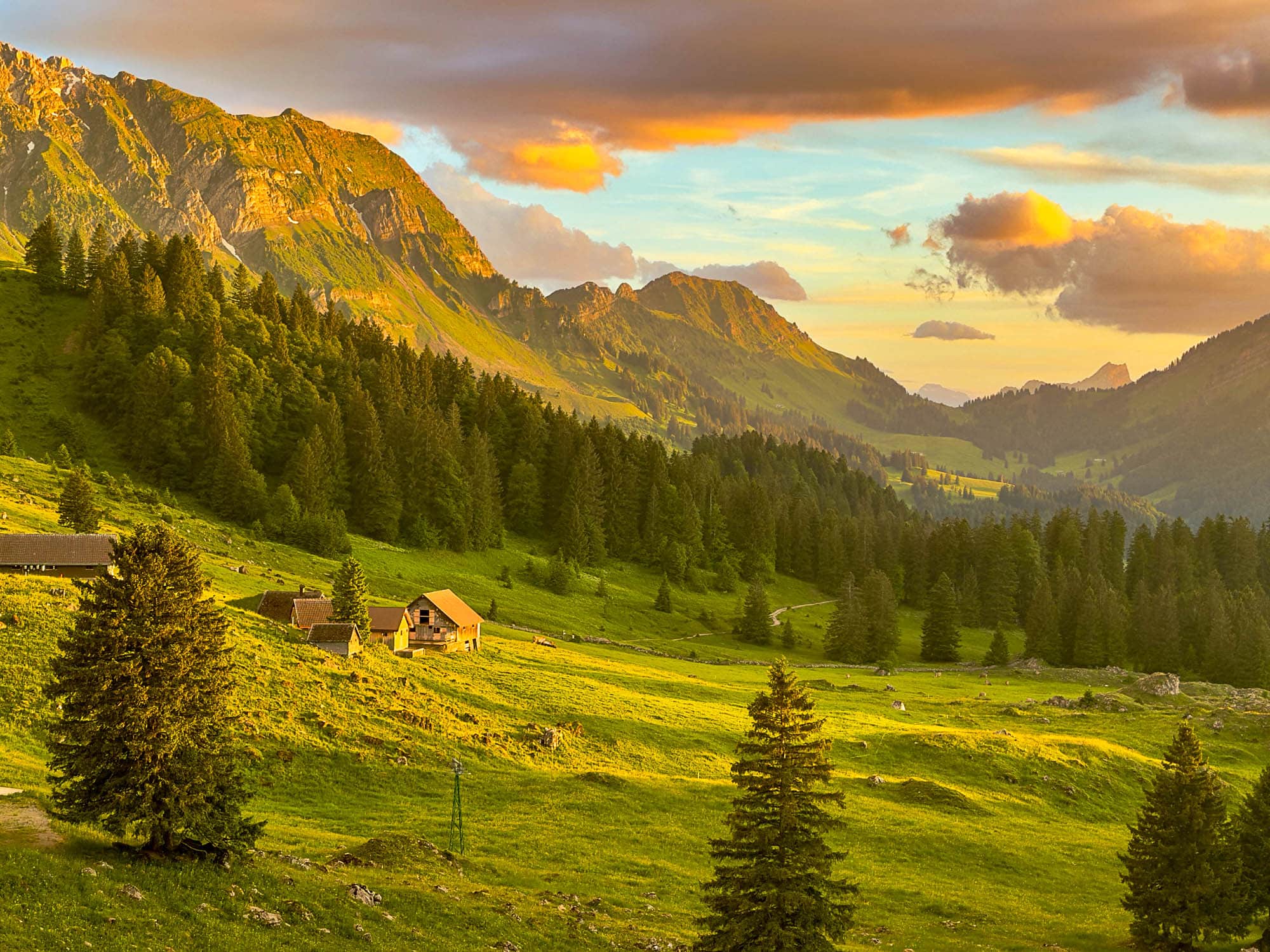
Day 2 — The Schäfler, the Altenalp, and a Daring Experiment
Wasserauen – Seealpsee – Altenalp – Schäfler (1,925 m) – Ebenalp
The hike up the Schäfler from Wasserauen is one of the classics of the Appenzell Alps—and on a sunny Sunday in early summer, it seems like half of Switzerland knows it. The parking lot in Wasserauen was, accordingly, a small triumph of optimism over physics.
But this is exactly where the difference lies when you’re out with a private guide: you know where you’re going. While most of the crowd ascended at a pace that confused recreational hiking with Olympic ambition, we set off at a rhythm meant for a full nine-day week—not for a single day of glory. The mountain isn’t going anywhere.
The Seealpsee presented itself as gusty and dramatic. A quick stop, photos, then on we went. Then came the steep ascent to Altenalp at 1,595 m—a romantically situated alpine inn where the world seems to turn noticeably slower.
Here, Rip decided to conduct a scientific experiment: homemade lemonade, followed immediately by a glass of fresh alpine milk. I’d like to make it clear that I neither recommended nor actively prevented this endeavor. The experiment ended without incident, which I count as a small medical triumph. Suzie and I remained more cautious, just to be on the safe side. During the rest of the steep ascent, we encountered three young women who, with serious expressions, warned us against continuing. We thanked them warmly and went on anyway—and lo and behold: it went well.
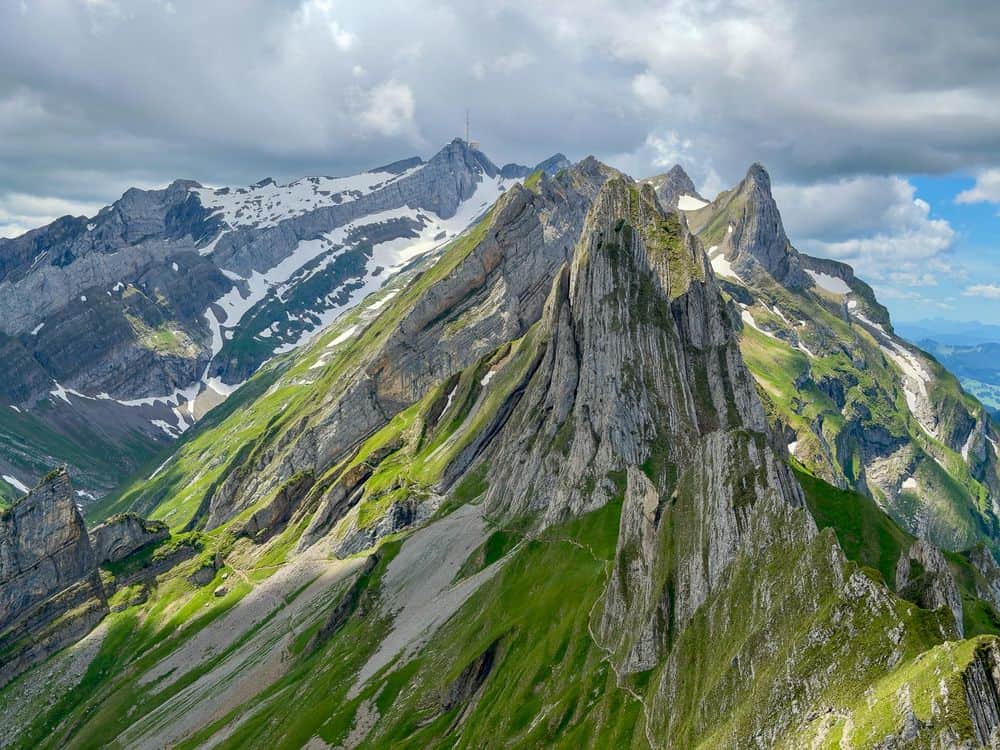
From the Schäfler ridge, a view opens up that explains why people cross oceans to go hiking in Switzerland: Lake Constance to the north, the green Appenzell hills below, and the entire Pre-Alpine landscape all around. At the Schäfler summit restaurant, we then refuel with local dishes.
Since it turns out that Suzie’s knee acts up on longer descents, we opt for the smarter route on the way back: a leisurely descent to Ebenalp and a ride down the steep, impressive cable car to Wasserauen. Unfortunately, this means we have to skip the Berggasthaus Äscher—which is probably the wiser decision anyway on a Sunday afternoon with perfect weather, if you don’t want to be overwhelmed by crowds of visitors.
We round off the evening on the hotel terrace with a hearty dinner and in excellent spirits.
Day 3 — Reading the Mountain
Schwägalp – Säntis via Tierwis – approx. 1,800 m
An experienced guide plans routes—but he also reads the mountain. Conditions can change overnight. What looks doable from below may look completely different up close. The ability to make the right decision at the right moment, with guests relying on you, is worth more than any desk-based preparation.
Today we’re heading to the Säntis summit (2,501 m) via the north face—a serious undertaking with exposed sections, chains, and a long, challenging traverse. We set off directly from the hotel, winding our way up countless switchbacks beneath the steep limestone walls. The atmosphere here is different from yesterday’s: fewer people, tougher terrain, genuine alpine seriousness. The sun rises late on this side—the shade keeps the north face cool and lends the ascent its own focused atmosphere.
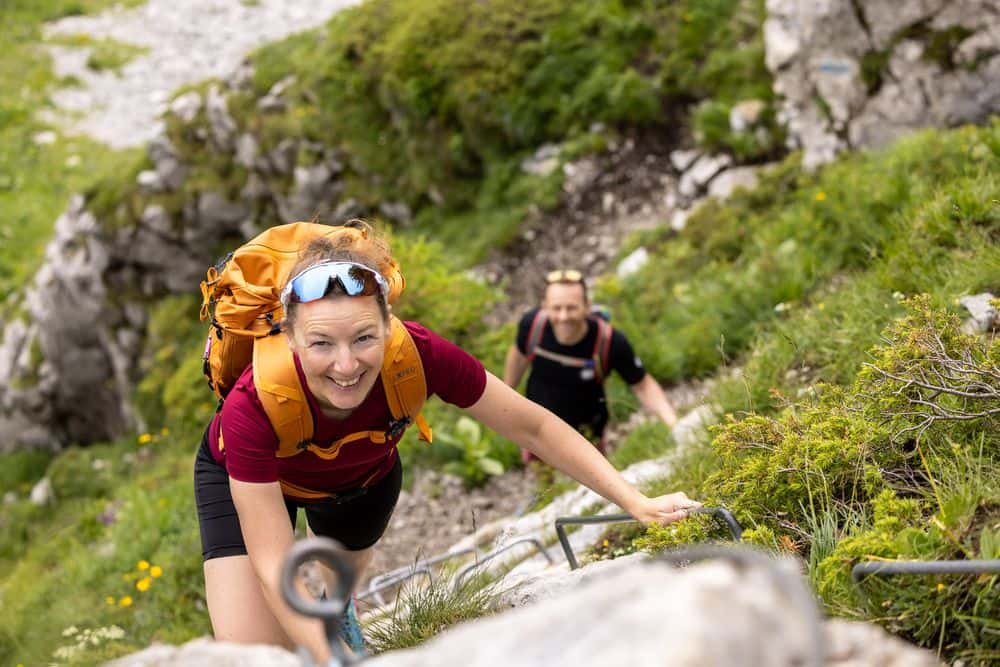
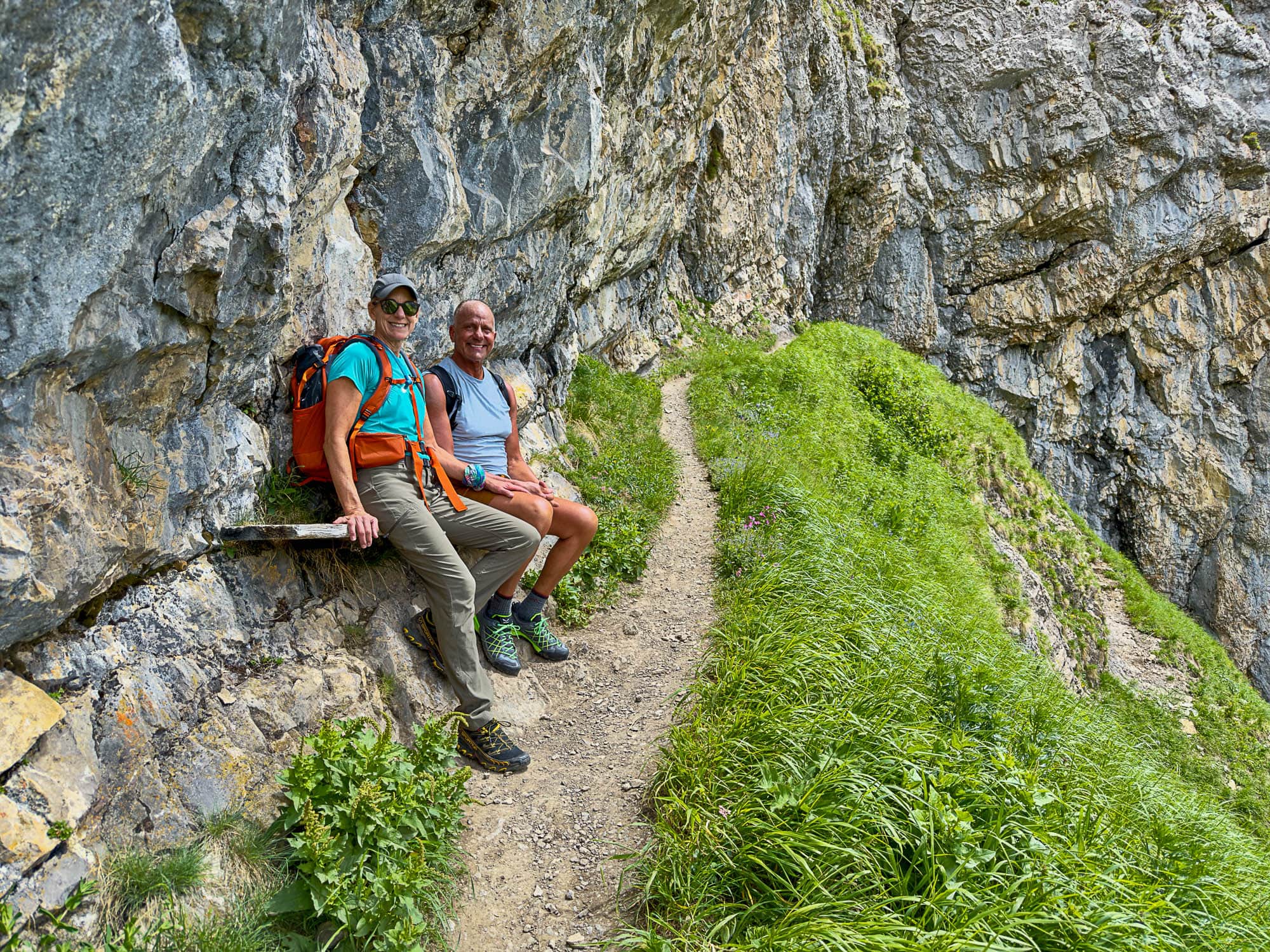
Suzie and Rip welcome the chains and pitons in the secured sections—not because they need them, but because the good mountain infrastructure allows us to focus on our movements rather than on holding on. We gain elevation at a calm, steady pace. Challenging, but never overwhelming.
After the exposed section, I let my guests rest briefly and go ahead to scout the rest of the route. What I find: old snowfields—hard, icy, exposed above the north face, with more beyond them. Technically passable with the right gear. Without it—and considering the afternoon heat, which would make the snow softer and more slippery—the decision is clear.
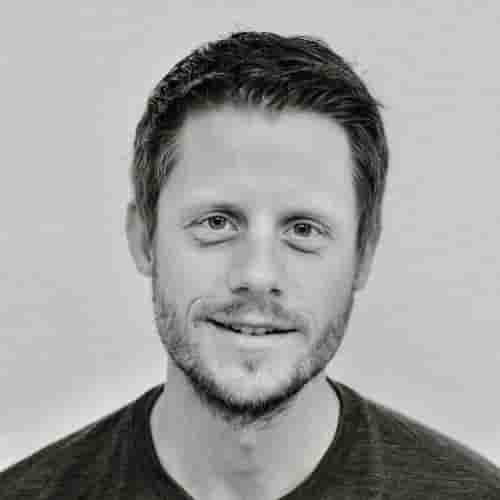
I come back. Suzie and Rip are already smiling, because we’ve developed a running joke: things get serious when Falko takes his hands out of his pockets. On the snowfield during the descent, I do exactly that, and they notice it immediately.
We turn back—casually, relaxed, and in high spirits. The view of the Alpine foothills is no less beautiful for it. The descent along the secured sections goes faster and more smoothly than Suzie had expected. Soon we’re back on easy terrain and tackle the final 300 meters of elevation gain back to the hotel.
Yesterday: Alpine Disneyland around the Schäfler, crowds of people, and postcard-perfect views. Today: a handful of other hikers, the serious atmosphere of the Säntis north face, alpine reality. Both days unforgettable in their own way.
Not every summit has to be reached. Every guest must return home safely—and want to come back.
Days 4 & 5 — The Zurich Interlude
One of the quiet perks of a private hiking week in Switzerland is exactly this: it adapts to your life, not the other way around. Suzie and Rip had a professional conference in Zurich—planned long before our hiking week—so we simply worked it into our itinerary. Two days in the city, then back to the mountains.
A good trip has room to breathe. The two days in Zurich weren’t a gap in the itinerary—they were part of it.
Ready for your own Private Alpine Week?
What Suzie and Rip experienced is bookable — individually planned, fully organized, exclusively for your group.
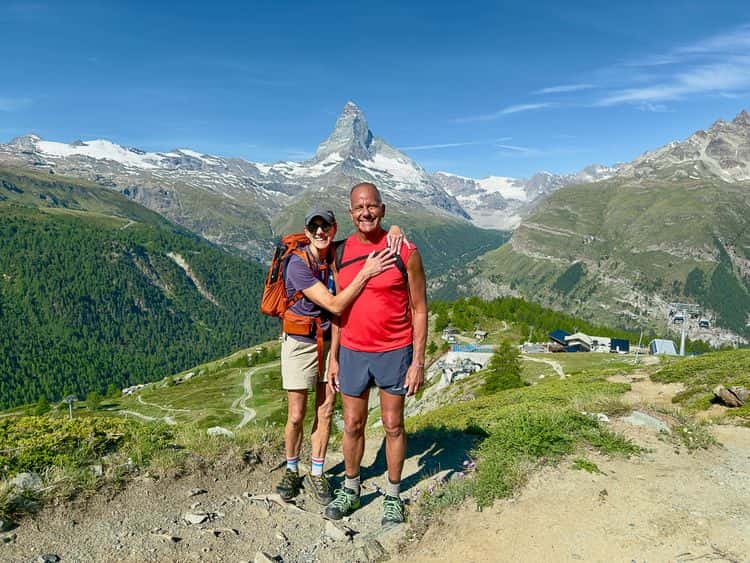
Day 6 — Lucerne and the Rathausbrauerei
Lucerne
Our reunion in Lucerne two days later had an energy that surprised me a little—or maybe not. When a trip goes well, you look forward to seeing each other again.
We check into our hotel in the Old Town and walk straight to the Rathausbrauerei—a centuries-old brewery right on the banks of the Reuss, where the food is hearty, the beer is house-brewed, and the atmosphere is exactly what you’d imagine a brewery next to a medieval town hall to be. Afterward, we take a leisurely evening stroll through Lucerne’s car-free Old Town—across the Chapel Bridge, along the river, and under the old city walls—before turning in early. The next day will be a long one.
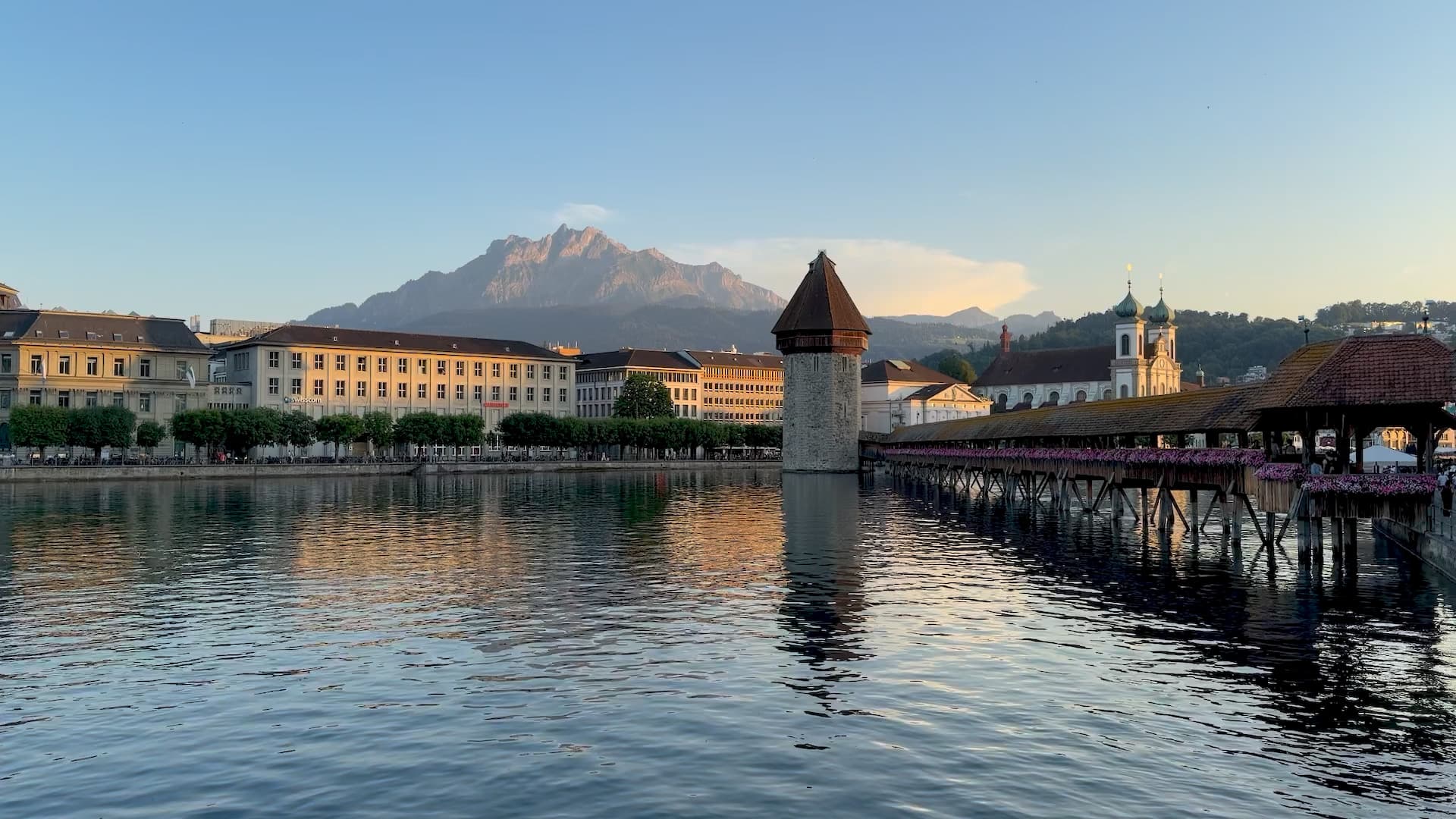
Day 7 — Mount Pilatus, French Fries, and a Swiss Magic Trick
Lucerne – Kriens – Fräkmüntegg – Pilatus Kulm (2,132 m) – Lötschberg – Grächen
The Pilatus hike via Lucerne is one of the most rewarding day hikes in Central Switzerland—and the smartest approach on a hot summer day is to start the ascent from Fräkmüntegg (1,412 m) on the north side. We take the cable car from Kriens, wait briefly in line with several tour groups, and then the cable car drops us off at Fräkmüntegg. The crowds vanish into thin air, and five minutes past the station, we’re all alone.
The shady north-facing ascent is a godsend on a day when it’s 36 degrees in the valley. Steep traverses below the Klimsenhorn, a few refreshing stream crossings, and Rips’ dry, American humor about Swiss engineering and American hiking habits—the kilometers fly by. Then the saddle between the Klimsenhorn and the summit: Lake Lucerne lies below us like a postcard, and the Alps rise up in every direction.
The mosquitoes at the saddle are just as thrilled to see us. We, however, are less than thrilled by them and press on.
The Pilatus summit is a different world from the ascent—all nationalities, all levels of gear, the entire spectrum of human decency packed into a small space. We take a quick look around, then retreat to the Restaurant Pilatus Kulm—for what turns out, in hindsight, to be the best serving of French fries of the entire week. Sometimes you deserve the simple things.
The cable car ride down is easy on the knees; Kriens greets us with 36 degrees and a car that’s been sitting in the sun and has heated up accordingly.
And then: the Lötschberg car ferry. I say this without exaggeration: the moment an American drives a car onto a train for the first time is something special. You roll right in. The train starts moving. It gets dark.
“Rip,” says Suzie, “you DON’T have to steer here.”
Twenty minutes later, the tunnel opens—and we simply pass through the Valais: the valley unfolding below us, the Rhône glistening in the afternoon light, and behind it, immediately and abruptly, the four-thousand-meter peaks. The contrast after the tunnel is so abrupt that it takes a moment to process what you’re seeing.
We drive down into the Rhône Valley, then south into the Mattertal, and arrive in Grächen in the late afternoon. The Mountain Lodge is perched high above the valley in a quaint Valais mountain village—modern, stylish rooms, a terrace with a view that justifies every meter of elevation gain. Dinner follows at sunset on the terrace of a nearby little restaurant. The mountains retain their light long after the valley has already grown dark. Then we all fall into bed, exhausted.
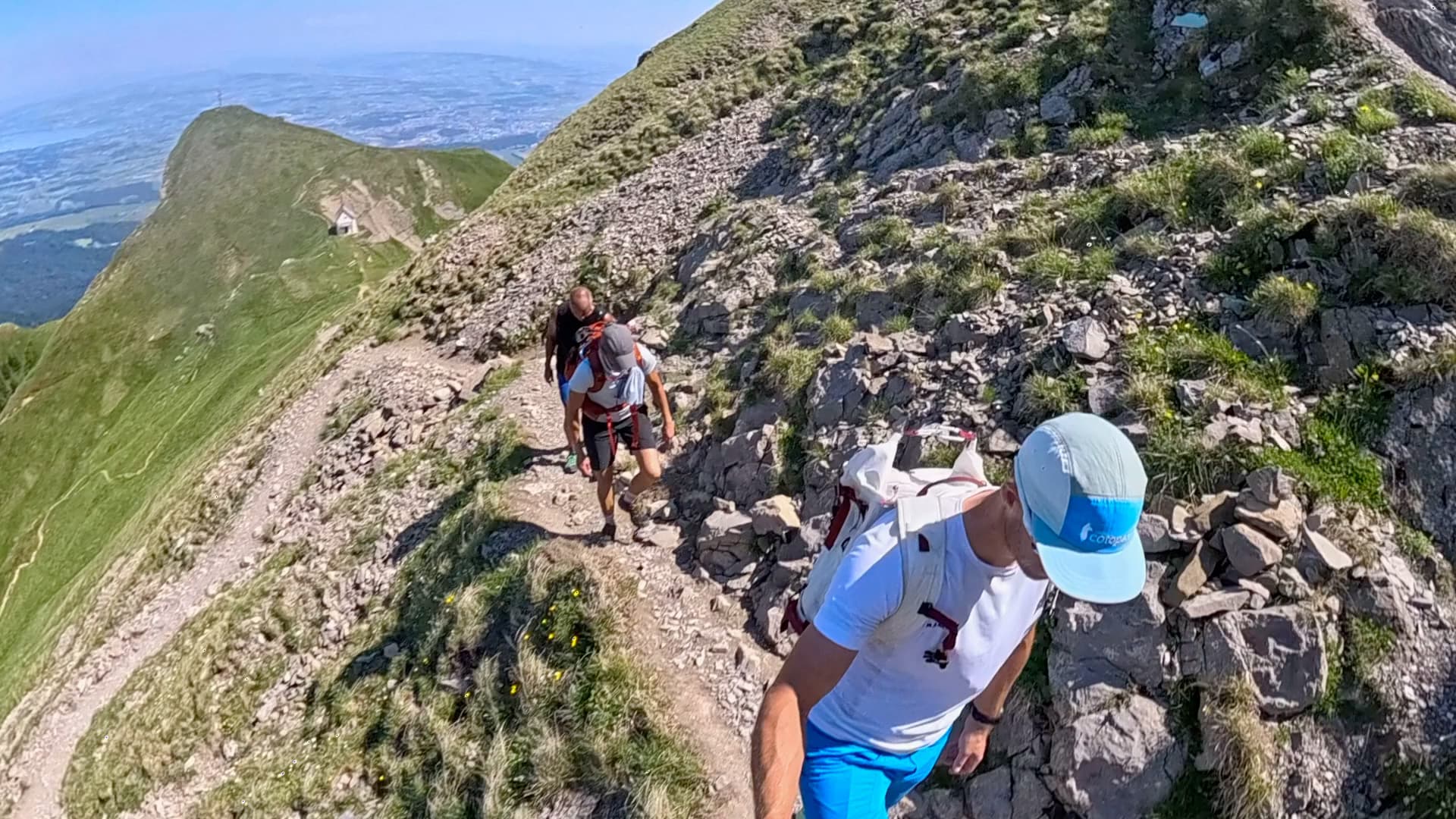
Day 8 — The Almagell High Trail and an Upgrade in Zermatt
Saas Grund – Saas Almagell – Furggstalden – Almagell High Trail – Kreuzbode (2,397 m) – Zermatt
After breakfast, we drive to the Saas Valley—a valley that is somewhat unfairly overshadowed by its neighbor, Zermatt, and has retained its unique charm precisely because of this. We park in Saas Grund, take a bus to Saas Almagell, and from there walk to the chairlift to Furggstalden.
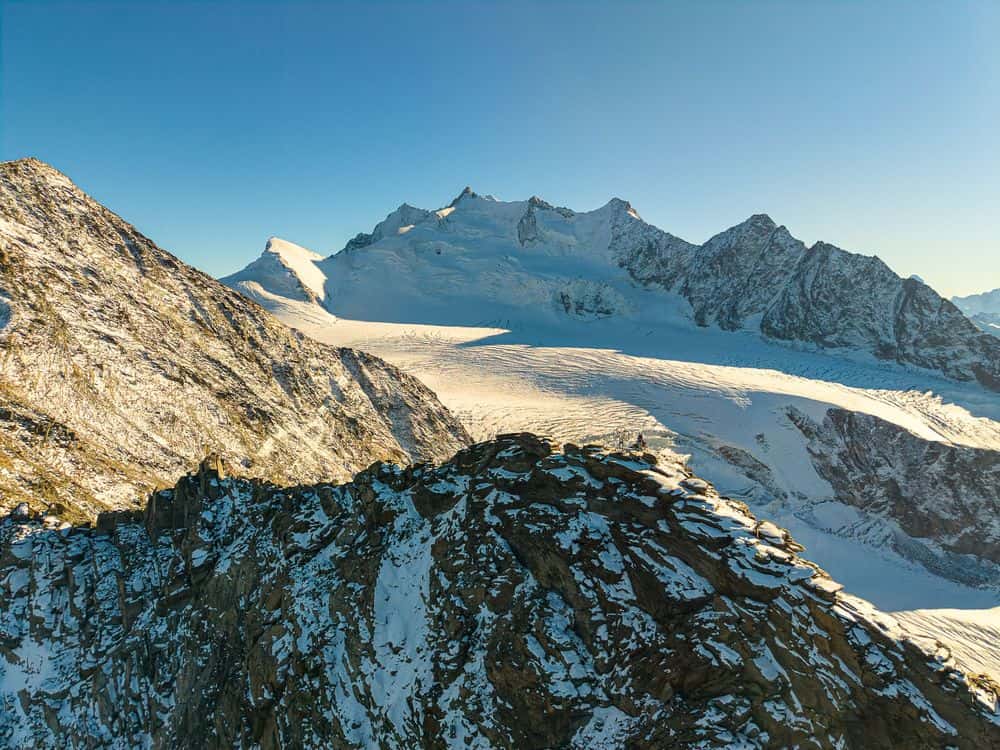
The Almagell High Trail is a rewarding hike. An adventure trail with suspension bridges and via ferrata-style sections leads to the Almagelleralp, from where the high-altitude trail crosses the mountain slopes at around 2,500 m. To the east lies the Saas Valley. Above it: Allalinhorn, Alphubel, Täschhorn, Dom, Lenzspitze—a parade of Valais’ four-thousanders, lined up as if for roll call.
The scorching summer of 2026 has left visible traces: glaciers that have retreated further than current maps show, snow lines that lie higher than they should. You can walk through this landscape and not fail to notice the change.
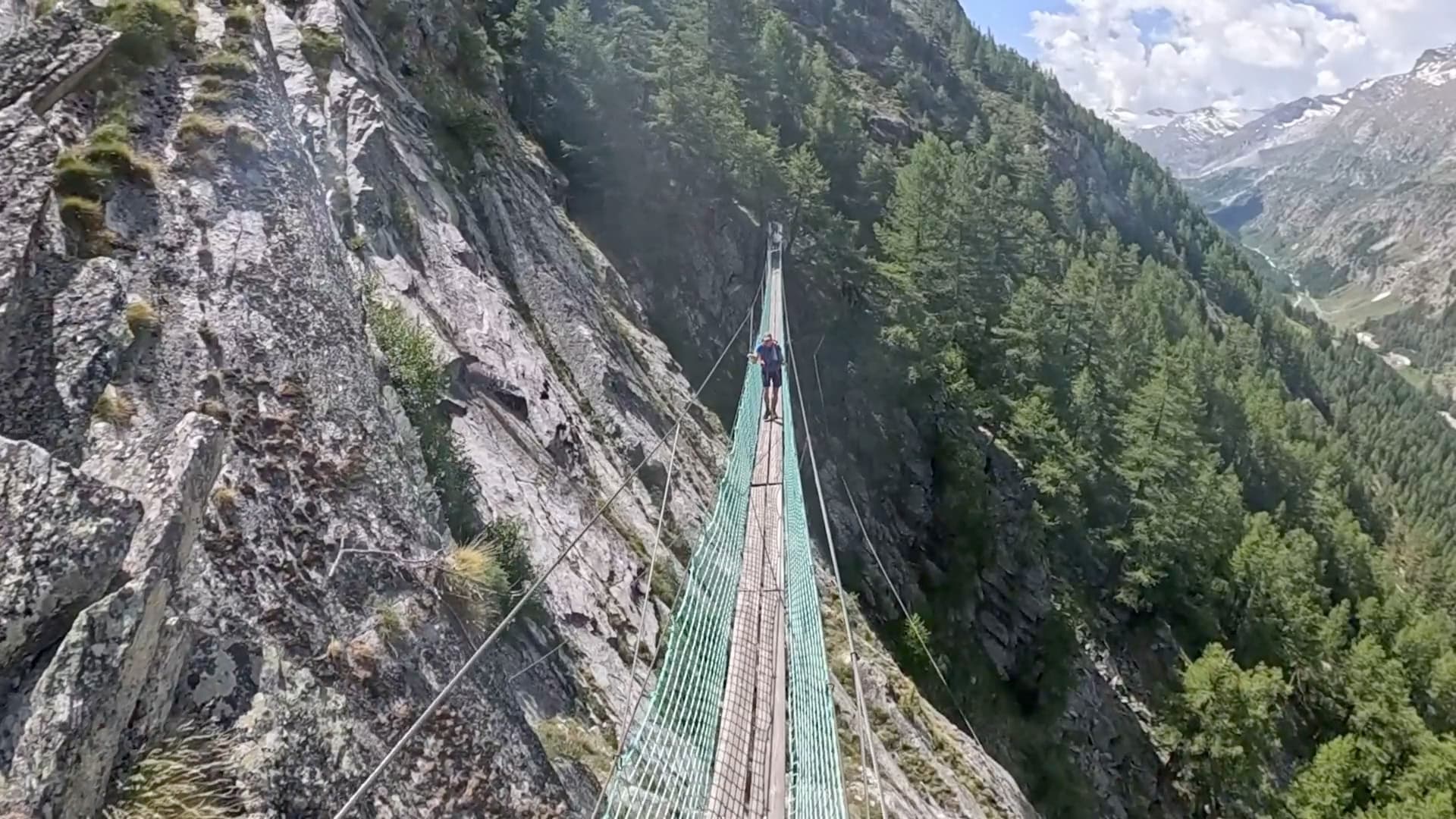
Meanwhile, my gaze is fixed on the sky. Storm clouds are gathering in the south—slowly but surely. At the Almagelleralp, I make a decision and tell Rip—who’s already studying the menu—with a wink that we’ll continue straight on the high trail. But he takes it in stride. We reach Kreuzboden well before the bad weather hits and treat ourselves to a leisurely meal on the terrace.
Down by cable car, then by bus to Saas Grund, and by car into the Mattertal to Täsch—where we load our luggage onto the shuttle train to Zermatt. The hotel shuttle picks us up at the train station and takes us to a quiet neighborhood away from the hustle and bustle: the Hotel Europe Zermatt, a hotel that showcases Zermatt as it would like to be when it’s not peak season.
Suzie and Rip don’t spend much time in the room. There are purchases to be made. They leave an outdoor gear store with significantly more than they had when they went in, and we decide to spend the evening at Marlo—a pizzeria with a terrace and a direct view of the Matterhorn, which makes paying the bill a purely formal matter.
Day 9 — Five Lakes, a Delayed Train, and a Final Lunch at 2,222 m
Zermatt – Sunnegga – Five Lakes Hike – Fluhalp – Riffelalp – Gornergrat Railway
The plan: the Europaweg from Täsch—a spectacular high-altitude hike with the Matterhorn as a constant companion all the way to Sunnegga. One of the most famous routes in Valais.
At the Zermatt train station, we learn that the line to Täsch is blocked by a broken-down train. Unfortunately, there’s no timeline for when service will resume.
This is where a private guide earns his planning fee. Within minutes, a new plan takes shape: take the funicular up to Sunnegga (2,288 m), and from there, hike the Five Lakes Trail in the opposite direction. Same view, different route. No problem.
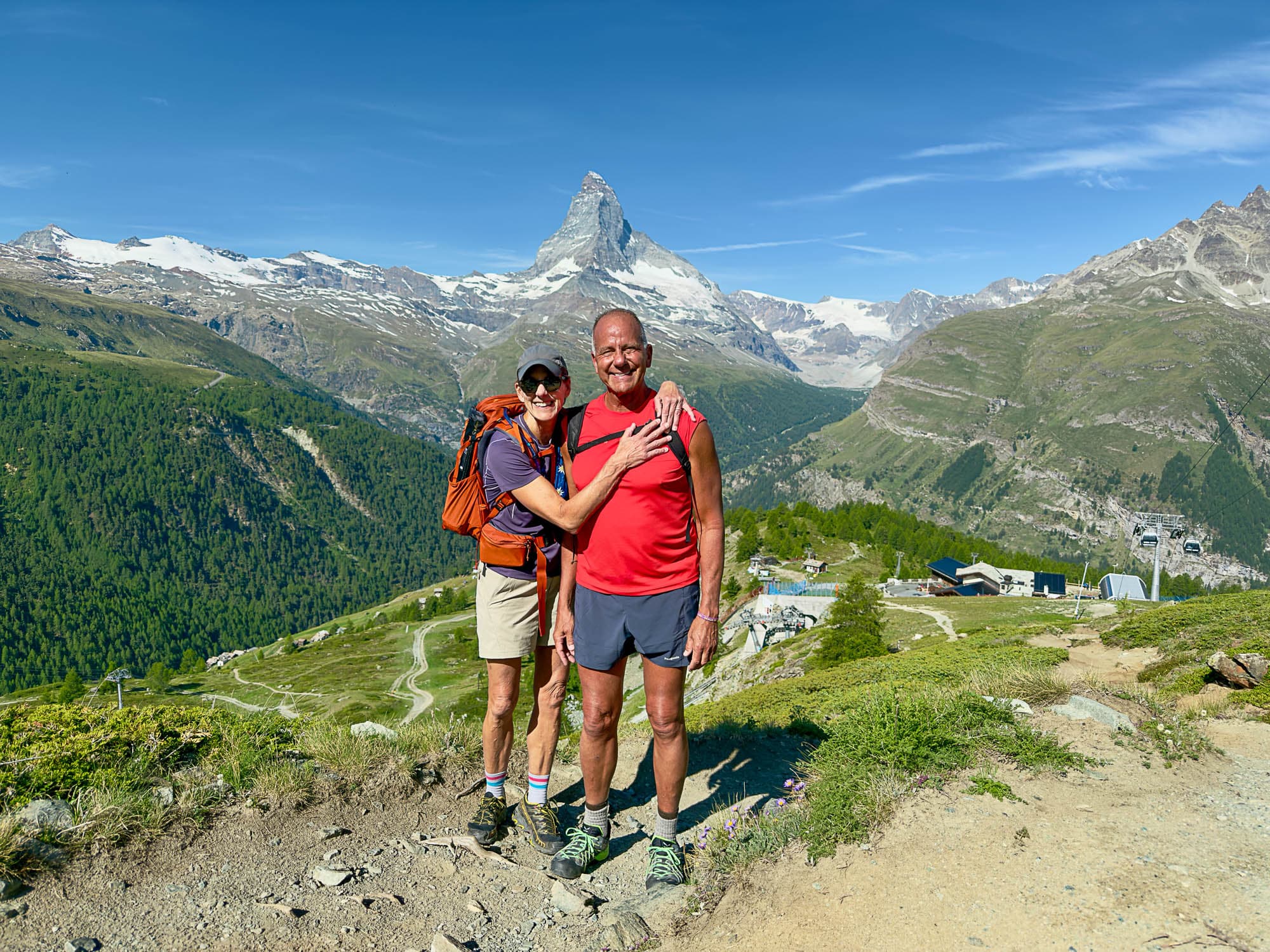
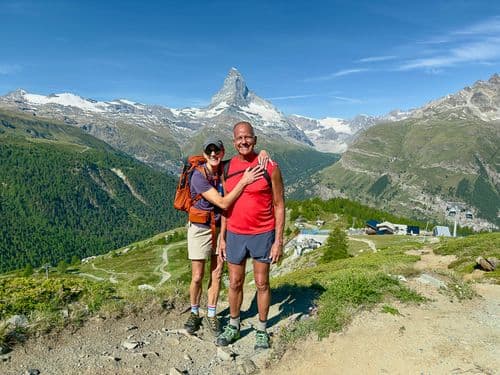
The Five Lakes Hike from Sunnegga is probably the most photographed hike around Zermatt—the sequence of mountain lakes reflecting the Matterhorn is a sight you won’t believe until you’re standing right in front of it. We have a bright blue sky after yesterday’s thunderstorms and a route that’s well-traveled but never overcrowded.
At Stellisee—the most famous of the lakes—tourists come toward us and ask where Stellisee is. They’re standing fifty meters away from it. Of course, we politely point them in the right direction.
Private alpine hiking week in Switzerland
Your Swiss Alps, your pace — fully guided, fully organized.
CHF 750 per day, guiding fee
We pass by the Berggasthaus Fluhalp without stopping for a break and continue along Grindjesee, through sparse larch forests that have a somewhat medieval and very peaceful feel, to Grüensee and then down to Riffelalp—and to our last lunch together of the week.
The Riffelalp Resort is located at 2,222 m and offers a level of luxury you wouldn’t necessarily expect at the end of a hike. We sit under huge umbrellas on the terrace, eating a leisurely, delicious meal, with the Matterhorn above us, the Gorner Glacier to the east, and the week behind us.
Between the resort and the Gornergratbahn station, there’s a hotel-owned shuttle train—a small electric train that covers the roughly 500-meter distance. Rip looks at it. We look at Rip and can’t help but laugh. In the end, though, he decides to walk.
The Gornergratbahn takes us back to Zermatt—open-air cars, mountain scenery, a leisurely return to the valley. We say goodbye at the train station. Suzie and Rip are staying one more night at the Hotel Europe and will continue on to Lausanne on their own the next morning—without a hitch, as I’m told.
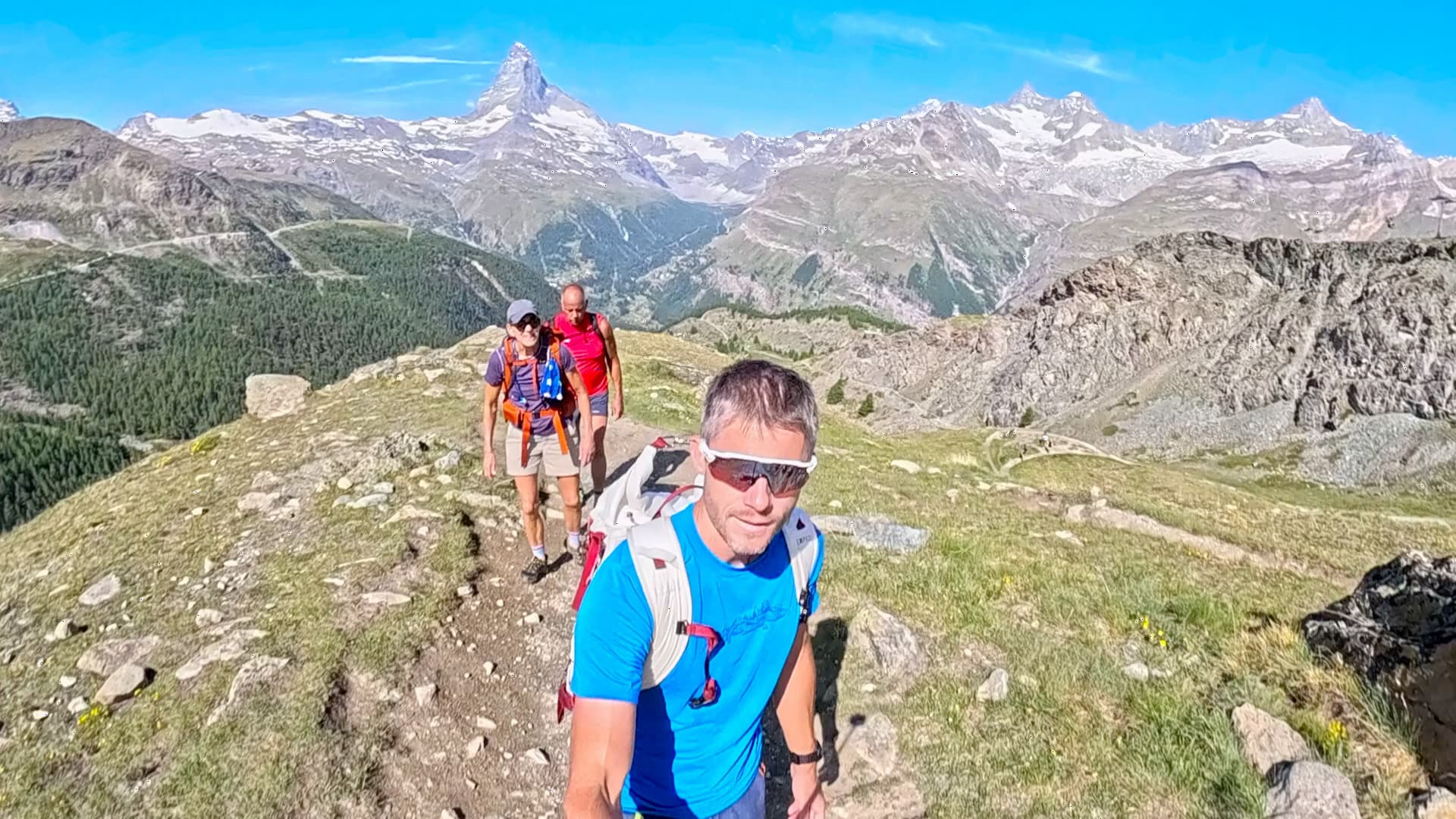
I’m heading home to the Lower Valais. The mountains stay where they are.
What nine days in the Swiss Alps really mean
Appenzell, Lucerne, the Saas Valley, Zermatt. Four regions. Four completely different landscapes. A private guide.
A plan that adapted—to snowfields above the Säntis, to Suzie’s knee on the Schäfler, to a conference in Zurich, to a delayed train in Zermatt, to thunderclouds over the Saas four-thousanders. The hiking weeks I’ll never forget aren’t the ones where everything went according to plan. Rather, they’re the ones where something changed—and we made the right decision.
Suzie and Rip arrived as experienced hikers. They’re heading home with glimpses of Switzerland in their luggage that most visitors never see—and with the knowledge that someone guided them there safely, at their own pace, with all the logistics taken care of.
That’s a private guided hiking week in Switzerland.
Interested in your own Private Alpine Week? Learn more and submit a no-obligation inquiry →