No. We hike to the hut at the foot of the mountain and back down. The summit is a high alpine climb and is reserved for IFMGA mountain guides. If that is what you are looking for, you need a different trip and a different level of preparation. I can recommend guides, just let me know.

+10
At four in the morning the headlamps come on outside. A line of small lights moves up into the Hörnli ridge, and you stand on the terrace in the cold and watch. You only get that moment if you slept up there.
On 14 July 1865 seven men stood on the summit of the Matterhorn for the first time. On the way down the rope broke. Four of them died, Edward Whymper survived, and within a few years an unclimbed mountain had become the most famous shape in the Alps.
Everything that happened that day started from the place where we spend the night.
The Hörnli Hut stands at 3,260 metres, right where the Hörnli ridge begins. Every attempt on the Matterhorn from this side has started here since 1865. You sleep in the building where the rope teams spend the night before the summit, you have dinner with them, and the next morning you watch them leave.
On the first day we climb up from Schwarzsee with the east face above us, and I tell you what is worth knowing about this mountain: why it has that shape, what really happened in 1865, and why the hut you are sleeping in had to be rebuilt stone by stone. On the second day we descend on the northern side, and there it is: the Matterhorn north face, one of the three great north faces of the Alps.
Two days, two faces, one night at 3,260 metres. There is no summit involved, and that is deliberate.
Your benefits
- You sleep at 3,260 metres, higher than most people ever have, at the foot of the most famous mountain in the Alps.
- You see the headlamps moving up the Hörnli ridge in the early morning. Day visitors never see this; they are still in the valley.
- Two completely different sides of the same mountain: the east face and the ridge on day one, the north face on day two.
- You get the history with it. Whymper, the accident of 1865, the first hut of 1880, and why the Matterhorn looks the way it does.
- Very small group, two to four people. On this terrain that is a safety decision, not a marketing number.
- Edited photographs of you along the way are included.
- Everything is arranged: cable cars, the hut with half board, the reservation. You only need to turn up.
fromCHF 890
CHF
Dates
2 days
July per September
Date of your choice
Almost everyone who comes along will never stand on the Matterhorn. That is not the point. The point is to arrive at the bottom of it once and understand how big this thing really is.
 Falko Burghausen
Meeting point
Zermatt main stationParticipants
Min. 2, max. 4 participants per guide
Course language
English, German
Included services
Guiding on both days by Falko Burghausen
Cable car from Zermatt to Schwarzsee and the descent from Furi to Zermatt
Overnight stay at the Hörnli Hut in a shared room with half board
Organisation of the hut reservation, including dietary requirements
The history and geology of the Matterhorn, told along the way
Edited photographs of you on the trail, delivered digitally within ten working days
Your guide
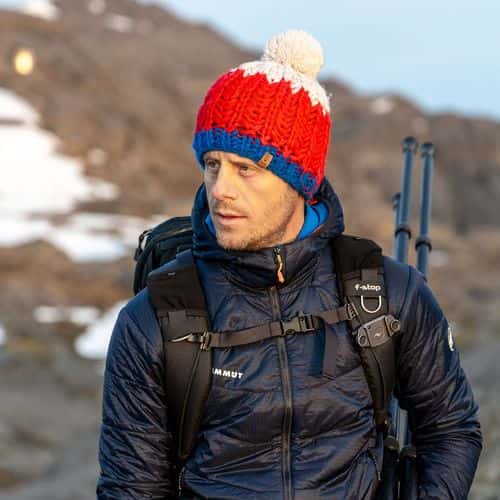
Falko Burghausen
Hiking Guide (in training). Internationally awarded Photographer. Swiss Athletics Trail Running Instructor.


Personal advice
Do you have any questions? I will be happy to advise you on this travel offer.
PDF Download
Requirements
Fitness
Technique
Distance15 km
Duration3 - 5h per day
Ascent750 m
Descent1400 m
Two days in high mountain terrain with a night at 3,260 metres.
The path to the hut is a white-blue-white alpine route. In the Swiss system this is the most demanding category of marked path, above the white-red-white mountain paths. In practice this section sits at the easier end of that category: steep, stony, exposed in places, with chains and fixed ropes on the upper part. You need to be sure-footed and comfortable with heights. You do not need to climb, and you do not need technical equipment.
The descent on day two is technically easier but long: 1,400 metres of continuous descent is hard on the knees. Walking poles help more than you would think.
Then there is the altitude. For most people 3,260 metres is unfamiliar and can make the first night shorter than usual. If you have spent the previous days in the mountains, you will find it easier.
Day 1: Schwarzsee, the east face, the Hörnli ridge
We meet in Zermatt in the morning and take the cable car via Furi up to Schwarzsee at 2,583 metres. There is a small lake up here and a chapel built, so the story goes, by two men who survived a snowstorm on this spot. From here we walk.
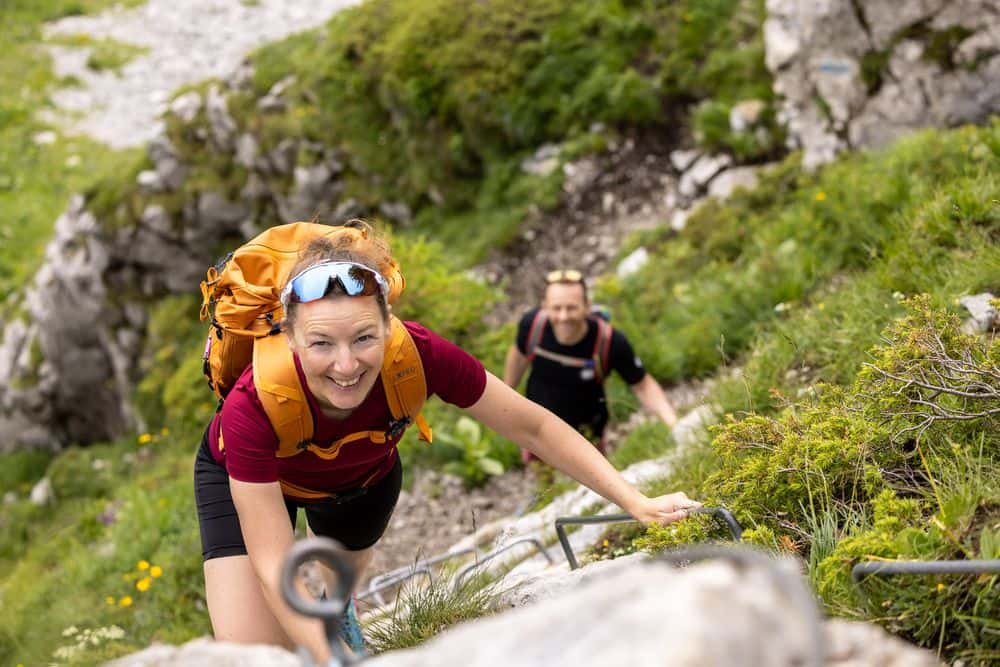
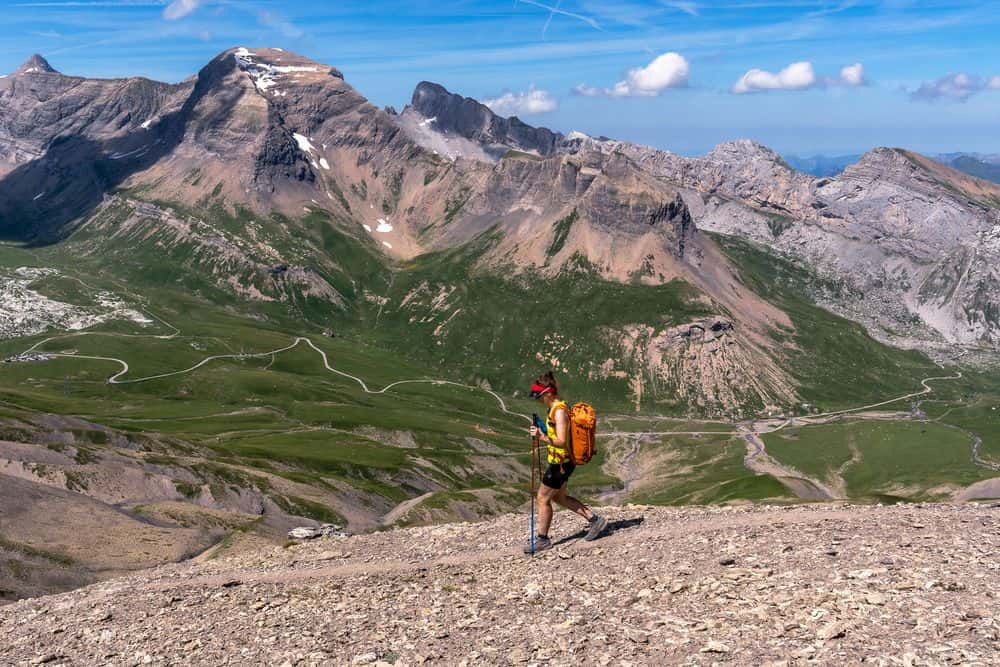
The Hörnli path climbs the south-eastern flank in long switchbacks. It is a marked route, but not a gentle one: steep, stony, exposed in places, and secured with chains and fixed ropes on the upper section. In return the mountain grows with every step. The east face rises above you, and at some point you see the Hörnli ridge the way the climbers see it: as a line that disappears into rock.
There is plenty of time to stop along the way. I will tell you why the Matterhorn has that pyramid shape, which two continental plates it is made of, what happened at the summit and then on the descent on 14 July 1865, and how a mountain nobody had climbed became the symbol of a country.
In the early afternoon we reach the Hörnli Hut at 3,260 metres. We check in, have tea on the terrace, and then simply sit and look. From here you see across the whole Matter valley to the Weisshorn and the Dent Blanche, and as the sun drops the entire basin turns warm.
Dinner is early, because most guests here are rope teams who will get up at two in the morning. The house goes quiet correspondingly early. It is unfamiliar and it is part of the experience.
About 3.5 kilometres, roughly 700 metres of ascent, two and a half to three hours of walking.
Day 2: Headlamps, the north face, the descent
Somewhere between three and four in the morning the building comes to life. The rope teams have breakfast and set off. If you want, you get up, step outside into the cold and watch them go: a chain of small lights pushing slowly up the ridge, the stars above it. For many people this is the thing they remember afterwards.
Then you can go back to bed until sunrise. After breakfast we descend, but not by the same path. We go down the northern side, and there the view opens onto the Matterhorn north face. Together with the north faces of the Eiger and the Grandes Jorasses it is one of the three great north faces of the Alps, and it looks like something that was never meant to be climbed. From below it looks even bigger.
We continue down across the alpine pastures to Furi at 1,867 metres, with the mountain behind us slowly turning back into a silhouette, and take the cable car down to the village.
If you still have the legs for it, we take the longer variant instead, through Zmutt, an old hamlet of tightly packed, sun-blackened wooden houses where time appears to have stopped. From there on foot all the way to Zermatt. We decide that in the morning, depending on how everyone feels and what the weather is doing, and it costs nothing extra.
About 11 kilometres to Furi, roughly 1,400 metres of descent, four to five hours. Via Zmutt about 14 kilometres and five to six hours.
CHF 890 per person, from two people.
The price includes guiding on both days, the cable cars up and down, the overnight stay with half board in a shared room, and your photographs. There are no tickets you need to buy separately.
Private room for two with its own shower: supplement CHF 100 per person, subject to availability at the hut.
The longer descent via Zmutt costs nothing extra. It simply takes longer.
Travelling alone? Then it becomes a private tour for CHF 1,490, with the same programme and my full attention.
Variants
Pure Flex tours don't come with a fixed date, they come with yours. Tell me when you'd like to go, I'll check availability and usually get back to you within a day. If you have wishes for how the days should run, we'll build them in.
In a small group
Price per person. Two to four participants. Cable cars, the overnight stay with half board and your photographs included.
CHF 890Private
Flat rate for one person. The dates, the pace and the breaks are entirely yours.
CHF 1,490Options
These are optional extras you can add to your booking.
Private room at the Hörnli Hut
Twin room with its own shower and toilet, towels included, no sleeping bag liner needed. For two people booking together, subject to availability.
CHF 100
The Matterhorn stands exactly on the border between Switzerland and Italy. At 4,478 metres it is not the highest mountain in the Alps, but it is by a distance the best known. Its shape comes from four faces and four ridges meeting at a single point, which almost never happens so cleanly, and it is the result of glaciers cutting into the mountain from every side at once.
The Hörnli Hut sits on the north-eastern spur where the Hörnli ridge begins. The first hut here was built in 1880, fifteen years after the first ascent. The present building was completely rebuilt between 2013 and 2015 for the 150th anniversary, and technically it is a small marvel: solar power and a closed water-recycling system at 3,260 metres, where every single piece of building material had to be flown in.
On the other side of the mountain, where we descend on the second day, lie the pastures of Stafel and the hamlet of Zmutt.
Zermatt is car free and easy to reach by train. From Zurich, Geneva, Bern or Basel the journey takes about three to four hours with one or two changes. If you come by car, you park in Täsch and take the shuttle train, which runs every twenty minutes.
Please note: we start on the morning of day one. Unless you are already in the region, plan to arrive in Zermatt the evening before. On day two we are back in the village in the afternoon, so travelling onward that same evening is no problem.
The cable car up to Schwarzsee and the descent from Furi are included in the price.
We stay at the Hörnli Hut at 3,260 metres, in a shared room with up to eight beds, with showers and toilets on the floor. Dinner and breakfast are included. A sleeping bag liner is compulsory; bring your own or buy one at the hut. Towels are not provided in the shared rooms.
If you would like more comfort, the hut has a private room for two with its own shower and toilet, towels included and no liner needed. It can be added for a supplement while it is available. Please mention it when you send your date request, not later.
Two things worth knowing. First, the Hörnli Hut is primarily the base for Matterhorn ascents. Dinner is early, it is quiet by nine, and between three and four in the morning half the building gets up. Second, water up here is precious and the infrastructure is deliberately frugal. Both are part of what makes the place what it is.
Check-in is from 14.00, and we have to be out by 08.30. I make the reservation, including any notes on allergies or vegetarian meals.
Half board at the hut is included: dinner on day one, breakfast on day two. Vegetarian is no problem. Please tell me about vegan diets and allergies when you request a date so I can register them with the reservation. At 3,260 metres these things cannot be solved at short notice.
You need your own food and drink for both days on the trail. Drinks at the hut are not included and, at this altitude, not cheap; the water has to be treated up there.
Essential
- Ankle-high hiking boots with a good sole. On this terrain this is a requirement, not a recommendation.
- Backpack, around 30 litres
- Warm layers, hat and gloves. At 3,260 metres the night is close to freezing even in midsummer.
- Wind and rain jacket
- Sleeping bag liner (compulsory in the shared rooms; available at the hut if you do not have one)
- Towel and toiletries
- Minimal change of clothes for one day
- Sun protection: sunglasses, high-factor cream, a hat. At this altitude this matters.
- At least 1.5 litres to drink and food for both days
- Headlamp
- Personal first aid, blister plasters
- Cash for drinks, ID
- Your camera or phone
Useful
- Walking poles. After 1,400 metres of descent you will be glad you brought them.
- Earplugs. In an eight-bed room with people getting up at three, they are worth a great deal.
- Light shoes for the hut
- Spare battery or power bank
- Travel to and from Zermatt, and accommodation in the valley
- Food on the trail, drinks at the hut
- Sleeping bag liner
- Supplement for the private room
- Personal equipment
- Insurance
This is a hike to the hut, not an ascent. The summit is a high alpine climb reserved for IFMGA mountain guides and is not part of this trip in any form.
Insurance is the responsibility of each participant (accident, health and liability). We recommend Rega patron membership and cancellation insurance.
The trip runs in settled weather. The Hörnli path is considerably more serious when wet, snowy or icy, and a thunderstorm on a ridge is not a theoretical risk. Free postponement up to 72 hours before the date; after that the hut's conditions apply. I would rather cancel a trip one day too early than one hour too late.
fromCHF 890
CHF
Dates
2 days
July per September
Date of your choice
Almost everyone who comes along will never stand on the Matterhorn. That is not the point. The point is to arrive at the bottom of it once and understand how big this thing really is.
Falko BurghausenMeeting point
Zermatt main stationParticipants
Min. 2, max. 4 participants per guide
Course language
English, German
Included services
Guiding on both days by Falko Burghausen
Cable car from Zermatt to Schwarzsee and the descent from Furi to Zermatt
Overnight stay at the Hörnli Hut in a shared room with half board
Organisation of the hut reservation, including dietary requirements
The history and geology of the Matterhorn, told along the way
Edited photographs of you on the trail, delivered digitally within ten working days
Your guide
Falko Burghausen
Hiking Guide (in training). Internationally awarded Photographer. Swiss Athletics Trail Running Instructor.
Personal advice
Do you have any questions? I will be happy to advise you on this travel offer.
PDF Download
At the Foot of the Matterhorn
Switzerland – ZermattfromCHF 890
July per September
Non-binding request
Your non-binding request will bring you one step closer to your experience. I will get back to you shortly with further information on dates and the exact procedure and discuss the next steps together.
Questions? Answers!
Still have questions about the offer? I have compiled the most important information for you.
Switzerland marks its paths in three categories. Yellow is a walking path, white-red-white is a mountain path, and white-blue-white is an alpine route, the most demanding marked category. The Hörnli path sits at the easier end of that category, but the marking tells you what to expect: steep, stony, exposed in places, with chains on the upper section.
You need to be sure-footed and comfortable with exposure. You do not need to climb and you do not need technical gear. If you hike regularly on Swiss mountain paths, you already know this kind of ground; this is one step beyond it.
Honestly, probably not. There are sections where the ground falls away on both sides. If you want to work on it, my fear of heights training is the better place to start, and we can talk about the Hörnli Hut afterwards.
Day one is around 700 metres of ascent in two and a half to three hours. Day two is 1,400 metres of descent in four to five hours, and the descent is the harder part. If you manage day hikes with a thousand metres of ascent, you will be fine.
3,260 metres is unfamiliar for most people. Typically you sleep less well on the first night and notice your breathing when you get up. Serious altitude problems are rare at this height. Drinking plenty and walking slowly both help.
Not like a hotel. Shared rooms with up to eight people, showers and toilets on the floor, a sleeping bag liner required, water in short supply. In exchange you wake up with the Matterhorn directly above you. Anyone who has done it once understands why people choose this.
Not a true single room, but there is a private twin room with its own shower that two people booking together can add. Solo travellers stay in the shared room, which is less daunting than its reputation.
If rope teams are going up and the weather allows it, yes. They usually set off between three and half past four. On days with a poor forecast nobody leaves, and then there are no lights. So I cannot guarantee it, and I would never promise it.
You do not have to, but half the building will, and you will notice. Most guests step outside, watch the lights for a while and go back to bed. Earplugs are still a good idea.
It is the longer option on day two, about an hour more, through an old Valais hamlet that looks much as it did two hundred years ago. It costs nothing extra. We decide in the morning based on how everyone feels and what the weather is doing.
Dogs are not allowed in the shared rooms at the Hörnli Hut, only in the private room. On top of that, the secured section is unpleasant to unsuitable for a dog. I would advise against it.
Because of the terrain, from sixteen years old and only with a parent, if they are sure-footed and comfortable with heights.
We postpone. Free up to 72 hours before; after that the hut's conditions apply. The Hörnli path in wet or snowy conditions is a different proposition from dry rock, and on a ridge a thunderstorm is a real risk.
That depends on the hut rather than on me. In high summer it is often full weeks ahead, but cancellations come up constantly. Just ask and I will check.
Edited high resolution images of you on the trail, by download link within ten working days, for private use. This is not a photography course; it is simply what happens when your guide is a photographer.
Pure Outdoor.
Discover our hiking trips and tours.Experience the impressive nature and breathtaking landscapes of the Alps and Scandinavia with us on our guided hikes.
Discover offers